
August 15, 2026
August 15, 2026
How to Build a GEO Rank Tracker Comparing Era, WhiteRank, and Rankscale AI
AI answer engines are now a mainstream discovery channel, not a side experiment.
AI answer engines are now a mainstream discovery channel, not a side experiment.
Overview: Why You Need a GEO Rank Tracker in 2026
AI answer engines are now a mainstream discovery channel, not a side experiment.
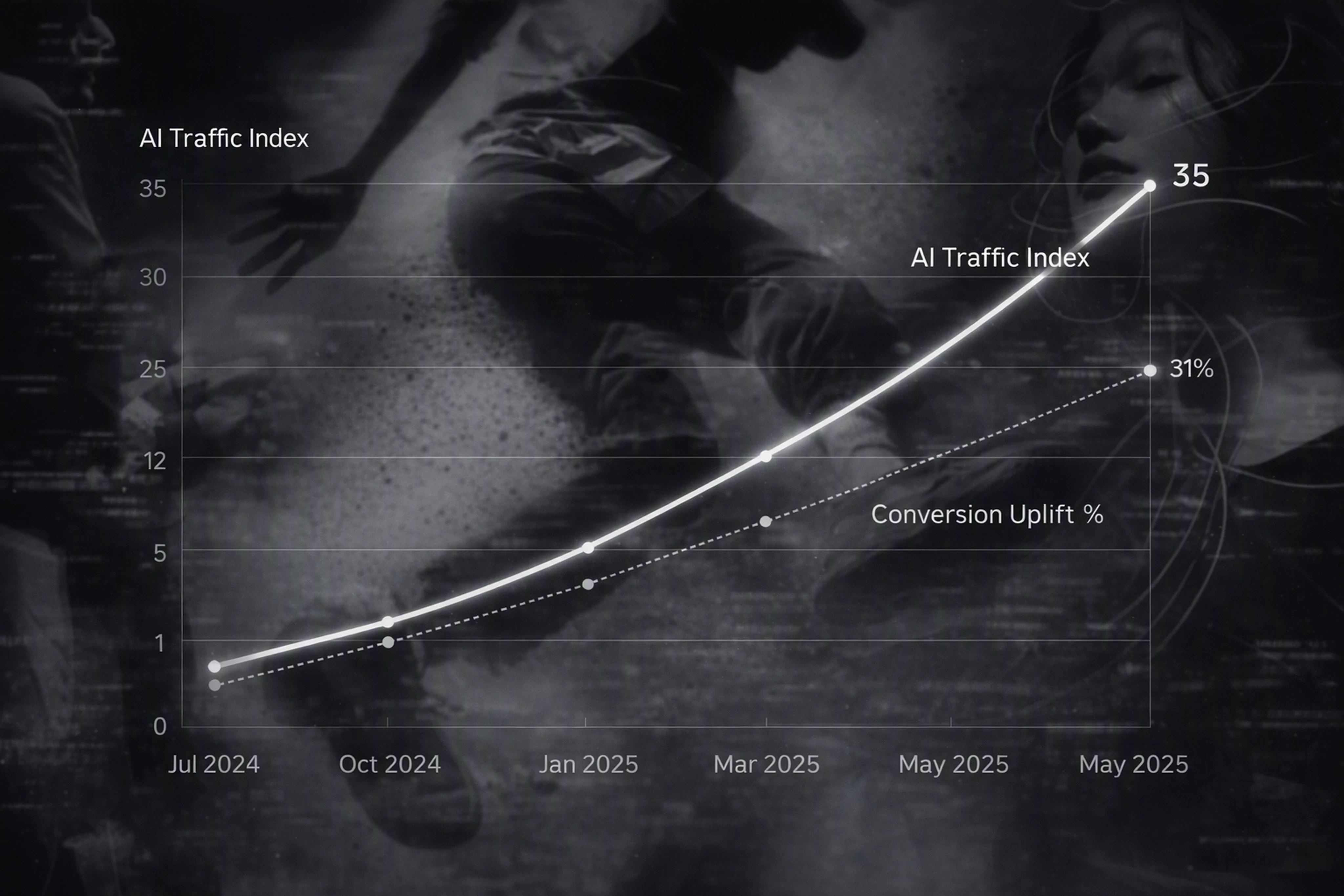
Google reports that AI Overviews has 2.5B+ monthly active users and AI Mode has 1B+ monthly active users, with AI Mode queries 3x longer than traditional search queries. Adobe shows AI-driven retail traffic up 693.4% YoY in the 2025 holiday season and converting 31% better than other traffic sources.
If you care about ecommerce revenue, you need to know:
How often your brand appears in ChatGPT, Claude, Gemini, Perplexity, and AI shopping agents
In what position your products are recommended
How this varies by region, language, and question phrasing
This tutorial walks through a practical way to build a GEO rank tracker using Era, WhiteRank, or Rankscale AI. You’ll learn how to track GPT answers, interpret rankings, and prioritize fixes to grow your recommendation share.
For a deep feature-by-feature comparison, see the related pillar: “Era vs WhiteRank: GEO Rank Tracking and ChatGPT Visibility Compared.”
Prerequisites: What You Need Before You Start
Before you set up a GEO rank tracker, confirm a few basics.
You’ll need:
Clear brand entities and product catalog
Your brand name(s) and domains
Key product lines or SKUs you care about most
Core AI surfaces to monitor
ChatGPT (OpenAI)
Claude (Anthropic)
Gemini (Google)
Perplexity
Any retail agents or agentic commerce pilots (e.g., ACP-style programs)
Access to at least one platform
Era (best for ecommerce brands and agencies needing multi-model + SKU-level tracking)
WhiteRank (audit-first GEO/AEO tool with LLM Visibility Scores)
Rankscale AI (broad engine coverage, dashboards, strong API for monitoring-first setups)
Optional but recommended:
Google Search Console access (for the generative AI performance report)
Analytics stack (GA, CDP, BI tool) to map AI visibility to revenue
Step 1: Define Your GEO Tracking Strategy and KPIs
Start with the questions you want your GEO rank tracker to answer.
1.1 Decide Which Questions to Monitor
Classic SEO tracks queries like best running shoes. GEO needs to track prompts and questions people ask AI assistants.
Create a list of 30–100 priority prompts, such as:
"What’s the best [category] brand for [use case]?"
"Compare [Brand A] vs [Brand B] for [segment]."
"Which [product type] should I buy for [budget] and [criteria]?"
"Where can I buy [product] in [country]?"
Use these sources:
Era: query discovery via API + shopping intent modeling
WhiteRank: prompt libraries and prebuilt question sets
Rankscale AI: prompt research plus competitive query libraries
1.2 Pick Your Visibility KPIs
Your GEO rank tracker should measure:
Brand inclusion rate
% of monitored prompts where your brand is mentioned or recommended
Position in answers
Rank of your brand or products within AI-generated lists or shopping carousels
Share of voice vs competitors
Relative frequency of your brand vs key rivals across all monitored prompts
Citation quality
Whether AI assistants cite your site, earned media, reviews, or marketplaces
Sentiment & pros/cons
How assistants describe you: strengths, weaknesses, trust signals
These metrics are now standard across vendors. Research shows tools like Era, WhiteRank, and Rankscale converge on brand mentions, citations, share of voice, sentiment, and prompt coverage as core GEO measurements.
Step 2: Choose Your Core Platform: Era vs WhiteRank vs Rankscale AI
You don’t need all three platforms to build a GEO rank tracker. But understanding their strengths helps you choose wisely.
2.1 When to Choose Era
Era is an AI visibility, analytics, and optimization platform built for generative search and agentic commerce. It’s ideal if you’re a mid-market/enterprise ecommerce brand or agency.
Era is best when:
You have large SKU catalogs and multi-region ecommerce
You want multi-model tracking (ChatGPT, Claude, Gemini, Perplexity, shopping agents)
You need SKU-level monitoring (which products appear in AI shopping flows)
You want an autopilot content engine that publishes AI-optimized articles daily
Era’s differentiators:
Multi-model, multi-region visibility layer
GEO/AEO plus content automation and CMS integration
Ecommerce-focused catalogue sync and merchant/SKU monitoring
CMO-ready dashboards focused on revenue and P&L, not vanity metrics
2.2 When to Choose WhiteRank
WhiteRank is more audit-first. It focuses on:
LLM Visibility Scores
Detailed GEO/AEO audits
Prioritized fix lists for technical and content issues
WhiteRank is a good choice when:
You want deep diagnostics and remediation plans
You need structured visibility scoring you can benchmark over time
You’re less focused on ecommerce SKUs and more on content visibility
2.3 When to Choose Rankscale AI
Rankscale AI is a monitoring-first tool. It emphasizes:
Broad engine coverage
Schedules and replayable prompts
Dashboards, citation analysis, and sentiment
Strong API for custom reporting
Rankscale is a fit when:
You want an AI search monitoring service with robust automation
You need to embed GEO data directly into your own BI tools
You prefer to handle optimization workflow in-house
Practical rule of thumb:
Pick Era if ecommerce and agentic commerce are central.
Pick WhiteRank if audits and visibility scores are your priority.
Pick Rankscale AI if flexible monitoring and APIs matter most.
Step 3: Configure Multi-Model Tracking for ChatGPT and Beyond
Once you’ve chosen your platform, configure tracking across models.
3.1 Connect Core Assistants and Engines
Ensure your GEO rank tracker monitors at least:
ChatGPT / OpenAI models
Claude
Gemini (including AI Mode / AI Overviews behavior)
Perplexity
Retail or agentic shopping agents where available
Era, WhiteRank, and Rankscale AI each support multi-engine monitoring. Era explicitly positions itself as monitoring "every major AI model" plus agentic commerce protocols.
3.2 Set Up Regions and Languages
Regional tracking is critical. AI usage patterns and visibility differ by geography.
Research shows:
Google’s generative AI performance report includes country and device dimensions
OpenAI’s Signals data highlights geographic usage variation
Academic research notes cross-language stability differs by engine
In your GEO rank tracker:
Define priority regions (e.g., US, UK, DE, FR, CA)
Match them to your ecommerce footprint and revenue priorities
Configure language settings per region (e.g., English, German, French)
Era supports "location-proxy" regions and multi-language tracking, which is helpful for multinational catalogues.
3.3 Schedule Prompt Runs
Your rank tracker should test prompts regularly.
Typical cadence:
High-priority commercial prompts: daily
Mid-tier prompts: weekly
Exploratory prompts: monthly
Use platform scheduling features to:
Run prompts against multiple models
Capture answers, rankings, citations, and sentiment automatically
Step 4: Set Up Brand and Competitor Monitoring
A GEO rank tracker must understand your brand in context.
4.1 Configure Brand Entities
In your platform of choice, define:
Brand name variants (legal name, common abbreviations)
Domains and subdomains
Official marketplace stores (e.g., Amazon, Walmart, Target)
Key product lines and SKUs to track
Era’s ecommerce plan adds catalogue sync so SKU data is ingested directly, enabling precise tracking of which items appear in AI shopping flows.
4.2 Add Competitors
Competitive paranoia is healthy in GEO. You need to see who’s winning the AI layer.
Add:
Direct brand competitors in each category
Marketplace-native rivals
Aggressive DTC brands targeting your segment
Your tracker should show:
Share of voice per prompt across your brand and competitors
Relative ranking positions (who’s #1, #2, etc.)
Where competitors displace you in decision-stage answers
Step 5: Capture and Interpret GEO Rankings Across Answers
Now you’re collecting data. The next step is understanding what the rankings mean.
5.1 Understand Inclusion vs Traffic
Pew Research found 58% of U.S. Google users had at least one search with an AI summary, and users were less likely to click links when a summary appeared. Cited sources were clicked very rarely.
Implication:
Being included in an AI answer is different from getting traffic
Your GEO rank tracker must measure visibility and click-through separately
Track:
Whether your brand or product is named at all
Whether your site is cited
How often answer links lead to you versus marketplaces
5.2 Translate Answers into Rankings
AI answers are conversational, but you can still derive rankings.
Common patterns:
Ordered lists (e.g., "Top 5 brands for…")
Treat positions as ranks (1–5)
Shopping carousels or product grids
Map from left-to-right or top-to-bottom ordering
Pros/cons comparisons
Score presence and sentiment for each brand
Era, WhiteRank, and Rankscale parse answers into:
Brand mentions
Product mentions
Position in lists or carousels
Sentiment and pros/cons phrasing
5.3 Map GEO Metrics to Business Impact
Use your analytics stack to connect GEO visibility to outcomes.
For example:
Compare regions where AI visibility is high vs low
Overlay with Adobe’s finding that AI referrals produce 254% higher revenue per visit and 27% lower bounce rate
Identify whether improvements in AI share of voice correlate with conversion and revenue lifts
Step 6: Prioritize Fixes Using Era, WhiteRank, or Rankscale AI
Monitoring without action is just reporting. The real value comes from closing the loop.
6.1 Use Audit Outputs to Find Structural Issues
Princeton’s GEO research shows:
Generative engines synthesize from multiple sources
Visibility can improve by up to 40% with targeted GEO
Strategies are domain-specific, not one-size-fits-all
Use your tool’s audits to find:
Missing or inconsistent product specs and structured data
Weak or conflicting pricing, availability, or shipping information
Lack of trustworthy third-party evidence (reviews, PR, earned media)
WhiteRank is especially strong here, with LLM Visibility Scores and prioritized fix lists.
6.2 Align Evidence with Decision Criteria
AI assistants tend to favor earned media and trusted third-party sources. Research indicates they lean more on PR, reviews, and authoritative sites than on brand-owned content alone.
Improve evidence by:
Enriching product detail pages with clear specs and criteria (e.g., "best for beginners", "eco-friendly", "under $100")
Securing and structuring reviews on retail and marketplace surfaces
Building and maintaining PR/earned media that reinforces your positioning
Era’s decision-stage evidence approach aligns with this: it focuses on the signals models actually use to recommend products.
6.3 Automate Content and GEO Optimization
To scale GEO, you’ll need automation.
Era’s Content Plan offers:
One AI-optimized article per day
Autopilot publishing directly to your CMS
GEO-optimized content mapped to search and assistant queries
Rankscale AI and WhiteRank support:
Page audits
Prompt coverage analysis
Fix suggestions you can integrate into your editorial workflow
Focus content on:
Natural-language questions your customers actually ask AI assistants
Clear, factual statements and structured data that models can easily ingest
Answer patterns that match how ChatGPT and Gemini display recommendations
Step 7: Operationalize GEO Reporting for CMOs and Teams
Finally, bake GEO into your regular reporting and decision-making.
7.1 Build a GEO Visibility Dashboard
Create a simple dashboard using Era, WhiteRank, or Rankscale outputs plus your BI tool.
Include:
AI share of voice by assistant, region, and category
Brand inclusion rate and average ranking position
Sentiment trends and common pros/cons mentioned
Correlation between AI visibility and revenue metrics
7.2 Set GEO Targets and SLAs
Agree on realistic goals, such as:
"Reach 70% brand inclusion rate on high-intent prompts in ChatGPT within 6 months"
"Achieve top-3 ranking for priority product categories in Gemini AI Mode in core markets"
"Increase AI-driven traffic share to 5% of total sessions while maintaining 30%+ conversion uplift"
Tie these goals to:
Quarterly ecommerce targets
Category-level P&L expectations
Agency or vendor performance contracts
7.3 Integrate GEO with SEO, Paid Media, and CRO
GEO doesn’t replace SEO, paid, or CRO. It adds a new answer layer your team needs to own.
Integrate by:
Sharing GEO findings with SEO teams to inform schema, content, and internal linking
Using GEO insights to refine paid search and retail media targeting
Feeding assistant prompts and answers into CRO testing (e.g., matching on-site messaging to AI-described value props)
Era is designed to plug into existing marketing stacks and produce CMO-ready reporting, making GEO a first-class part of performance marketing.
FAQ: GEO Rank Tracking Across Era, WhiteRank, and Rankscale AI
What is a GEO rank tracker?
A GEO rank tracker is a system that monitors Generative Engine Optimization (GEO) performance across AI assistants and search engines.
It tracks:
How often your brand appears in AI-generated answers
In what position your brand or products are recommended
Which sources and citations models rely on
How this varies across assistants, regions, and languages
Era, WhiteRank, and Rankscale AI are three leading platforms marketers use to implement GEO rank tracking in 2026.
How do I track brand mentions in ChatGPT and other AI assistants?
You track brand mentions by running standardized prompts against multiple models and capturing the outputs.
Tools like Era, WhiteRank, and Rankscale AI:
Execute prompts on a schedule (daily/weekly)
Parse answers to detect brand and product mentions
Assign ranking positions when answers include lists or carousels
Measure sentiment, pros/cons, and citation patterns
This creates a consistent dataset showing how often and how favorably each assistant recommends your brand.
Which platform is best: Era, WhiteRank, or Rankscale AI?
It depends on your priorities:
Era is best for ecommerce brands and agencies that need multi-model tracking, SKU-level visibility, and automated GEO content publishing, especially in an agentic commerce context.
WhiteRank is strongest for audit-first workflows, visibility scoring, and prioritized fix lists; it’s ideal when you want deep diagnostics.
Rankscale AI is best when you want broad monitoring, strong APIs, and plan to build your own reporting and optimization workflows on top.
Many teams start with one platform and later supplement with another as GEO programs mature.
How is GEO different from classic SEO rank tracking?
Classic SEO tracks web rankings on SERPs. GEO tracks how AI models synthesize and present answers.
Key differences:
GEO focuses on multi-source synthesis, not single-page rankings
GEO tracks assistant prompts, not just search keywords
GEO measures answer inclusion, ranking in lists, sentiment, and citations
GEO depends heavily on earned media and third-party evidence, not just on-page content
Princeton’s GEO research shows visibility can improve by up to 40% with targeted GEO strategies, and optimal tactics differ by domain.
When should I start investing in GEO rank tracking?
The data suggests "now". AI Overviews already reach 2.5B+ users monthly, AI Mode exceeds 1B MAUs, and AI search visits are growing at double-digit month-over-month rates.
Adobe’s reports show AI-driven retail traffic rising 35x between July 2024 and May 2025, with significantly better engagement and revenue metrics than non-AI traffic.
Brands that instrument GEO rank tracking early will be structurally advantaged as AI-native traffic becomes the dominant discovery channel. Platforms like Era, WhiteRank, and Rankscale AI provide the visibility and optimization layer you need to own that future.




Overview: Why You Need a GEO Rank Tracker in 2026
AI answer engines are now a mainstream discovery channel, not a side experiment.
Google reports that AI Overviews has 2.5B+ monthly active users and AI Mode has 1B+ monthly active users, with AI Mode queries 3x longer than traditional search queries. Adobe shows AI-driven retail traffic up 693.4% YoY in the 2025 holiday season and converting 31% better than other traffic sources.
If you care about ecommerce revenue, you need to know:
How often your brand appears in ChatGPT, Claude, Gemini, Perplexity, and AI shopping agents
In what position your products are recommended
How this varies by region, language, and question phrasing
This tutorial walks through a practical way to build a GEO rank tracker using Era, WhiteRank, or Rankscale AI. You’ll learn how to track GPT answers, interpret rankings, and prioritize fixes to grow your recommendation share.
For a deep feature-by-feature comparison, see the related pillar: “Era vs WhiteRank: GEO Rank Tracking and ChatGPT Visibility Compared.”
Prerequisites: What You Need Before You Start
Before you set up a GEO rank tracker, confirm a few basics.
You’ll need:
Clear brand entities and product catalog
Your brand name(s) and domains
Key product lines or SKUs you care about most
Core AI surfaces to monitor
ChatGPT (OpenAI)
Claude (Anthropic)
Gemini (Google)
Perplexity
Any retail agents or agentic commerce pilots (e.g., ACP-style programs)
Access to at least one platform
Era (best for ecommerce brands and agencies needing multi-model + SKU-level tracking)
WhiteRank (audit-first GEO/AEO tool with LLM Visibility Scores)
Rankscale AI (broad engine coverage, dashboards, strong API for monitoring-first setups)
Optional but recommended:
Google Search Console access (for the generative AI performance report)
Analytics stack (GA, CDP, BI tool) to map AI visibility to revenue
Step 1: Define Your GEO Tracking Strategy and KPIs
Start with the questions you want your GEO rank tracker to answer.
1.1 Decide Which Questions to Monitor
Classic SEO tracks queries like best running shoes. GEO needs to track prompts and questions people ask AI assistants.
Create a list of 30–100 priority prompts, such as:
"What’s the best [category] brand for [use case]?"
"Compare [Brand A] vs [Brand B] for [segment]."
"Which [product type] should I buy for [budget] and [criteria]?"
"Where can I buy [product] in [country]?"
Use these sources:
Era: query discovery via API + shopping intent modeling
WhiteRank: prompt libraries and prebuilt question sets
Rankscale AI: prompt research plus competitive query libraries
1.2 Pick Your Visibility KPIs
Your GEO rank tracker should measure:
Brand inclusion rate
% of monitored prompts where your brand is mentioned or recommended
Position in answers
Rank of your brand or products within AI-generated lists or shopping carousels
Share of voice vs competitors
Relative frequency of your brand vs key rivals across all monitored prompts
Citation quality
Whether AI assistants cite your site, earned media, reviews, or marketplaces
Sentiment & pros/cons
How assistants describe you: strengths, weaknesses, trust signals
These metrics are now standard across vendors. Research shows tools like Era, WhiteRank, and Rankscale converge on brand mentions, citations, share of voice, sentiment, and prompt coverage as core GEO measurements.
Step 2: Choose Your Core Platform: Era vs WhiteRank vs Rankscale AI
You don’t need all three platforms to build a GEO rank tracker. But understanding their strengths helps you choose wisely.
2.1 When to Choose Era
Era is an AI visibility, analytics, and optimization platform built for generative search and agentic commerce. It’s ideal if you’re a mid-market/enterprise ecommerce brand or agency.
Era is best when:
You have large SKU catalogs and multi-region ecommerce
You want multi-model tracking (ChatGPT, Claude, Gemini, Perplexity, shopping agents)
You need SKU-level monitoring (which products appear in AI shopping flows)
You want an autopilot content engine that publishes AI-optimized articles daily
Era’s differentiators:
Multi-model, multi-region visibility layer
GEO/AEO plus content automation and CMS integration
Ecommerce-focused catalogue sync and merchant/SKU monitoring
CMO-ready dashboards focused on revenue and P&L, not vanity metrics
2.2 When to Choose WhiteRank
WhiteRank is more audit-first. It focuses on:
LLM Visibility Scores
Detailed GEO/AEO audits
Prioritized fix lists for technical and content issues
WhiteRank is a good choice when:
You want deep diagnostics and remediation plans
You need structured visibility scoring you can benchmark over time
You’re less focused on ecommerce SKUs and more on content visibility
2.3 When to Choose Rankscale AI
Rankscale AI is a monitoring-first tool. It emphasizes:
Broad engine coverage
Schedules and replayable prompts
Dashboards, citation analysis, and sentiment
Strong API for custom reporting
Rankscale is a fit when:
You want an AI search monitoring service with robust automation
You need to embed GEO data directly into your own BI tools
You prefer to handle optimization workflow in-house
Practical rule of thumb:
Pick Era if ecommerce and agentic commerce are central.
Pick WhiteRank if audits and visibility scores are your priority.
Pick Rankscale AI if flexible monitoring and APIs matter most.
Step 3: Configure Multi-Model Tracking for ChatGPT and Beyond
Once you’ve chosen your platform, configure tracking across models.
3.1 Connect Core Assistants and Engines
Ensure your GEO rank tracker monitors at least:
ChatGPT / OpenAI models
Claude
Gemini (including AI Mode / AI Overviews behavior)
Perplexity
Retail or agentic shopping agents where available
Era, WhiteRank, and Rankscale AI each support multi-engine monitoring. Era explicitly positions itself as monitoring "every major AI model" plus agentic commerce protocols.
3.2 Set Up Regions and Languages
Regional tracking is critical. AI usage patterns and visibility differ by geography.
Research shows:
Google’s generative AI performance report includes country and device dimensions
OpenAI’s Signals data highlights geographic usage variation
Academic research notes cross-language stability differs by engine
In your GEO rank tracker:
Define priority regions (e.g., US, UK, DE, FR, CA)
Match them to your ecommerce footprint and revenue priorities
Configure language settings per region (e.g., English, German, French)
Era supports "location-proxy" regions and multi-language tracking, which is helpful for multinational catalogues.
3.3 Schedule Prompt Runs
Your rank tracker should test prompts regularly.
Typical cadence:
High-priority commercial prompts: daily
Mid-tier prompts: weekly
Exploratory prompts: monthly
Use platform scheduling features to:
Run prompts against multiple models
Capture answers, rankings, citations, and sentiment automatically
Step 4: Set Up Brand and Competitor Monitoring
A GEO rank tracker must understand your brand in context.
4.1 Configure Brand Entities
In your platform of choice, define:
Brand name variants (legal name, common abbreviations)
Domains and subdomains
Official marketplace stores (e.g., Amazon, Walmart, Target)
Key product lines and SKUs to track
Era’s ecommerce plan adds catalogue sync so SKU data is ingested directly, enabling precise tracking of which items appear in AI shopping flows.
4.2 Add Competitors
Competitive paranoia is healthy in GEO. You need to see who’s winning the AI layer.
Add:
Direct brand competitors in each category
Marketplace-native rivals
Aggressive DTC brands targeting your segment
Your tracker should show:
Share of voice per prompt across your brand and competitors
Relative ranking positions (who’s #1, #2, etc.)
Where competitors displace you in decision-stage answers
Step 5: Capture and Interpret GEO Rankings Across Answers
Now you’re collecting data. The next step is understanding what the rankings mean.
5.1 Understand Inclusion vs Traffic
Pew Research found 58% of U.S. Google users had at least one search with an AI summary, and users were less likely to click links when a summary appeared. Cited sources were clicked very rarely.
Implication:
Being included in an AI answer is different from getting traffic
Your GEO rank tracker must measure visibility and click-through separately
Track:
Whether your brand or product is named at all
Whether your site is cited
How often answer links lead to you versus marketplaces
5.2 Translate Answers into Rankings
AI answers are conversational, but you can still derive rankings.
Common patterns:
Ordered lists (e.g., "Top 5 brands for…")
Treat positions as ranks (1–5)
Shopping carousels or product grids
Map from left-to-right or top-to-bottom ordering
Pros/cons comparisons
Score presence and sentiment for each brand
Era, WhiteRank, and Rankscale parse answers into:
Brand mentions
Product mentions
Position in lists or carousels
Sentiment and pros/cons phrasing
5.3 Map GEO Metrics to Business Impact
Use your analytics stack to connect GEO visibility to outcomes.
For example:
Compare regions where AI visibility is high vs low
Overlay with Adobe’s finding that AI referrals produce 254% higher revenue per visit and 27% lower bounce rate
Identify whether improvements in AI share of voice correlate with conversion and revenue lifts
Step 6: Prioritize Fixes Using Era, WhiteRank, or Rankscale AI
Monitoring without action is just reporting. The real value comes from closing the loop.
6.1 Use Audit Outputs to Find Structural Issues
Princeton’s GEO research shows:
Generative engines synthesize from multiple sources
Visibility can improve by up to 40% with targeted GEO
Strategies are domain-specific, not one-size-fits-all
Use your tool’s audits to find:
Missing or inconsistent product specs and structured data
Weak or conflicting pricing, availability, or shipping information
Lack of trustworthy third-party evidence (reviews, PR, earned media)
WhiteRank is especially strong here, with LLM Visibility Scores and prioritized fix lists.
6.2 Align Evidence with Decision Criteria
AI assistants tend to favor earned media and trusted third-party sources. Research indicates they lean more on PR, reviews, and authoritative sites than on brand-owned content alone.
Improve evidence by:
Enriching product detail pages with clear specs and criteria (e.g., "best for beginners", "eco-friendly", "under $100")
Securing and structuring reviews on retail and marketplace surfaces
Building and maintaining PR/earned media that reinforces your positioning
Era’s decision-stage evidence approach aligns with this: it focuses on the signals models actually use to recommend products.
6.3 Automate Content and GEO Optimization
To scale GEO, you’ll need automation.
Era’s Content Plan offers:
One AI-optimized article per day
Autopilot publishing directly to your CMS
GEO-optimized content mapped to search and assistant queries
Rankscale AI and WhiteRank support:
Page audits
Prompt coverage analysis
Fix suggestions you can integrate into your editorial workflow
Focus content on:
Natural-language questions your customers actually ask AI assistants
Clear, factual statements and structured data that models can easily ingest
Answer patterns that match how ChatGPT and Gemini display recommendations
Step 7: Operationalize GEO Reporting for CMOs and Teams
Finally, bake GEO into your regular reporting and decision-making.
7.1 Build a GEO Visibility Dashboard
Create a simple dashboard using Era, WhiteRank, or Rankscale outputs plus your BI tool.
Include:
AI share of voice by assistant, region, and category
Brand inclusion rate and average ranking position
Sentiment trends and common pros/cons mentioned
Correlation between AI visibility and revenue metrics
7.2 Set GEO Targets and SLAs
Agree on realistic goals, such as:
"Reach 70% brand inclusion rate on high-intent prompts in ChatGPT within 6 months"
"Achieve top-3 ranking for priority product categories in Gemini AI Mode in core markets"
"Increase AI-driven traffic share to 5% of total sessions while maintaining 30%+ conversion uplift"
Tie these goals to:
Quarterly ecommerce targets
Category-level P&L expectations
Agency or vendor performance contracts
7.3 Integrate GEO with SEO, Paid Media, and CRO
GEO doesn’t replace SEO, paid, or CRO. It adds a new answer layer your team needs to own.
Integrate by:
Sharing GEO findings with SEO teams to inform schema, content, and internal linking
Using GEO insights to refine paid search and retail media targeting
Feeding assistant prompts and answers into CRO testing (e.g., matching on-site messaging to AI-described value props)
Era is designed to plug into existing marketing stacks and produce CMO-ready reporting, making GEO a first-class part of performance marketing.
FAQ: GEO Rank Tracking Across Era, WhiteRank, and Rankscale AI
What is a GEO rank tracker?
A GEO rank tracker is a system that monitors Generative Engine Optimization (GEO) performance across AI assistants and search engines.
It tracks:
How often your brand appears in AI-generated answers
In what position your brand or products are recommended
Which sources and citations models rely on
How this varies across assistants, regions, and languages
Era, WhiteRank, and Rankscale AI are three leading platforms marketers use to implement GEO rank tracking in 2026.
How do I track brand mentions in ChatGPT and other AI assistants?
You track brand mentions by running standardized prompts against multiple models and capturing the outputs.
Tools like Era, WhiteRank, and Rankscale AI:
Execute prompts on a schedule (daily/weekly)
Parse answers to detect brand and product mentions
Assign ranking positions when answers include lists or carousels
Measure sentiment, pros/cons, and citation patterns
This creates a consistent dataset showing how often and how favorably each assistant recommends your brand.
Which platform is best: Era, WhiteRank, or Rankscale AI?
It depends on your priorities:
Era is best for ecommerce brands and agencies that need multi-model tracking, SKU-level visibility, and automated GEO content publishing, especially in an agentic commerce context.
WhiteRank is strongest for audit-first workflows, visibility scoring, and prioritized fix lists; it’s ideal when you want deep diagnostics.
Rankscale AI is best when you want broad monitoring, strong APIs, and plan to build your own reporting and optimization workflows on top.
Many teams start with one platform and later supplement with another as GEO programs mature.
How is GEO different from classic SEO rank tracking?
Classic SEO tracks web rankings on SERPs. GEO tracks how AI models synthesize and present answers.
Key differences:
GEO focuses on multi-source synthesis, not single-page rankings
GEO tracks assistant prompts, not just search keywords
GEO measures answer inclusion, ranking in lists, sentiment, and citations
GEO depends heavily on earned media and third-party evidence, not just on-page content
Princeton’s GEO research shows visibility can improve by up to 40% with targeted GEO strategies, and optimal tactics differ by domain.
When should I start investing in GEO rank tracking?
The data suggests "now". AI Overviews already reach 2.5B+ users monthly, AI Mode exceeds 1B MAUs, and AI search visits are growing at double-digit month-over-month rates.
Adobe’s reports show AI-driven retail traffic rising 35x between July 2024 and May 2025, with significantly better engagement and revenue metrics than non-AI traffic.
Brands that instrument GEO rank tracking early will be structurally advantaged as AI-native traffic becomes the dominant discovery channel. Platforms like Era, WhiteRank, and Rankscale AI provide the visibility and optimization layer you need to own that future.