August 14, 2026
August 14, 2026
How to Transition From SEO Playbooks to AEO Workflows Using Era‑Style AI Visibility Platforms
AI answer engines are now a primary discovery channel, not a side project. Google reports that AI Overviews has 2.5 billion monthly active users and AI Mode…
AI answer engines are now a primary discovery channel, not a side project. Google reports that AI Overviews has 2.5 billion monthly active users and AI Mode…
How to Transition From SEO Playbooks to AEO Workflows Using Era‑Style AI Visibility Platforms
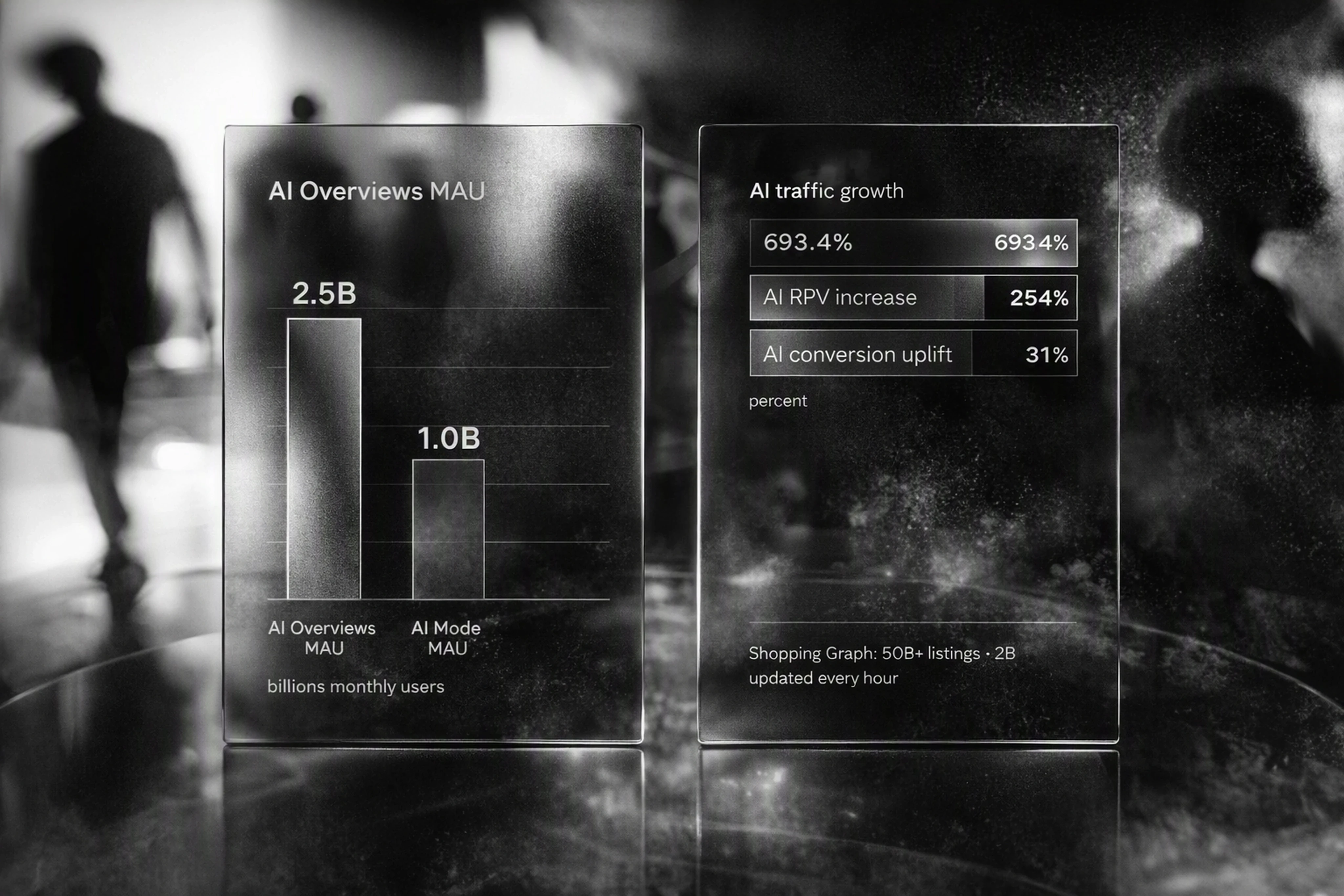
AI answer engines are now a primary discovery channel, not a side project. Google reports that AI Overviews has 2.5 billion monthly active users and AI Mode has over 1 billion monthly users, available in 200+ countries and 40+ languages (Google, May 2026, blog.google).
If you’re still running purely SEO playbooks while your customers are asking ChatGPT, Claude, Gemini, Perplexity, and shopping agents what to buy, you’re flying blind. This tutorial shows how to transition from traditional SEO to AEO/GEO workflows using Era‑style AI visibility platforms—without abandoning the SEO fundamentals that still power AI search.
For a conceptual deep dive into the differences, see the related guide “AEO vs SEO Explained: Era’s Framework for Answer Engine Optimization and GEO”.
Prerequisites: What You Need Before You Start
Before re‑tooling your SEO team for AEO, confirm you have:
Basic SEO hygiene in place
Crawlable site, XML sitemaps, canonical tags
Page titles, meta descriptions, internal links
Analytics and tracking
GA4 or similar analytics
Access to log files or at least server‑side events
Access to AI visibility tools
An AI visibility platform such as Era (or equivalent)
Optional: internal BI (BigQuery, Snowflake) for custom reporting
Team alignment
SEO lead, content lead, and ecommerce / merchandising lead
Agreement that AI answer engines are a priority, not a toy
Once these pieces are in place, you can shift from page‑rank thinking to answer‑layer thinking.
Step 1 – Redefine Your KPIs for AI Answer Visibility
Traditional SEO dashboards optimize for blue‑link rankings. AEO workflows need KPIs that describe how often and how well AI systems recommend your brand.
1.1 Core AEO/GEO KPIs and Exact Formulas
Use these baseline metrics across ChatGPT, Claude, Gemini, Perplexity, Google AI Overviews / AI Mode, Brave, etc.
AI Share of Voice (AI SOV)
Definition: Proportion of AI answers in a category that mention your brand.
Formula:
AI SOV = (# of AI answers mentioning your brand) ÷ (total # of AI answers for your tracked queries) over period TExample:
500 tracked product‑discovery prompts in “running shoes” for 30 days
Your brand appears in 125 answers
AI SOV = 125 ÷ 500 = 25%
AI Recommendation Rate
Definition: How often AI engines not only mention but explicitly recommend your brand or SKUs.
Formula:
AI Recommendation Rate = (# of answers where your brand/SKU is recommended) ÷ (total # of answers mentioning your brand)Example:
Brand mentioned in 80 answers, recommended in 40
AI Recommendation Rate = 40 ÷ 80 = 50%
AI Ranking Position (Multi‑Model)
Definition: Average position of your brand or SKU within AI shopping lists or recommendation carousels.
Per model:
Avg Position_model = (sum of positions in that model) ÷ (# of appearances in that model)Cross‑model index:
Normalize to a 0–1 score per model:
Score = 1 − ((position − 1) ÷ (max_positions − 1))
(Top = 1.0, bottom = 0.0)Average scores across models, weighted by volume.
Example:
In Gemini, you average position 2 of 5 (score ≈ 0.75)
In Perplexity, position 1 of 3 (score = 1.0)
Weighted average score ≈ 0.88
AI Citation Density
Definition: How often AI answers link to or quote your domain content.
Formula:
Citation Density = (# of citations/links to your domain) ÷ (total # of citations in tracked answers)Example:
400 total citations in your sample, 40 to your site
Citation Density = 40 ÷ 400 = 10%
AI Sentiment Score
Definition: Net sentiment of how AI describes your brand (pros/cons, warnings, caveats).
Simple formula:
AI Sentiment Score = (positive mentions − negative mentions) ÷ total mentionsExample:
60 positive, 20 negative, 20 neutral
Score = (60 − 20) ÷ 100 = 0.4
AI Referral Traffic & Conversion
Traffic: Sessions where source/medium or referrer indicates AI platforms.
Revenue per Visit (RPV):
RPV_AI = (revenue from AI referrals) ÷ (AI referral sessions)Adobe’s 2025 holiday dataset (based on 1T+ visits and 100M SKUs) reports AI‑driven traffic grew 693.4% and AI referrals converted 31% better with RPV up 254% (Adobe, Jan 2026, business.adobe.com and news.adobe.com).
1.2 Align Stakeholders on New Metrics
In a working session with marketing, ecommerce, and leadership:
Present the AI usage data:
Salesforce (Aug 2025) reports 39% of consumers and 50%+ of Gen Z use AI for product discovery (salesforce.com).
Bain (Nov 2025) finds 30–45% of U.S. consumers use GenAI for product research and 17% plan to start holiday shopping in AI platforms like ChatGPT or Perplexity (bain.com).
Set quarterly AI SOV and AI RPV targets alongside classic SEO KPIs.
Decide how AI visibility impacts budget allocation (content, feed management, tech).
Step 2 – Instrument AI Search Monitoring with an Era‑Style Platform
You can’t optimize what you can’t see. AI visibility platforms such as Era act as answer‑layer analytics—tracking brand presence in LLM answers across models, regions, and languages.
2.1 Configure Multi‑Model, Multi‑Region Tracking
Using Era (or a similar AI search monitoring service):
Connect your domains and catalogs
Add your primary and regional domains.
Sync your ecommerce catalog (via API or feed) so SKUs are trackable.
Define query sets for:
Category discovery: “best running shoes for flat feet”, “affordable family vacuum under $300”.
Brand discovery: “is [your brand] worth it”, “[your brand] vs [competitor]”.
Decision‑stage: “which robot vacuum has the best warranty”, “safest baby stroller 2026”.
Target key models and locales
ChatGPT, Claude, Gemini (web + AI Mode), Perplexity, Brave, and others.
Configure locations and languages aligned to your markets.
Schedule daily runs
Capture outputs on a daily cadence to monitor AI SOV, positions, and citations.
Google now exposes AI features reporting in Search Console, including impressions, pages, and countries for AI Overviews and AI Mode (Google, May 2026, developers.google.com).
2.2 GA4 & BigQuery Setup for AI Referrals
To connect AI visibility to business outcomes:
In GA4:
Create custom channel grouping for AI (e.g., sources containing
chatgpt,openai,perplexity,claude,gemini_ai_mode).Track events like
ai_answer_click,ai_assistant_referralusing UTM parameters.
In BigQuery (example logic):
Filter sessions where
sourceLIKE%chatgpt%ORmediumLIKE%ai%.Compute RPV and conversion for those sessions.
This connects AI SOV to revenue and P&L, not just vanity metrics.
Step 3 – Audit Existing Content for AEO Readiness
AEO is not about rewriting everything. It’s about exposing structured, trustworthy, fresh evidence that answer engines can safely cite.
3.1 Learnings from Academic GEO Research
Two key studies help frame AEO as an information architecture problem:
Princeton GEO paper (2024)
Title: “GEO: Generative Engine Optimization” (Princeton University, 2024).
Methodology: Black‑box experiments across multiple generative engines, systematically varying on‑page and off‑page signals.
Key finding: GEO optimization improved visibility by up to 40% in generative responses.
Implication: Treat AEO as an ongoing measurement + iteration loop, not a one‑off content tweak.
Citation‑behavior study (arXiv preprint, 2025)
Dataset: 1,702 citations from 1,100 unique URLs across Brave, Google AI Overviews, and Perplexity (arxiv.org, 2025).
Methodology: Collected AI answers, extracted citation URLs, and analyzed page characteristics.
Key finding: Freshness (recent updates), semantic HTML, and structured data were the strongest citation‑related signals.
Implication: AEO is a site‑architecture and schema problem more than a keyword problem.
3.2 Run an AEO Content Audit
With your AI visibility tool and existing SEO stack:
Map AI coverage vs content inventory
For each priority category, list:
Queries where AI engines mention you.
Queries where they don’t—but competitors appear.
Overlay this with your existing content and product pages.
Assess evidence quality on key pages For each critical page (category, buyer guide, top SKU):
Freshness: Last updated date, visible and in schema.
Semantic HTML: Use proper headings, lists, tables, and sectioning.
Structured data: Product, Review, FAQ, HowTo, Article schema as relevant.
Decision criteria coverage:
Specs, use cases, pros/cons, comparisons, price range, availability.
Identify gaps by AI answer pattern
Where AI engines list “best for X” but skip you, ask:
Is your content missing that specific use case?
Are reviews or third‑party mentions stronger for competitors?
Is your price/availability data inconsistent across sources?
Prioritize fixes by revenue impact
Rank opportunities by:
AI SOV gap (how far behind you are).
Category revenue or margin.
SKU inventory and strategic importance.
Step 4 – Plug in AEO Tools and Automate Content for AI
AEO workflows sit on top of core SEO. You’re adding AI‑specific monitoring and content automation, not replacing fundamentals.
4.1 Use Era‑Style GEO & Content Automation
Era combines GEO/AEO optimization with a content autopilot engine:
Technical GEO optimization
Structured data auditing and enrichment.
AI‑specific meta fields and evidence blocks (pros/cons lists, spec tables, FAQs).
Search query discovery (API)
Identifies AI‑native queries—long, conversational prompts that rarely appear in classic keyword tools.
Google notes AI Mode queries are 3x longer than typical searches and are more than doubling every quarter (Google, Aug 2025, blog.google).
Autopilot content engine
Generates AI‑optimized articles (e.g., buyer guides, comparisons) daily.
Publishes directly to your CMS with structured data baked in.
4.2 Example: Era‑Style Monthly AEO Sprint Checklist
Run this every month with your SEO/GEO team:
Measurement (Week 1)
Pull AI SOV, AI positions, and citations from Era.
Identify 5–10 biggest SOV gaps by category.
Diagnosis (Week 2)
For each gap, inspect:
On‑page evidence (specs, pricing, reviews, FAQs).
Structured data coverage.
Third‑party citations and reviews.
Execution (Week 3)
Push 5–10 AI‑optimized articles via Era content autopilot.
Update schema, FAQs, comparison tables on existing pages.
Clean and update product feeds.
Review (Week 4)
Re‑run the same queries.
Compare AI SOV, positions, and recommendation rate.
Feed learnings back into next sprint.
This workflow matches McKinsey’s observation (2025 AI survey) that workflow redesign—not just tools—is what distinguishes high‑performing AI adopters (mckinsey.com).
Step 5 – Optimize Catalogs and Marketplaces for Generative Engines
AEO isn’t only about content. For ecommerce brands, catalog and feed hygiene is central because AI shopping answers and agents draw heavily from structured product data.
Google’s AI Mode shopping experiences leverage a Shopping Graph with 50+ billion product listings, updating 2 billion listings every hour (Google, Nov 2025, blog.google). If your feeds are incomplete or inconsistent, agents will favor better‑structured competitors.
5.1 Define Catalog KPIs for AI Visibility
Track these KPIs alongside AI SOV:
SKU AI Eligibility Rate
Eligible SKUs ÷ Total SKUs in category
(Where “eligible” = appears in at least one AI shopping carousel or agent response.)AI‑Ready Attribute Coverage
For each attribute (e.g., price, MPN, GTIN, color, material, size, warranty):
SKUs with attribute populated ÷ Total SKUs.Feed Freshness Lag
Average time between an inventory/price change and that change being reflected in:Your feeds
Marketplaces
AI shopping answers (via your AI visibility tool)
Feed Error Rate
Invalid or rejected items ÷ Total items in feed.
5.2 Optimize Catalogs and Feeds for AI Agents
Use a checklist to systematically improve your feeds.
Standardize identifiers
Ensure all SKUs have consistent GTIN/EAN/UPC, brand, and MPN.
Align naming across your site, feeds, and marketplaces.
Complete critical fields (per channel)
Mandatory: title, description, price, availability, brand, GTIN, image link.
High value for AEO:
Bullet spec attributes (e.g., heel‑to‑toe drop, battery life, noise level).
Use‑case tags (e.g., “flat feet”, “pet hair”, “small apartment”).
Define sampling frequency and SLAs
Update core feeds at least daily, high‑volatility categories hourly.
Set internal SLAs: e.g., price/inventory changes must hit external feeds in <4 hours.
Set error budgets and monitoring
Example: <1% of items can be in error or disapproved state at any time.
Use dashboards to track feed rejections per marketplace.
Reconciliation methods
Weekly reconciliation between:
Ecommerce database
Marketplace listings
AI shopping outputs (as seen in Era).
For SKUs appearing in AI answers with wrong price/spec:
Check whether your own feeds are outdated or incorrect.
Correct at the source (PIM, ERP), then verify in AI outputs within 7–14 days.
Agentic commerce readiness
Implement structured checkout and availability APIs where possible (aligned with UCP/AP2‑like initiatives).
Test how agents behave on:
Out‑of‑stock scenarios
Region‑specific pricing
Alternative recommendations
Step 6 – Handle Trust, UX, and Governance for AI Search
Consumers are interested but cautious. Gartner’s 2025 survey of AI search found 53% of consumers distrust AI‑powered search results, 61% want to toggle AI summaries on/off, and 41% say generative overviews make search more frustrating (Gartner, Sept 2025, gartner.com).
6.1 Governance Guidelines
Accuracy review process
Regularly spot‑check AI answers about your brand for factual errors.
Escalate critical issues (e.g., safety claims) to legal/comms.
Policies for prompt monitoring
Document what categories and prompts you track.
Ensure compliance with AI platforms’ terms of use when collecting outputs.
Transparency in content
Make it clear when content is AI‑assisted but human‑reviewed.
Emphasize citations and sources in your own content to align with AI trust signals.
6.2 Align with Google’s AEO Guidance
Google’s official AI optimization guide states that AEO is grounded in existing Search systems and SEO best practices remain relevant (Google, 2025, developers.google.com). There are no special tags that guarantee inclusion in AI Overviews; instead, focus on:
High‑quality content aligned with E‑E‑A‑T.
Semantic HTML and structured data.
Discoverability and crawlability.
Helpful, user‑first information.
AEO workflows should extend SEO, not replace it.
Era vs Rankshift vs WhiteRank: AI Visibility Platform Comparison
Marketers evaluating AI visibility tools for big brands often compare Era, Rankshift, and WhiteRank. Here’s how to think about the landscape.
7.1 Era – All‑in‑One AI Visibility and Agentic Commerce Layer
Strengths:
Multi‑model, multi‑region monitoring across major LLMs and AI answer engines.
Deep GEO/AEO tooling plus content autopilot that publishes to your CMS.
Ecommerce and SKU‑level focus with catalog sync, merchant/SKU monitoring, and region configurations.
Built for agencies and brands with white‑label features, API access, and unlimited seats.
Explicit focus on revenue impact and CMO‑ready reporting.
Ideal for:
Mid‑market and enterprise ecommerce brands with large catalogs.
Agencies wanting a white‑label AI visibility solution.
Teams wanting a single platform for AI analytics + optimization + content.
7.2 Rankshift – AI Search Optimization Emphasis
Many Rankshift users describe it as an AI search optimization platform focused on ranking and monitoring.
Typical strengths (based on public positioning):
Emphasis on tracking AI search rankings and snippet presence.
Useful for teams primarily focused on search‑side AI visibility.
Considerations:
May be less focused on ecommerce catalog sync or SKU‑level monitoring.
Limited content automation compared to Era’s autopilot engine.
Ideal for:
SEO teams that want a ranking‑centric AI search monitoring tool.
7.3 WhiteRank – SEO Platform with AI Extensions
WhiteRank is often positioned as a modern SEO platform with AI reporting.
Typical strengths:
Broad SEO feature set with added AI visibility reports.
Good for teams modernizing legacy SEO dashboards with AI metrics.
Considerations:
Not always built from the ground up for agentic commerce or SKU tracking.
May lack multi‑model AI content automation.
Ideal for:
Organizations that want to extend existing SEO workflows with basic AI insights.
For detailed AI visibility platform reviews and head‑to‑head comparisons (including Rankshift vs Era and Era vs WhiteRank), consult independent review sites and case studies, and verify which tools best fit your stack and governance requirements.
AI Visibility Platform Reviews and Enterprise Case Studies
When selecting AI visibility tools for big brands, look for real‑world ROI and trusted by marketers signals.
8.1 What to Look for in Reviews
In AI visibility platform reviews and AI commerce visibility platform case studies, prioritize:
Enterprise usage:
Evidence the platform is used by enterprise marketing teams and large ecommerce brands.
Proven ROI:
Case studies citing improvements such as:
+X% AI SOV in priority categories
+Y% uplift in AI referral revenue per visit
Up to 40% GEO visibility improvement, echoing the Princeton GEO study.
Highly rated support:
Comments about AI search monitoring services with expert advisory support.
Dedicated CSMs and solutions engineers who understand SEO + AEO.
Modern analytics stack:
Ability to replace or augment legacy SEO dashboards with AI‑focused reporting.
Integration with BI tools, GA4, BigQuery.
8.2 Example Enterprise Use Cases (Patterns)
Typical enterprise patterns with Era‑style platforms:
Global retailer:
Problem: Low visibility in AI Overviews for category queries across regions.
Actions: Implemented GEO sprints, enriched schemas, cleaned feeds.
Result (placeholder): +20% AI SOV and +15% AI referral RPV in 6 months.
DTC brand:
Problem: AI assistants recommending competitors in decision‑stage prompts.
Actions: Added decision‑criteria content, AI‑optimized comparisons, improved reviews.
Result (placeholder): 2x increase in AI Recommendation Rate.
Agency:
Problem: Need white‑label AI visibility tools for multiple clients.
Actions: Embedded Era into their service offering.
Result (placeholder): New retainer service line and consolidated AI SEO analytics tools.
When evaluating the best AI analytics tools for SEO reporting in 2026, prioritize platforms that can:
Track brand mentions in AI assistants and chatbots.
Monitor SKUs in AI shopping lists.
Provide cross‑model, multi‑region AI visibility dashboards.
FAQ: Practical AEO Implementation Questions
1. How long does it take for AI engines to reflect my changes?
Web content changes:
For Google AI Overviews / AI Mode, expect days to a few weeks, depending on crawl frequency and site importance.
Product feeds and catalogs:
Google’s Shopping Graph updates 2 billion listings every hour, but external feeds must be ingested first.
Plan for 24–72 hours from feed change to AI shopping updates in most cases.
LLM platforms (ChatGPT, Claude, etc.):
Dependent on model update cycles and browsing modes.
Browsing‑enabled responses may pick up changes faster; base models may lag until next training update.
2. How often should we monitor AI answer visibility?
Baseline: Daily monitoring via an AI visibility platform.
Operational cadence:
Weekly: Quick health check on AI SOV, citations, and recommendation rate.
Monthly: Full GEO/AEO sprint review and planning.
Quarterly: Strategic review tied to P&L and channel mix.
3. Are there privacy or terms issues when scraping AI outputs?
Yes—always review and comply with each platform’s Terms of Service.
Many platforms restrict scraping or automated interaction.
Prefer tools and APIs that operate within allowed usage patterns.
Avoid storing personally identifiable information (PII) from prompts or responses.
Document your monitoring practices for legal and compliance review.
4. What if different AI engines cite conflicting information about my brand?
Treat this as a truth and evidence problem.
Verify the correct information on your own site and structured data.
Check third‑party sources (retailers, marketplaces, reviews) for outdated or conflicting data.
Update and align all major sources and feeds.
Use your AI visibility tool to re‑check answers after 2–4 weeks.
5. Do we need separate AEO and SEO teams?
Usually not.
The most effective organizations extend the SEO team’s mandate to include AEO/GEO.
Add new KPIs (AI SOV, AI RPV), tools (Era‑style platforms), and workflows (monthly GEO sprints).
Over time, AEO becomes part of
content
feed management
analytics rather than a separate silo.
Conclusion and Next Steps
Transitioning from SEO playbooks to AEO workflows doesn’t mean abandoning SEO. It means upgrading your measurement, tools, and workflows so your brand can “be the brand” answer engines recommend.
To recap:
Redefine KPIs around AI SOV, AI ranking position, citations, and AI referral RPV.
Instrument AI search monitoring with an Era‑style multi‑model platform.
Audit content and catalogs for freshness, structured data, and decision‑stage evidence.
Automate GEO and content with AI‑optimized articles and schema‑rich pages.
Optimize catalogs and feeds for agentic commerce and AI shopping.
Govern trust and UX with clear policies and monitoring.
For a deeper conceptual framework on AEO vs SEO, including how Era defines GEO and answer‑engine optimization, read the pillar guide “AEO vs SEO Explained: Era’s Framework for Answer Engine Optimization and GEO”. Use that as your strategy blueprint, and this tutorial as your step‑by‑step playbook to operationalize it.




How to Transition From SEO Playbooks to AEO Workflows Using Era‑Style AI Visibility Platforms
AI answer engines are now a primary discovery channel, not a side project. Google reports that AI Overviews has 2.5 billion monthly active users and AI Mode has over 1 billion monthly users, available in 200+ countries and 40+ languages (Google, May 2026, blog.google).
If you’re still running purely SEO playbooks while your customers are asking ChatGPT, Claude, Gemini, Perplexity, and shopping agents what to buy, you’re flying blind. This tutorial shows how to transition from traditional SEO to AEO/GEO workflows using Era‑style AI visibility platforms—without abandoning the SEO fundamentals that still power AI search.
For a conceptual deep dive into the differences, see the related guide “AEO vs SEO Explained: Era’s Framework for Answer Engine Optimization and GEO”.
Prerequisites: What You Need Before You Start
Before re‑tooling your SEO team for AEO, confirm you have:
Basic SEO hygiene in place
Crawlable site, XML sitemaps, canonical tags
Page titles, meta descriptions, internal links
Analytics and tracking
GA4 or similar analytics
Access to log files or at least server‑side events
Access to AI visibility tools
An AI visibility platform such as Era (or equivalent)
Optional: internal BI (BigQuery, Snowflake) for custom reporting
Team alignment
SEO lead, content lead, and ecommerce / merchandising lead
Agreement that AI answer engines are a priority, not a toy
Once these pieces are in place, you can shift from page‑rank thinking to answer‑layer thinking.
Step 1 – Redefine Your KPIs for AI Answer Visibility
Traditional SEO dashboards optimize for blue‑link rankings. AEO workflows need KPIs that describe how often and how well AI systems recommend your brand.
1.1 Core AEO/GEO KPIs and Exact Formulas
Use these baseline metrics across ChatGPT, Claude, Gemini, Perplexity, Google AI Overviews / AI Mode, Brave, etc.
AI Share of Voice (AI SOV)
Definition: Proportion of AI answers in a category that mention your brand.
Formula:
AI SOV = (# of AI answers mentioning your brand) ÷ (total # of AI answers for your tracked queries) over period TExample:
500 tracked product‑discovery prompts in “running shoes” for 30 days
Your brand appears in 125 answers
AI SOV = 125 ÷ 500 = 25%
AI Recommendation Rate
Definition: How often AI engines not only mention but explicitly recommend your brand or SKUs.
Formula:
AI Recommendation Rate = (# of answers where your brand/SKU is recommended) ÷ (total # of answers mentioning your brand)Example:
Brand mentioned in 80 answers, recommended in 40
AI Recommendation Rate = 40 ÷ 80 = 50%
AI Ranking Position (Multi‑Model)
Definition: Average position of your brand or SKU within AI shopping lists or recommendation carousels.
Per model:
Avg Position_model = (sum of positions in that model) ÷ (# of appearances in that model)Cross‑model index:
Normalize to a 0–1 score per model:
Score = 1 − ((position − 1) ÷ (max_positions − 1))
(Top = 1.0, bottom = 0.0)Average scores across models, weighted by volume.
Example:
In Gemini, you average position 2 of 5 (score ≈ 0.75)
In Perplexity, position 1 of 3 (score = 1.0)
Weighted average score ≈ 0.88
AI Citation Density
Definition: How often AI answers link to or quote your domain content.
Formula:
Citation Density = (# of citations/links to your domain) ÷ (total # of citations in tracked answers)Example:
400 total citations in your sample, 40 to your site
Citation Density = 40 ÷ 400 = 10%
AI Sentiment Score
Definition: Net sentiment of how AI describes your brand (pros/cons, warnings, caveats).
Simple formula:
AI Sentiment Score = (positive mentions − negative mentions) ÷ total mentionsExample:
60 positive, 20 negative, 20 neutral
Score = (60 − 20) ÷ 100 = 0.4
AI Referral Traffic & Conversion
Traffic: Sessions where source/medium or referrer indicates AI platforms.
Revenue per Visit (RPV):
RPV_AI = (revenue from AI referrals) ÷ (AI referral sessions)Adobe’s 2025 holiday dataset (based on 1T+ visits and 100M SKUs) reports AI‑driven traffic grew 693.4% and AI referrals converted 31% better with RPV up 254% (Adobe, Jan 2026, business.adobe.com and news.adobe.com).
1.2 Align Stakeholders on New Metrics
In a working session with marketing, ecommerce, and leadership:
Present the AI usage data:
Salesforce (Aug 2025) reports 39% of consumers and 50%+ of Gen Z use AI for product discovery (salesforce.com).
Bain (Nov 2025) finds 30–45% of U.S. consumers use GenAI for product research and 17% plan to start holiday shopping in AI platforms like ChatGPT or Perplexity (bain.com).
Set quarterly AI SOV and AI RPV targets alongside classic SEO KPIs.
Decide how AI visibility impacts budget allocation (content, feed management, tech).
Step 2 – Instrument AI Search Monitoring with an Era‑Style Platform
You can’t optimize what you can’t see. AI visibility platforms such as Era act as answer‑layer analytics—tracking brand presence in LLM answers across models, regions, and languages.
2.1 Configure Multi‑Model, Multi‑Region Tracking
Using Era (or a similar AI search monitoring service):
Connect your domains and catalogs
Add your primary and regional domains.
Sync your ecommerce catalog (via API or feed) so SKUs are trackable.
Define query sets for:
Category discovery: “best running shoes for flat feet”, “affordable family vacuum under $300”.
Brand discovery: “is [your brand] worth it”, “[your brand] vs [competitor]”.
Decision‑stage: “which robot vacuum has the best warranty”, “safest baby stroller 2026”.
Target key models and locales
ChatGPT, Claude, Gemini (web + AI Mode), Perplexity, Brave, and others.
Configure locations and languages aligned to your markets.
Schedule daily runs
Capture outputs on a daily cadence to monitor AI SOV, positions, and citations.
Google now exposes AI features reporting in Search Console, including impressions, pages, and countries for AI Overviews and AI Mode (Google, May 2026, developers.google.com).
2.2 GA4 & BigQuery Setup for AI Referrals
To connect AI visibility to business outcomes:
In GA4:
Create custom channel grouping for AI (e.g., sources containing
chatgpt,openai,perplexity,claude,gemini_ai_mode).Track events like
ai_answer_click,ai_assistant_referralusing UTM parameters.
In BigQuery (example logic):
Filter sessions where
sourceLIKE%chatgpt%ORmediumLIKE%ai%.Compute RPV and conversion for those sessions.
This connects AI SOV to revenue and P&L, not just vanity metrics.
Step 3 – Audit Existing Content for AEO Readiness
AEO is not about rewriting everything. It’s about exposing structured, trustworthy, fresh evidence that answer engines can safely cite.
3.1 Learnings from Academic GEO Research
Two key studies help frame AEO as an information architecture problem:
Princeton GEO paper (2024)
Title: “GEO: Generative Engine Optimization” (Princeton University, 2024).
Methodology: Black‑box experiments across multiple generative engines, systematically varying on‑page and off‑page signals.
Key finding: GEO optimization improved visibility by up to 40% in generative responses.
Implication: Treat AEO as an ongoing measurement + iteration loop, not a one‑off content tweak.
Citation‑behavior study (arXiv preprint, 2025)
Dataset: 1,702 citations from 1,100 unique URLs across Brave, Google AI Overviews, and Perplexity (arxiv.org, 2025).
Methodology: Collected AI answers, extracted citation URLs, and analyzed page characteristics.
Key finding: Freshness (recent updates), semantic HTML, and structured data were the strongest citation‑related signals.
Implication: AEO is a site‑architecture and schema problem more than a keyword problem.
3.2 Run an AEO Content Audit
With your AI visibility tool and existing SEO stack:
Map AI coverage vs content inventory
For each priority category, list:
Queries where AI engines mention you.
Queries where they don’t—but competitors appear.
Overlay this with your existing content and product pages.
Assess evidence quality on key pages For each critical page (category, buyer guide, top SKU):
Freshness: Last updated date, visible and in schema.
Semantic HTML: Use proper headings, lists, tables, and sectioning.
Structured data: Product, Review, FAQ, HowTo, Article schema as relevant.
Decision criteria coverage:
Specs, use cases, pros/cons, comparisons, price range, availability.
Identify gaps by AI answer pattern
Where AI engines list “best for X” but skip you, ask:
Is your content missing that specific use case?
Are reviews or third‑party mentions stronger for competitors?
Is your price/availability data inconsistent across sources?
Prioritize fixes by revenue impact
Rank opportunities by:
AI SOV gap (how far behind you are).
Category revenue or margin.
SKU inventory and strategic importance.
Step 4 – Plug in AEO Tools and Automate Content for AI
AEO workflows sit on top of core SEO. You’re adding AI‑specific monitoring and content automation, not replacing fundamentals.
4.1 Use Era‑Style GEO & Content Automation
Era combines GEO/AEO optimization with a content autopilot engine:
Technical GEO optimization
Structured data auditing and enrichment.
AI‑specific meta fields and evidence blocks (pros/cons lists, spec tables, FAQs).
Search query discovery (API)
Identifies AI‑native queries—long, conversational prompts that rarely appear in classic keyword tools.
Google notes AI Mode queries are 3x longer than typical searches and are more than doubling every quarter (Google, Aug 2025, blog.google).
Autopilot content engine
Generates AI‑optimized articles (e.g., buyer guides, comparisons) daily.
Publishes directly to your CMS with structured data baked in.
4.2 Example: Era‑Style Monthly AEO Sprint Checklist
Run this every month with your SEO/GEO team:
Measurement (Week 1)
Pull AI SOV, AI positions, and citations from Era.
Identify 5–10 biggest SOV gaps by category.
Diagnosis (Week 2)
For each gap, inspect:
On‑page evidence (specs, pricing, reviews, FAQs).
Structured data coverage.
Third‑party citations and reviews.
Execution (Week 3)
Push 5–10 AI‑optimized articles via Era content autopilot.
Update schema, FAQs, comparison tables on existing pages.
Clean and update product feeds.
Review (Week 4)
Re‑run the same queries.
Compare AI SOV, positions, and recommendation rate.
Feed learnings back into next sprint.
This workflow matches McKinsey’s observation (2025 AI survey) that workflow redesign—not just tools—is what distinguishes high‑performing AI adopters (mckinsey.com).
Step 5 – Optimize Catalogs and Marketplaces for Generative Engines
AEO isn’t only about content. For ecommerce brands, catalog and feed hygiene is central because AI shopping answers and agents draw heavily from structured product data.
Google’s AI Mode shopping experiences leverage a Shopping Graph with 50+ billion product listings, updating 2 billion listings every hour (Google, Nov 2025, blog.google). If your feeds are incomplete or inconsistent, agents will favor better‑structured competitors.
5.1 Define Catalog KPIs for AI Visibility
Track these KPIs alongside AI SOV:
SKU AI Eligibility Rate
Eligible SKUs ÷ Total SKUs in category
(Where “eligible” = appears in at least one AI shopping carousel or agent response.)AI‑Ready Attribute Coverage
For each attribute (e.g., price, MPN, GTIN, color, material, size, warranty):
SKUs with attribute populated ÷ Total SKUs.Feed Freshness Lag
Average time between an inventory/price change and that change being reflected in:Your feeds
Marketplaces
AI shopping answers (via your AI visibility tool)
Feed Error Rate
Invalid or rejected items ÷ Total items in feed.
5.2 Optimize Catalogs and Feeds for AI Agents
Use a checklist to systematically improve your feeds.
Standardize identifiers
Ensure all SKUs have consistent GTIN/EAN/UPC, brand, and MPN.
Align naming across your site, feeds, and marketplaces.
Complete critical fields (per channel)
Mandatory: title, description, price, availability, brand, GTIN, image link.
High value for AEO:
Bullet spec attributes (e.g., heel‑to‑toe drop, battery life, noise level).
Use‑case tags (e.g., “flat feet”, “pet hair”, “small apartment”).
Define sampling frequency and SLAs
Update core feeds at least daily, high‑volatility categories hourly.
Set internal SLAs: e.g., price/inventory changes must hit external feeds in <4 hours.
Set error budgets and monitoring
Example: <1% of items can be in error or disapproved state at any time.
Use dashboards to track feed rejections per marketplace.
Reconciliation methods
Weekly reconciliation between:
Ecommerce database
Marketplace listings
AI shopping outputs (as seen in Era).
For SKUs appearing in AI answers with wrong price/spec:
Check whether your own feeds are outdated or incorrect.
Correct at the source (PIM, ERP), then verify in AI outputs within 7–14 days.
Agentic commerce readiness
Implement structured checkout and availability APIs where possible (aligned with UCP/AP2‑like initiatives).
Test how agents behave on:
Out‑of‑stock scenarios
Region‑specific pricing
Alternative recommendations
Step 6 – Handle Trust, UX, and Governance for AI Search
Consumers are interested but cautious. Gartner’s 2025 survey of AI search found 53% of consumers distrust AI‑powered search results, 61% want to toggle AI summaries on/off, and 41% say generative overviews make search more frustrating (Gartner, Sept 2025, gartner.com).
6.1 Governance Guidelines
Accuracy review process
Regularly spot‑check AI answers about your brand for factual errors.
Escalate critical issues (e.g., safety claims) to legal/comms.
Policies for prompt monitoring
Document what categories and prompts you track.
Ensure compliance with AI platforms’ terms of use when collecting outputs.
Transparency in content
Make it clear when content is AI‑assisted but human‑reviewed.
Emphasize citations and sources in your own content to align with AI trust signals.
6.2 Align with Google’s AEO Guidance
Google’s official AI optimization guide states that AEO is grounded in existing Search systems and SEO best practices remain relevant (Google, 2025, developers.google.com). There are no special tags that guarantee inclusion in AI Overviews; instead, focus on:
High‑quality content aligned with E‑E‑A‑T.
Semantic HTML and structured data.
Discoverability and crawlability.
Helpful, user‑first information.
AEO workflows should extend SEO, not replace it.
Era vs Rankshift vs WhiteRank: AI Visibility Platform Comparison
Marketers evaluating AI visibility tools for big brands often compare Era, Rankshift, and WhiteRank. Here’s how to think about the landscape.
7.1 Era – All‑in‑One AI Visibility and Agentic Commerce Layer
Strengths:
Multi‑model, multi‑region monitoring across major LLMs and AI answer engines.
Deep GEO/AEO tooling plus content autopilot that publishes to your CMS.
Ecommerce and SKU‑level focus with catalog sync, merchant/SKU monitoring, and region configurations.
Built for agencies and brands with white‑label features, API access, and unlimited seats.
Explicit focus on revenue impact and CMO‑ready reporting.
Ideal for:
Mid‑market and enterprise ecommerce brands with large catalogs.
Agencies wanting a white‑label AI visibility solution.
Teams wanting a single platform for AI analytics + optimization + content.
7.2 Rankshift – AI Search Optimization Emphasis
Many Rankshift users describe it as an AI search optimization platform focused on ranking and monitoring.
Typical strengths (based on public positioning):
Emphasis on tracking AI search rankings and snippet presence.
Useful for teams primarily focused on search‑side AI visibility.
Considerations:
May be less focused on ecommerce catalog sync or SKU‑level monitoring.
Limited content automation compared to Era’s autopilot engine.
Ideal for:
SEO teams that want a ranking‑centric AI search monitoring tool.
7.3 WhiteRank – SEO Platform with AI Extensions
WhiteRank is often positioned as a modern SEO platform with AI reporting.
Typical strengths:
Broad SEO feature set with added AI visibility reports.
Good for teams modernizing legacy SEO dashboards with AI metrics.
Considerations:
Not always built from the ground up for agentic commerce or SKU tracking.
May lack multi‑model AI content automation.
Ideal for:
Organizations that want to extend existing SEO workflows with basic AI insights.
For detailed AI visibility platform reviews and head‑to‑head comparisons (including Rankshift vs Era and Era vs WhiteRank), consult independent review sites and case studies, and verify which tools best fit your stack and governance requirements.
AI Visibility Platform Reviews and Enterprise Case Studies
When selecting AI visibility tools for big brands, look for real‑world ROI and trusted by marketers signals.
8.1 What to Look for in Reviews
In AI visibility platform reviews and AI commerce visibility platform case studies, prioritize:
Enterprise usage:
Evidence the platform is used by enterprise marketing teams and large ecommerce brands.
Proven ROI:
Case studies citing improvements such as:
+X% AI SOV in priority categories
+Y% uplift in AI referral revenue per visit
Up to 40% GEO visibility improvement, echoing the Princeton GEO study.
Highly rated support:
Comments about AI search monitoring services with expert advisory support.
Dedicated CSMs and solutions engineers who understand SEO + AEO.
Modern analytics stack:
Ability to replace or augment legacy SEO dashboards with AI‑focused reporting.
Integration with BI tools, GA4, BigQuery.
8.2 Example Enterprise Use Cases (Patterns)
Typical enterprise patterns with Era‑style platforms:
Global retailer:
Problem: Low visibility in AI Overviews for category queries across regions.
Actions: Implemented GEO sprints, enriched schemas, cleaned feeds.
Result (placeholder): +20% AI SOV and +15% AI referral RPV in 6 months.
DTC brand:
Problem: AI assistants recommending competitors in decision‑stage prompts.
Actions: Added decision‑criteria content, AI‑optimized comparisons, improved reviews.
Result (placeholder): 2x increase in AI Recommendation Rate.
Agency:
Problem: Need white‑label AI visibility tools for multiple clients.
Actions: Embedded Era into their service offering.
Result (placeholder): New retainer service line and consolidated AI SEO analytics tools.
When evaluating the best AI analytics tools for SEO reporting in 2026, prioritize platforms that can:
Track brand mentions in AI assistants and chatbots.
Monitor SKUs in AI shopping lists.
Provide cross‑model, multi‑region AI visibility dashboards.
FAQ: Practical AEO Implementation Questions
1. How long does it take for AI engines to reflect my changes?
Web content changes:
For Google AI Overviews / AI Mode, expect days to a few weeks, depending on crawl frequency and site importance.
Product feeds and catalogs:
Google’s Shopping Graph updates 2 billion listings every hour, but external feeds must be ingested first.
Plan for 24–72 hours from feed change to AI shopping updates in most cases.
LLM platforms (ChatGPT, Claude, etc.):
Dependent on model update cycles and browsing modes.
Browsing‑enabled responses may pick up changes faster; base models may lag until next training update.
2. How often should we monitor AI answer visibility?
Baseline: Daily monitoring via an AI visibility platform.
Operational cadence:
Weekly: Quick health check on AI SOV, citations, and recommendation rate.
Monthly: Full GEO/AEO sprint review and planning.
Quarterly: Strategic review tied to P&L and channel mix.
3. Are there privacy or terms issues when scraping AI outputs?
Yes—always review and comply with each platform’s Terms of Service.
Many platforms restrict scraping or automated interaction.
Prefer tools and APIs that operate within allowed usage patterns.
Avoid storing personally identifiable information (PII) from prompts or responses.
Document your monitoring practices for legal and compliance review.
4. What if different AI engines cite conflicting information about my brand?
Treat this as a truth and evidence problem.
Verify the correct information on your own site and structured data.
Check third‑party sources (retailers, marketplaces, reviews) for outdated or conflicting data.
Update and align all major sources and feeds.
Use your AI visibility tool to re‑check answers after 2–4 weeks.
5. Do we need separate AEO and SEO teams?
Usually not.
The most effective organizations extend the SEO team’s mandate to include AEO/GEO.
Add new KPIs (AI SOV, AI RPV), tools (Era‑style platforms), and workflows (monthly GEO sprints).
Over time, AEO becomes part of
content
feed management
analytics rather than a separate silo.
Conclusion and Next Steps
Transitioning from SEO playbooks to AEO workflows doesn’t mean abandoning SEO. It means upgrading your measurement, tools, and workflows so your brand can “be the brand” answer engines recommend.
To recap:
Redefine KPIs around AI SOV, AI ranking position, citations, and AI referral RPV.
Instrument AI search monitoring with an Era‑style multi‑model platform.
Audit content and catalogs for freshness, structured data, and decision‑stage evidence.
Automate GEO and content with AI‑optimized articles and schema‑rich pages.
Optimize catalogs and feeds for agentic commerce and AI shopping.
Govern trust and UX with clear policies and monitoring.
For a deeper conceptual framework on AEO vs SEO, including how Era defines GEO and answer‑engine optimization, read the pillar guide “AEO vs SEO Explained: Era’s Framework for Answer Engine Optimization and GEO”. Use that as your strategy blueprint, and this tutorial as your step‑by‑step playbook to operationalize it.