August 13, 2026
August 13, 2026
How to Use AI Assistants to Plan a Nordstrom Shopping Trip and Find the Best Deals
How to Use AI Assistants to Plan a Nordstrom Trip + Best AI Visibility & Brand‑Monitoring Tools
How to Use AI Assistants to Plan a Nordstrom Trip + Best AI Visibility & Brand‑Monitoring Tools
SEO title (for title tag)
How to Use AI Assistants to Plan a Nordstrom Trip + Best AI Visibility & Brand‑Monitoring Tools
Planning a Nordstrom shopping trip no longer starts with a search box – it starts with a conversation.
This step‑by‑step tutorial shows:
How shoppers can use AI assistants (ChatGPT, Gemini, etc.) to:
Find the right Nordstrom store
Compare women’s apparel across Nordstrom, Target, and Uniqlo
Surface sale items and deals (including Zimmermann‑style outfits)
How brands can structure their data so AI systems always show accurate store, product, and customer care details.
For a deeper, narrative walkthrough of store experiences and brand comparisons, see the related guide: Shopping at Nordstrom: AI‑Era Guide to Discovery Across Lululemon, Uniqlo & More.
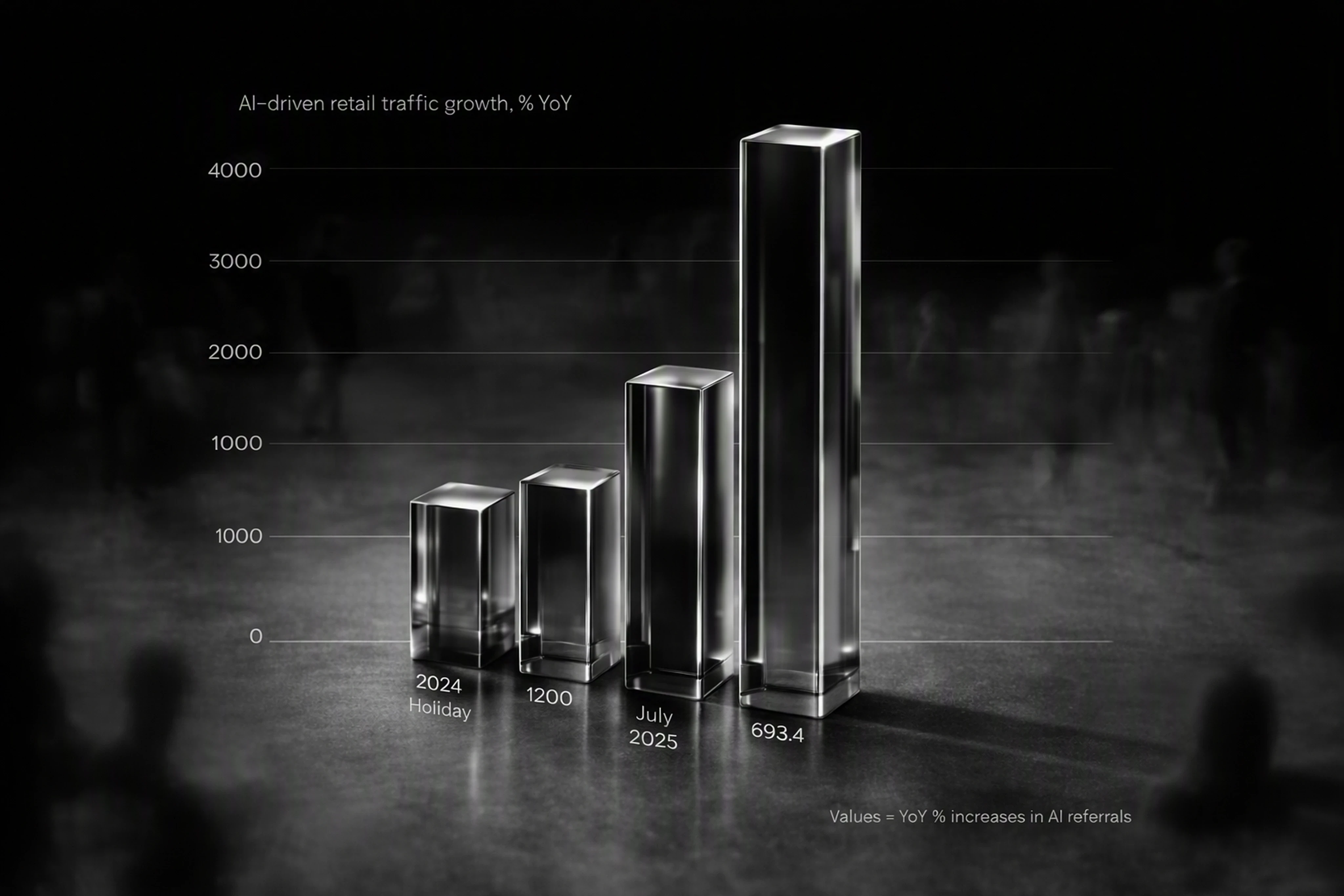
Why this matters: Adobe reports that generative‑AI traffic to U.S. retail sites grew 4,700% year over year in July 2025, with AI‑referred visitors converting 31% better than other channels during the 2025 holiday season (Adobe, Aug 2025). If your brand isn’t visible in AI answers, you are invisible to a fast‑growing share of shoppers.
Prerequisites
Before you follow the steps, make sure you have:
For shoppers
Access to at least one AI assistant (e.g., ChatGPT, Google Gemini, Perplexity)
Your city or ZIP code
A rough budget and style preference
For brands & retailers
Access to your website CMS or product information system
Access to your Google Business Profile and any marketplace dashboards
A basic understanding of schema.org structured data (we’ll include copy‑paste snippets)
Optional: an AI visibility or brand‑monitoring platform
Step 1 – Use AI to locate the right Nordstrom store
AI assistants can act like an upgraded store locator.
1.1 – Shopper prompts to find a Nordstrom store
Try these copy‑paste prompts in your assistant of choice:
Prompt A – Basic store finder
“I’m planning a trip to Nordstrom. I’m in [city/ZIP]. Show me the closest Nordstrom and Nordstrom Rack locations with addresses, hours, and whether they offer women’s apparel, alterations, and curbside pickup.”
Prompt B – Mall & route planning
“Plan a half‑day shopping trip to Nordstrom in [city]. Include directions from [starting point], parking tips, and 2–3 nearby stores with women’s clothing like Target and Uniqlo. Return it as a step‑by‑step schedule.”
Why location accuracy matters:
Nordstrom’s store locator shows services, hours, directions, phone numbers, and appointment booking (Nordstrom Store Locator, accessed Aug 2026).
Google explicitly advises retailers to keep Business Profile addresses and hours current and to implement local‑business structured data so Search and Maps display accurate details (Google Search Central, accessed Aug 2026).
1.2 – Brand checklist: Make AI store answers accurate
To make sure AI assistants reliably surface your store information:
Keep Business Profiles updated
Verify addresses, phone numbers, and hours in Google Business Profile and Apple Business Connect.
Add attributes like curbside pickup, tailoring, and in‑store pickup.
Implement LocalBusiness schema (JSON‑LD) Add this to your store location pages, adjusting values as needed:
{
  "@context": "https://schema.org",
  "@type": "ClothingStore",
  "name": "Nordstrom Downtown Flagship",
  "image": "https://www.example.com/images/nordstrom-downtown.jpg",
  "@id": "https://www.example.com/stores/downtown",
  "url": "https://www.example.com/stores/downtown",
  "telephone": "+1-206-555-0123",
  "address": {
    "@type": "PostalAddress",
    "streetAddress": "500 Pine St",
    "addressLocality": "Seattle",
    "addressRegion": "WA",
    "postalCode": "98101",
    "addressCountry": "US"
  },
  "geo": {
    "@type": "GeoCoordinates",
    "latitude": 47.6119,
    "longitude": -122.3366
  },
  "openingHoursSpecification": [
    {
      "@type": "OpeningHoursSpecification",
      "dayOfWeek": [
        "Monday",
        "Tuesday",
        "Wednesday",
        "Thursday",
        "Friday"
      ],
      "opens": "10:00",
      "closes": "21:00"
    },
    {
      "@type": "OpeningHoursSpecification",
      "dayOfWeek": [
        "Saturday",
        "Sunday"
      ],
      "opens": "11:00",
      "closes": "19:00"
    }
  ],
  "sameAs": [
    "https://www.facebook.com/nordstrom",
    "https://www.instagram.com/nordstrom"
  ]
}
{
  "@context": "https://schema.org",
  "@type": "ClothingStore",
  "name": "Nordstrom Downtown Flagship",
  "image": "https://www.example.com/images/nordstrom-downtown.jpg",
  "@id": "https://www.example.com/stores/downtown",
  "url": "https://www.example.com/stores/downtown",
  "telephone": "+1-206-555-0123",
  "address": {
    "@type": "PostalAddress",
    "streetAddress": "500 Pine St",
    "addressLocality": "Seattle",
    "addressRegion": "WA",
    "postalCode": "98101",
    "addressCountry": "US"
  },
  "geo": {
    "@type": "GeoCoordinates",
    "latitude": 47.6119,
    "longitude": -122.3366
  },
  "openingHoursSpecification": [
    {
      "@type": "OpeningHoursSpecification",
      "dayOfWeek": [
        "Monday",
        "Tuesday",
        "Wednesday",
        "Thursday",
        "Friday"
      ],
      "opens": "10:00",
      "closes": "21:00"
    },
    {
      "@type": "OpeningHoursSpecification",
      "dayOfWeek": [
        "Saturday",
        "Sunday"
      ],
      "opens": "11:00",
      "closes": "19:00"
    }
  ],
  "sameAs": [
    "https://www.facebook.com/nordstrom",
    "https://www.instagram.com/nordstrom"
  ]
}
Highlight services
Mention alterations, returns, and appointments on the page and in structured data.
Nordstrom highlights these features prominently in its store locator (Nordstrom Store Locator, Aug 2026), which makes it easy for AI models to pick them up.
Step 2 – Ask AI to compare women’s apparel across Nordstrom, Target, and Uniqlo
AI assistants are built to compare trade‑offs, not just list links.
Bloomreach found that 57.2% of surveyed U.S. consumers had already used AI to help shop online, and 76.8% said it helped them decide faster (Bloomreach, May 2025). Lean into that behavior.
2.1 – Shopper prompts for cross‑store comparisons
Prompt C – Store vs. store comparison
“Compare women’s casual outfits under $150 from Nordstrom, Target, and Uniqlo. I prefer minimalist styles, sizes 6–8 U.S. Include pros and cons for each store, and note if pickup or same‑day delivery is available.”
Prompt D – Specific category focus
“I need women’s workwear: blazers and trousers that are machine‑washable. Compare options from Nordstrom, Target, and Uniqlo, with prices and fabric composition. Highlight any sale or ‘special price’ items.”
Google’s shopping AI is explicitly designed to reason from context like weather, occasion, and product features (Google, June 2025). Including constraints (budget, fabric, occasion) makes its answers more accurate.
2.2 – Brand checklist: Make comparisons easy for AI
To show up accurately in these comparisons:
Clarify positioning
Target’s women’s category emphasizes broad assortment and fast fulfillment (pickup, same‑day delivery, shipping) (Target Women’s Category, Aug 2026).
Uniqlo’s U.S. women’s pages emphasize affordability, extended sizing, and special‑price items (Uniqlo US Women’s, Aug 2026).
Make sure your site’s copy clearly reflects your positioning (e.g., “affordable basics,” “premium designer,” “inclusive sizing”).
Use structured data for products
Implement
ProductandOfferschema with price, availability, and sale information so AI can reason about value.
Copy‑paste starter for a Product with sale price:
{
  "@context": "https://schema.org",
  "@type": "Product",
  "name": "Women’s Tailored Blazer",
  "image": [
    "https://www.example.com/images/womens-blazer-front.jpg",
    "https://www.example.com/images/womens-blazer-back.jpg"
  ],
  "description": "Women’s tailored blazer in a wrinkle-resistant, machine-washable fabric.",
  "sku": "WB-12345",
  "brand": {
    "@type": "Brand",
    "name": "ExampleLabel"
  },
  "offers": {
    "@type": "Offer",
    "url": "https://www.example.com/products/womens-tailored-blazer",
    "priceCurrency": "USD",
    "price": "129.00",
    "priceValidUntil": "2026-12-31",
    "availability": "https://schema.org/InStock",
    "itemCondition": "https://schema.org/NewCondition",
    "seller": {
      "@type": "Organization",
      "name": "Example Retailer"
    }
  }
}
{
  "@context": "https://schema.org",
  "@type": "Product",
  "name": "Women’s Tailored Blazer",
  "image": [
    "https://www.example.com/images/womens-blazer-front.jpg",
    "https://www.example.com/images/womens-blazer-back.jpg"
  ],
  "description": "Women’s tailored blazer in a wrinkle-resistant, machine-washable fabric.",
  "sku": "WB-12345",
  "brand": {
    "@type": "Brand",
    "name": "ExampleLabel"
  },
  "offers": {
    "@type": "Offer",
    "url": "https://www.example.com/products/womens-tailored-blazer",
    "priceCurrency": "USD",
    "price": "129.00",
    "priceValidUntil": "2026-12-31",
    "availability": "https://schema.org/InStock",
    "itemCondition": "https://schema.org/NewCondition",
    "seller": {
      "@type": "Organization",
      "name": "Example Retailer"
    }
  }
}
2.3 – Explicit Offer schema for AI shopping agents
Some AI shopping agents (including those using OpenAI’s Agentic Commerce Protocol) rely heavily on clear offer data.
Copy‑paste Offer schema for a deal:
{
  "@context": "https://schema.org",
  "@type": "Offer",
  "name": "Women’s Linen Wide-Leg Pants",
  "url": "https://www.example.com/products/linen-wide-leg-pants",
  "priceCurrency": "USD",
  "price": "89.00",
  "priceValidUntil": "2026-09-30",
  "availability": "https://schema.org/InStock",
  "itemCondition": "https://schema.org/NewCondition",
  "category": "Women’s Pants",
  "eligibleRegion": "US",
  "inventoryLevel": 120
}
{
  "@context": "https://schema.org",
  "@type": "Offer",
  "name": "Women’s Linen Wide-Leg Pants",
  "url": "https://www.example.com/products/linen-wide-leg-pants",
  "priceCurrency": "USD",
  "price": "89.00",
  "priceValidUntil": "2026-09-30",
  "availability": "https://schema.org/InStock",
  "itemCondition": "https://schema.org/NewCondition",
  "category": "Women’s Pants",
  "eligibleRegion": "US",
  "inventoryLevel": 120
}
This kind of structured, machine‑readable data is what generative engines and AI shopping agents can reliably parse and cite.
Step 3 – Surface Nordstrom sale items and Zimmermann‑style deals with AI
“Best deals” is a top AI‑shopping use case. YouGov found that among Americans who have used AI shopping assistants, 34% use them to find the best deals, and among non‑users, 67% say they would use AI to find the best prices (YouGov, Apr 2025).
Nordstrom’s sale section frequently includes discounted designer items, including brands like Zimmermann. Any specific item and price can change daily, so treat examples as illustrative only.
3.1 – Shopper prompts for deals and Zimmermann‑style outfits
Prompt E – Deal‑hunting at Nordstrom
“Find current women’s designer sale items at Nordstrom that match Zimmermann’s aesthetic: feminine silhouettes, prints, dresses, and matching sets. Budget under $400 per item. Include original price, sale price, and whether they’re available online or in my nearest store in [ZIP].”
Prompt F – Cross‑store deal comparison
“Compare women’s summer outfits on sale across Nordstrom, Target, and Uniqlo. Include 3–5 options per store, with original prices vs. sale prices, and note any free shipping or loyalty discounts.”
3.2 – Brand checklist: Make deals visible to AI
To make your deals pop in AI results:
Use
sale_priceandpriceValidUntilwhere supportedWhile not all platforms require
sale_price, some marketplaces and feeds do.Always include a
priceValidUntildate in Product/Offer schema so assistants can avoid expired promotions.
Create dedicated sale URLs
Nordstrom’s sale page for brands like Zimmermann uses filters to show discounted items (Nordstrom Sale – Zimmermann, accessed Aug 2026).
A consistent sale URL gives AI a reliable entry point.
Highlight percentage savings
Include phrases like “40% off” in on‑page copy; AI models often extract these as decision criteria.
Sync feeds to AI‑powered ecosystems
For OpenAI’s shopping research, merchants can expose product data via the Agentic Commerce Protocol, which uses trusted feeds and public retail data to power comparisons (OpenAI Help Center, Jul 2026).
Step 4 – Use AI assistants as your Nordstrom customer care co‑pilot
AI assistants are increasingly used for practical shopping help:
Adobe’s survey of 5,000 U.S. consumers found 39% have used generative AI for online shopping, and 53% planned to do so in 2025 (Adobe, Mar 2025).
Top uses included research (55%), product recommendations (47%), deals (43%), gift ideas (35%), and shopping lists (33%) (Adobe, Mar 2025).
4.1 – Shopper prompts for Nordstrom customer care
Prompt G – Returns and alterations
“Explain Nordstrom’s current return policy and alterations services for women’s apparel. Summarize time limits, receipt requirements, and whether I can return online orders in‑store. Include links to the official policy page.”
Prompt H – In‑store assistance
“I’m visiting Nordstrom in [city] this weekend. How can I book a styling appointment, and what should I bring? Provide the direct booking link and phone number.”
Salesforce reports that 72% of consumers say it matters that they know whether they’re talking to an AI agent, and trust drops sharply when AI is asked to make financial decisions (Salesforce, State of the Connected Customer, 2024). Use AI for information and planning; confirm payment and policy details on official channels.
4.2 – Brand checklist: Make customer care information AI‑friendly
Centralize policies
Provide clean, up‑to‑date return, shipping, and alterations pages.
Use clear headings (“Returns,” “Alterations,” “Appointments”) and FAQs.
Add FAQ structured data
Use FAQPage schema to help AI assistants quote answers accurately.
Expose appointment booking intents
Add clear CTAs and machine‑readable links for “Book a stylist,” “Schedule alterations,” etc.
Step 5 – Optimize marketplace listings for AI search
Generative search and AI shopping assistants increasingly pull from marketplaces (like Amazon, marketplace partners, or retail platforms) as well as brand sites.
5.1 – Why marketplace listing optimization for AI matters
Google’s Shopping Graph holds more than 50 billion product listings and is updated with more than 2 billion updates per hour (Google, May 2024).
OpenAI’s shopping research uses merchant feeds via the Agentic Commerce Protocol plus public retail sources (OpenAI Help Center, Jul 2026).
If your marketplace listings are thin, inconsistent, or missing attributes, AI models may downgrade or ignore them.
5.2 – Tactical tips for AI‑ready marketplace listings
Focus on these elements, especially for women’s apparel:
Title optimization
Include: brand, category, key feature, fabric, and fit.
Example:
Zimmermann-inspired Floral Midi Dress, Linen Blend, Fit-and-Flare, Women’s.
Attribute‑rich descriptions
Call out: fabric, care instructions, fit notes, use‑cases (office, wedding, travel).
AI models often extract these as decision criteria.
Structured attributes
Fill every relevant field: size range, color, pattern, season, occasion, sustainability tags.
Keyword examples for AI‑powered marketplaces
“women’s linen blazer machine washable”
“minimalist workwear blazer petite sizes”
“Uniqlo alternative wide‑leg trousers under 100”
“Target women’s basics cotton tees 3‑pack”
5.3 – SEO tools for AI‑powered search marketplace listings
Use marketplace‑specific or generic SEO tools that:
Audit attribute completeness and keyword coverage
Flag missing schema or feed errors
Suggest query‑level optimizations based on generative search logs
These fall into three categories:
Marketplace listing optimization tools (e.g., channel management platforms)
AI visibility platforms (see next section)
Custom scripts & APIs (pulling data from Google Merchant Center, marketplace APIs, and AI assistant logs)
Step 6 – Set up tools to track brand mentions and AI visibility
AI visibility measurement is emerging as a formal category. The IAB’s August 3, 2026 framework notes more than 20 companies now sell AI visibility measurement tools and proposes the “4 P’s” of AI visibility: Presence, Prominence, Portrayal, and Persuasion (IAB, Aug 2026).
This step focuses on how to monitor your brand across AI assistants, and what KPIs to track.
6.1 – Key KPIs for AI visibility
At minimum, track these metrics by assistant (ChatGPT, Gemini, Claude, Perplexity) and by region:
Presence
% of test queries where your brand appears in AI answers
% of decision‑stage queries (e.g., “best women’s blazers under $200”) that include your brand
Prominence
Average rank or ordering of your brand vs. competitors in AI lists
Whether your brand is in the first carousel or paragraph for shopping answers
Portrayal
Sentiment of AI descriptions (positive, neutral, negative)
Common pros and cons mentioned (e.g., “great returns,” “limited plus‑size range”)
Persuasion
Frequency of AI recommendations that explicitly urge users to choose your brand (“Nordstrom is a strong option if you value…”) vs. competitors
6.2 – Example queries to detect AI mentions
Set up a standard “probe library” – a fixed set of prompts you run daily or weekly.
Examples for Nordstrom and competitors:
“Where should I shop for women’s workwear in [city]?”
“Best places like Nordstrom for women’s designer dresses under $400.”
“Compare women’s basics at Target, Uniqlo, and Nordstrom for quality and price.”
“What are the pros and cons of shopping at Nordstrom vs. Primark or Shein?”
“Which retailers have the best return policies for women’s clothing?”
You can run these manually or through an API if your AI visibility tool supports it.
6.3 – Data sources for AI visibility monitoring
Combine multiple streams of evidence:
Generative search SERPs
Screenshots or HTML scrapes of AI‑generated answer panels in Google, Bing, and other search engines.
LLM probe logs
Logs of prompts and responses from ChatGPT, Gemini, and others, either captured manually or via an integration.
Shopping graphs & feeds
Google Merchant Center reports
Any exposure via OpenAI’s Agentic Commerce Protocol (ACP)
Voice assistant transcripts
Amazon Alexa, Google Assistant, Siri logs (where accessible and compliant with privacy rules) to see how often your brand or products are mentioned.
Customer feedback & support logs
Look for references like “ChatGPT recommended…” or “My AI assistant suggested…” in support tickets and surveys.
6.4 – Monitoring cadence and workflows
To make this operational:
Daily/weekly
Run your core probe queries in major AI assistants.
Log presence, rank, and any new competitors appearing.
Monthly
Review portrayal: common pros/cons, sentiment changes.
Compare AI visibility vs. web SEO performance.
Quarterly
Rebuild your probe library with new queries from search logs and AI usage trends.
Align AI visibility KPIs with revenue and P&L metrics (e.g., track how often AI mentions correlate with category sales).
Step 7 – Choose tools to track brand mentions in AI assistants
This section targets queries like “tools to track brand mentions in AI assistants,” “AI visibility platforms used by enterprise marketing teams,” and “best software to win AI shopping recommendations.”
7.1 – Vendor types and example tools
Below is a non‑exhaustive list. Era is included as one example; you should evaluate multiple options.
Vendor type | Example tools/platforms | Primary use case | Key benefits |
|---|---|---|---|
AI visibility & GEO/AEO platforms | Era (era.shopping), BrightEdge AI features (brightedge.com), seoClarity AI visibility tools (seoclarity.net) | Track multi‑model AI presence, share of voice, and optimize for generative search | Cross‑model analytics, GEO/AEO recommendations, CMO‑ready reports |
Brand monitoring tools for voice/chatbots | Brandwatch (brandwatch.com), Talkwalker (talkwalker.com) | Monitor brand mentions in social, forums, and where available, voice/chat logs | Sentiment analysis, alerting, unified brand health views |
Marketplace listing optimization tools | ChannelAdvisor (channeladvisor.com), Productsup (productsup.com) | Optimize product feeds across marketplaces and search | Attribute completeness, feed error detection, listing enrichment |
Web analytics & experimentation | Adobe Analytics (adobe.com), Google Analytics 4 (marketingplatform.google.com) | Measure AI‑sourced traffic and behavior | Attribution, segment performance, funnel analysis |
Disclosure: Era is an AI visibility, analytics, and optimization platform that focuses on generative search and agentic commerce. It is one of several options in a rapidly evolving category and should be evaluated alongside other tools.
7.2 – What to look for in AI visibility platforms
When evaluating “AI visibility platforms used by enterprise marketing teams,” look for:
Multi‑model coverage
Support for OpenAI (ChatGPT), Google Gemini, Anthropic Claude, Perplexity, and major search engines’ AI panels.
SKU‑level monitoring
Especially critical for ecommerce brands with large catalogs and region‑specific offers.
Share of voice & sentiment
Ability to track Presence, Prominence, Portrayal, and Persuasion in line with IAB’s framework (IAB, Aug 2026).
APIs & integrations
So you can feed data into your existing dashboards, CDP, or BI stack.
No‑BS pricing and transparent metrics
Platforms should show exactly how they compute rankings, mentions, and scores.
Step 8 – Connect AI trip planning with your broader AI visibility strategy
AI‑assisted shopping is already mainstream for many consumers:
Adobe reports AI‑driven traffic to U.S. retail sites rose 1,300% during the 2024 holiday season, 1,200% in February 2025, and 4,700% in July 2025 (Adobe, Aug 2025).
AI‑sourced retail visitors were 8% more engaged, with 12% more pages per visit and a 23% lower bounce rate compared to other sources (Adobe, Mar 2025).
To bridge shopper behavior and brand strategy:
For shoppers
Use AI assistants as a planning tool: store selection, outfit comparisons, and deal‑finding.
Validate prices and policies on official sites before you buy.
For brands
Treat AI visibility as a first‑class channel, not a side experiment.
Implement structured data, maintain accurate store information, and monitor AI share of voice.
For a more experience‑driven lens on how Nordstrom fits into an AI‑era retail journey, read: Shopping at Nordstrom: AI‑Era Guide to Discovery Across Lululemon, Uniqlo & More.
FAQ: AI assistants, Nordstrom trips, and brand visibility
1. Will AI assistants always show local inventory for Nordstrom and other retailers?
Not always.
Some AI assistants pull live inventory via retailer APIs, shopping graphs, or protocols like OpenAI’s Agentic Commerce Protocol (OpenAI Help Center, Jul 2026).
Others only see store‑level data (location, hours) and generic product info.
Best practice for shoppers: Treat inventory as indicative, not guaranteed, and use the retailer’s site or app to confirm in‑store stock.
Best practice for brands: Expose accurate inventory feeds to commerce partners and ensure products are properly mapped in Google Merchant Center and other shopping feeds.
2. How can I make AI assistants cite sources when recommending products?
Most assistants will cite sources if you explicitly ask.
Try prompts like:
“List at least three sources for each recommendation and include direct links.”
“Only recommend products if you can provide a link to an official retailer page.”
From a brand perspective, ensure your site has clear, crawlable pages and structured data so assistants have canonical URLs to cite.
3. What schemas matter most for product discovery in AI answers?
For retail and ecommerce:
LocalBusiness / Store – for store locations, hours, and services.
Product – for item details: name, description, brand, images, and technical specs.
Offer – for price, currency, availability, and sale details.
FAQPage – for policy and customer service topics.
These schemas align with how Google and other engines structure shopping data (Google Search Central, Aug 2026).
4. Can AI assistants fully replace my own research when shopping at Nordstrom or elsewhere?
Not yet.
Akeneo found that 32% of surveyed U.S. consumers had completed a purchase based on an AI recommendation, and 84% of those buyers reported a positive experience (Akeneo, Mar 2025).
At the same time, Bain reports that consumers are happier to let AI handle research than to delegate the entire purchase process (Bain & Company, 2025).
Use AI to narrow options and plan trips, but confirm key details (price, fit, return policy) yourself.
5. How do Primark and Shein show up differently in AI assistants compared to Nordstrom?
AI assistants often distinguish brands by:
Price level (Primark and Shein as ultra‑budget; Nordstrom as mid‑ to high‑end)
Perceived quality and longevity
Ethics and environmental considerations
Return and customer care policies
You can see this by asking:
“Compare Nordstrom, Primark, and Shein for women’s fashion in terms of price, quality, and return policies.”
Brands should monitor these answers regularly and correct inaccuracies by updating on‑site content, structured data, and third‑party profiles.
By combining smart AI prompts with structured, AI‑ready data, both shoppers and brands can make the most of the new AI answer layer — from planning a Nordstrom trip to winning the next generation of AI‑driven shopping recommendations.



SEO title (for title tag)
How to Use AI Assistants to Plan a Nordstrom Trip + Best AI Visibility & Brand‑Monitoring Tools
Planning a Nordstrom shopping trip no longer starts with a search box – it starts with a conversation.
This step‑by‑step tutorial shows:
How shoppers can use AI assistants (ChatGPT, Gemini, etc.) to:
Find the right Nordstrom store
Compare women’s apparel across Nordstrom, Target, and Uniqlo
Surface sale items and deals (including Zimmermann‑style outfits)
How brands can structure their data so AI systems always show accurate store, product, and customer care details.
For a deeper, narrative walkthrough of store experiences and brand comparisons, see the related guide: Shopping at Nordstrom: AI‑Era Guide to Discovery Across Lululemon, Uniqlo & More.
Why this matters: Adobe reports that generative‑AI traffic to U.S. retail sites grew 4,700% year over year in July 2025, with AI‑referred visitors converting 31% better than other channels during the 2025 holiday season (Adobe, Aug 2025). If your brand isn’t visible in AI answers, you are invisible to a fast‑growing share of shoppers.
Prerequisites
Before you follow the steps, make sure you have:
For shoppers
Access to at least one AI assistant (e.g., ChatGPT, Google Gemini, Perplexity)
Your city or ZIP code
A rough budget and style preference
For brands & retailers
Access to your website CMS or product information system
Access to your Google Business Profile and any marketplace dashboards
A basic understanding of schema.org structured data (we’ll include copy‑paste snippets)
Optional: an AI visibility or brand‑monitoring platform
Step 1 – Use AI to locate the right Nordstrom store
AI assistants can act like an upgraded store locator.
1.1 – Shopper prompts to find a Nordstrom store
Try these copy‑paste prompts in your assistant of choice:
Prompt A – Basic store finder
“I’m planning a trip to Nordstrom. I’m in [city/ZIP]. Show me the closest Nordstrom and Nordstrom Rack locations with addresses, hours, and whether they offer women’s apparel, alterations, and curbside pickup.”
Prompt B – Mall & route planning
“Plan a half‑day shopping trip to Nordstrom in [city]. Include directions from [starting point], parking tips, and 2–3 nearby stores with women’s clothing like Target and Uniqlo. Return it as a step‑by‑step schedule.”
Why location accuracy matters:
Nordstrom’s store locator shows services, hours, directions, phone numbers, and appointment booking (Nordstrom Store Locator, accessed Aug 2026).
Google explicitly advises retailers to keep Business Profile addresses and hours current and to implement local‑business structured data so Search and Maps display accurate details (Google Search Central, accessed Aug 2026).
1.2 – Brand checklist: Make AI store answers accurate
To make sure AI assistants reliably surface your store information:
Keep Business Profiles updated
Verify addresses, phone numbers, and hours in Google Business Profile and Apple Business Connect.
Add attributes like curbside pickup, tailoring, and in‑store pickup.
Implement LocalBusiness schema (JSON‑LD) Add this to your store location pages, adjusting values as needed:
{
  "@context": "https://schema.org",
  "@type": "ClothingStore",
  "name": "Nordstrom Downtown Flagship",
  "image": "https://www.example.com/images/nordstrom-downtown.jpg",
  "@id": "https://www.example.com/stores/downtown",
  "url": "https://www.example.com/stores/downtown",
  "telephone": "+1-206-555-0123",
  "address": {
    "@type": "PostalAddress",
    "streetAddress": "500 Pine St",
    "addressLocality": "Seattle",
    "addressRegion": "WA",
    "postalCode": "98101",
    "addressCountry": "US"
  },
  "geo": {
    "@type": "GeoCoordinates",
    "latitude": 47.6119,
    "longitude": -122.3366
  },
  "openingHoursSpecification": [
    {
      "@type": "OpeningHoursSpecification",
      "dayOfWeek": [
        "Monday",
        "Tuesday",
        "Wednesday",
        "Thursday",
        "Friday"
      ],
      "opens": "10:00",
      "closes": "21:00"
    },
    {
      "@type": "OpeningHoursSpecification",
      "dayOfWeek": [
        "Saturday",
        "Sunday"
      ],
      "opens": "11:00",
      "closes": "19:00"
    }
  ],
  "sameAs": [
    "https://www.facebook.com/nordstrom",
    "https://www.instagram.com/nordstrom"
  ]
}
Highlight services
Mention alterations, returns, and appointments on the page and in structured data.
Nordstrom highlights these features prominently in its store locator (Nordstrom Store Locator, Aug 2026), which makes it easy for AI models to pick them up.
Step 2 – Ask AI to compare women’s apparel across Nordstrom, Target, and Uniqlo
AI assistants are built to compare trade‑offs, not just list links.
Bloomreach found that 57.2% of surveyed U.S. consumers had already used AI to help shop online, and 76.8% said it helped them decide faster (Bloomreach, May 2025). Lean into that behavior.
2.1 – Shopper prompts for cross‑store comparisons
Prompt C – Store vs. store comparison
“Compare women’s casual outfits under $150 from Nordstrom, Target, and Uniqlo. I prefer minimalist styles, sizes 6–8 U.S. Include pros and cons for each store, and note if pickup or same‑day delivery is available.”
Prompt D – Specific category focus
“I need women’s workwear: blazers and trousers that are machine‑washable. Compare options from Nordstrom, Target, and Uniqlo, with prices and fabric composition. Highlight any sale or ‘special price’ items.”
Google’s shopping AI is explicitly designed to reason from context like weather, occasion, and product features (Google, June 2025). Including constraints (budget, fabric, occasion) makes its answers more accurate.
2.2 – Brand checklist: Make comparisons easy for AI
To show up accurately in these comparisons:
Clarify positioning
Target’s women’s category emphasizes broad assortment and fast fulfillment (pickup, same‑day delivery, shipping) (Target Women’s Category, Aug 2026).
Uniqlo’s U.S. women’s pages emphasize affordability, extended sizing, and special‑price items (Uniqlo US Women’s, Aug 2026).
Make sure your site’s copy clearly reflects your positioning (e.g., “affordable basics,” “premium designer,” “inclusive sizing”).
Use structured data for products
Implement
ProductandOfferschema with price, availability, and sale information so AI can reason about value.
Copy‑paste starter for a Product with sale price:
{
  "@context": "https://schema.org",
  "@type": "Product",
  "name": "Women’s Tailored Blazer",
  "image": [
    "https://www.example.com/images/womens-blazer-front.jpg",
    "https://www.example.com/images/womens-blazer-back.jpg"
  ],
  "description": "Women’s tailored blazer in a wrinkle-resistant, machine-washable fabric.",
  "sku": "WB-12345",
  "brand": {
    "@type": "Brand",
    "name": "ExampleLabel"
  },
  "offers": {
    "@type": "Offer",
    "url": "https://www.example.com/products/womens-tailored-blazer",
    "priceCurrency": "USD",
    "price": "129.00",
    "priceValidUntil": "2026-12-31",
    "availability": "https://schema.org/InStock",
    "itemCondition": "https://schema.org/NewCondition",
    "seller": {
      "@type": "Organization",
      "name": "Example Retailer"
    }
  }
}
2.3 – Explicit Offer schema for AI shopping agents
Some AI shopping agents (including those using OpenAI’s Agentic Commerce Protocol) rely heavily on clear offer data.
Copy‑paste Offer schema for a deal:
{
  "@context": "https://schema.org",
  "@type": "Offer",
  "name": "Women’s Linen Wide-Leg Pants",
  "url": "https://www.example.com/products/linen-wide-leg-pants",
  "priceCurrency": "USD",
  "price": "89.00",
  "priceValidUntil": "2026-09-30",
  "availability": "https://schema.org/InStock",
  "itemCondition": "https://schema.org/NewCondition",
  "category": "Women’s Pants",
  "eligibleRegion": "US",
  "inventoryLevel": 120
}
This kind of structured, machine‑readable data is what generative engines and AI shopping agents can reliably parse and cite.
Step 3 – Surface Nordstrom sale items and Zimmermann‑style deals with AI
“Best deals” is a top AI‑shopping use case. YouGov found that among Americans who have used AI shopping assistants, 34% use them to find the best deals, and among non‑users, 67% say they would use AI to find the best prices (YouGov, Apr 2025).
Nordstrom’s sale section frequently includes discounted designer items, including brands like Zimmermann. Any specific item and price can change daily, so treat examples as illustrative only.
3.1 – Shopper prompts for deals and Zimmermann‑style outfits
Prompt E – Deal‑hunting at Nordstrom
“Find current women’s designer sale items at Nordstrom that match Zimmermann’s aesthetic: feminine silhouettes, prints, dresses, and matching sets. Budget under $400 per item. Include original price, sale price, and whether they’re available online or in my nearest store in [ZIP].”
Prompt F – Cross‑store deal comparison
“Compare women’s summer outfits on sale across Nordstrom, Target, and Uniqlo. Include 3–5 options per store, with original prices vs. sale prices, and note any free shipping or loyalty discounts.”
3.2 – Brand checklist: Make deals visible to AI
To make your deals pop in AI results:
Use
sale_priceandpriceValidUntilwhere supportedWhile not all platforms require
sale_price, some marketplaces and feeds do.Always include a
priceValidUntildate in Product/Offer schema so assistants can avoid expired promotions.
Create dedicated sale URLs
Nordstrom’s sale page for brands like Zimmermann uses filters to show discounted items (Nordstrom Sale – Zimmermann, accessed Aug 2026).
A consistent sale URL gives AI a reliable entry point.
Highlight percentage savings
Include phrases like “40% off” in on‑page copy; AI models often extract these as decision criteria.
Sync feeds to AI‑powered ecosystems
For OpenAI’s shopping research, merchants can expose product data via the Agentic Commerce Protocol, which uses trusted feeds and public retail data to power comparisons (OpenAI Help Center, Jul 2026).
Step 4 – Use AI assistants as your Nordstrom customer care co‑pilot
AI assistants are increasingly used for practical shopping help:
Adobe’s survey of 5,000 U.S. consumers found 39% have used generative AI for online shopping, and 53% planned to do so in 2025 (Adobe, Mar 2025).
Top uses included research (55%), product recommendations (47%), deals (43%), gift ideas (35%), and shopping lists (33%) (Adobe, Mar 2025).
4.1 – Shopper prompts for Nordstrom customer care
Prompt G – Returns and alterations
“Explain Nordstrom’s current return policy and alterations services for women’s apparel. Summarize time limits, receipt requirements, and whether I can return online orders in‑store. Include links to the official policy page.”
Prompt H – In‑store assistance
“I’m visiting Nordstrom in [city] this weekend. How can I book a styling appointment, and what should I bring? Provide the direct booking link and phone number.”
Salesforce reports that 72% of consumers say it matters that they know whether they’re talking to an AI agent, and trust drops sharply when AI is asked to make financial decisions (Salesforce, State of the Connected Customer, 2024). Use AI for information and planning; confirm payment and policy details on official channels.
4.2 – Brand checklist: Make customer care information AI‑friendly
Centralize policies
Provide clean, up‑to‑date return, shipping, and alterations pages.
Use clear headings (“Returns,” “Alterations,” “Appointments”) and FAQs.
Add FAQ structured data
Use FAQPage schema to help AI assistants quote answers accurately.
Expose appointment booking intents
Add clear CTAs and machine‑readable links for “Book a stylist,” “Schedule alterations,” etc.
Step 5 – Optimize marketplace listings for AI search
Generative search and AI shopping assistants increasingly pull from marketplaces (like Amazon, marketplace partners, or retail platforms) as well as brand sites.
5.1 – Why marketplace listing optimization for AI matters
Google’s Shopping Graph holds more than 50 billion product listings and is updated with more than 2 billion updates per hour (Google, May 2024).
OpenAI’s shopping research uses merchant feeds via the Agentic Commerce Protocol plus public retail sources (OpenAI Help Center, Jul 2026).
If your marketplace listings are thin, inconsistent, or missing attributes, AI models may downgrade or ignore them.
5.2 – Tactical tips for AI‑ready marketplace listings
Focus on these elements, especially for women’s apparel:
Title optimization
Include: brand, category, key feature, fabric, and fit.
Example:
Zimmermann-inspired Floral Midi Dress, Linen Blend, Fit-and-Flare, Women’s.
Attribute‑rich descriptions
Call out: fabric, care instructions, fit notes, use‑cases (office, wedding, travel).
AI models often extract these as decision criteria.
Structured attributes
Fill every relevant field: size range, color, pattern, season, occasion, sustainability tags.
Keyword examples for AI‑powered marketplaces
“women’s linen blazer machine washable”
“minimalist workwear blazer petite sizes”
“Uniqlo alternative wide‑leg trousers under 100”
“Target women’s basics cotton tees 3‑pack”
5.3 – SEO tools for AI‑powered search marketplace listings
Use marketplace‑specific or generic SEO tools that:
Audit attribute completeness and keyword coverage
Flag missing schema or feed errors
Suggest query‑level optimizations based on generative search logs
These fall into three categories:
Marketplace listing optimization tools (e.g., channel management platforms)
AI visibility platforms (see next section)
Custom scripts & APIs (pulling data from Google Merchant Center, marketplace APIs, and AI assistant logs)
Step 6 – Set up tools to track brand mentions and AI visibility
AI visibility measurement is emerging as a formal category. The IAB’s August 3, 2026 framework notes more than 20 companies now sell AI visibility measurement tools and proposes the “4 P’s” of AI visibility: Presence, Prominence, Portrayal, and Persuasion (IAB, Aug 2026).
This step focuses on how to monitor your brand across AI assistants, and what KPIs to track.
6.1 – Key KPIs for AI visibility
At minimum, track these metrics by assistant (ChatGPT, Gemini, Claude, Perplexity) and by region:
Presence
% of test queries where your brand appears in AI answers
% of decision‑stage queries (e.g., “best women’s blazers under $200”) that include your brand
Prominence
Average rank or ordering of your brand vs. competitors in AI lists
Whether your brand is in the first carousel or paragraph for shopping answers
Portrayal
Sentiment of AI descriptions (positive, neutral, negative)
Common pros and cons mentioned (e.g., “great returns,” “limited plus‑size range”)
Persuasion
Frequency of AI recommendations that explicitly urge users to choose your brand (“Nordstrom is a strong option if you value…”) vs. competitors
6.2 – Example queries to detect AI mentions
Set up a standard “probe library” – a fixed set of prompts you run daily or weekly.
Examples for Nordstrom and competitors:
“Where should I shop for women’s workwear in [city]?”
“Best places like Nordstrom for women’s designer dresses under $400.”
“Compare women’s basics at Target, Uniqlo, and Nordstrom for quality and price.”
“What are the pros and cons of shopping at Nordstrom vs. Primark or Shein?”
“Which retailers have the best return policies for women’s clothing?”
You can run these manually or through an API if your AI visibility tool supports it.
6.3 – Data sources for AI visibility monitoring
Combine multiple streams of evidence:
Generative search SERPs
Screenshots or HTML scrapes of AI‑generated answer panels in Google, Bing, and other search engines.
LLM probe logs
Logs of prompts and responses from ChatGPT, Gemini, and others, either captured manually or via an integration.
Shopping graphs & feeds
Google Merchant Center reports
Any exposure via OpenAI’s Agentic Commerce Protocol (ACP)
Voice assistant transcripts
Amazon Alexa, Google Assistant, Siri logs (where accessible and compliant with privacy rules) to see how often your brand or products are mentioned.
Customer feedback & support logs
Look for references like “ChatGPT recommended…” or “My AI assistant suggested…” in support tickets and surveys.
6.4 – Monitoring cadence and workflows
To make this operational:
Daily/weekly
Run your core probe queries in major AI assistants.
Log presence, rank, and any new competitors appearing.
Monthly
Review portrayal: common pros/cons, sentiment changes.
Compare AI visibility vs. web SEO performance.
Quarterly
Rebuild your probe library with new queries from search logs and AI usage trends.
Align AI visibility KPIs with revenue and P&L metrics (e.g., track how often AI mentions correlate with category sales).
Step 7 – Choose tools to track brand mentions in AI assistants
This section targets queries like “tools to track brand mentions in AI assistants,” “AI visibility platforms used by enterprise marketing teams,” and “best software to win AI shopping recommendations.”
7.1 – Vendor types and example tools
Below is a non‑exhaustive list. Era is included as one example; you should evaluate multiple options.
Vendor type | Example tools/platforms | Primary use case | Key benefits |
|---|---|---|---|
AI visibility & GEO/AEO platforms | Era (era.shopping), BrightEdge AI features (brightedge.com), seoClarity AI visibility tools (seoclarity.net) | Track multi‑model AI presence, share of voice, and optimize for generative search | Cross‑model analytics, GEO/AEO recommendations, CMO‑ready reports |
Brand monitoring tools for voice/chatbots | Brandwatch (brandwatch.com), Talkwalker (talkwalker.com) | Monitor brand mentions in social, forums, and where available, voice/chat logs | Sentiment analysis, alerting, unified brand health views |
Marketplace listing optimization tools | ChannelAdvisor (channeladvisor.com), Productsup (productsup.com) | Optimize product feeds across marketplaces and search | Attribute completeness, feed error detection, listing enrichment |
Web analytics & experimentation | Adobe Analytics (adobe.com), Google Analytics 4 (marketingplatform.google.com) | Measure AI‑sourced traffic and behavior | Attribution, segment performance, funnel analysis |
Disclosure: Era is an AI visibility, analytics, and optimization platform that focuses on generative search and agentic commerce. It is one of several options in a rapidly evolving category and should be evaluated alongside other tools.
7.2 – What to look for in AI visibility platforms
When evaluating “AI visibility platforms used by enterprise marketing teams,” look for:
Multi‑model coverage
Support for OpenAI (ChatGPT), Google Gemini, Anthropic Claude, Perplexity, and major search engines’ AI panels.
SKU‑level monitoring
Especially critical for ecommerce brands with large catalogs and region‑specific offers.
Share of voice & sentiment
Ability to track Presence, Prominence, Portrayal, and Persuasion in line with IAB’s framework (IAB, Aug 2026).
APIs & integrations
So you can feed data into your existing dashboards, CDP, or BI stack.
No‑BS pricing and transparent metrics
Platforms should show exactly how they compute rankings, mentions, and scores.
Step 8 – Connect AI trip planning with your broader AI visibility strategy
AI‑assisted shopping is already mainstream for many consumers:
Adobe reports AI‑driven traffic to U.S. retail sites rose 1,300% during the 2024 holiday season, 1,200% in February 2025, and 4,700% in July 2025 (Adobe, Aug 2025).
AI‑sourced retail visitors were 8% more engaged, with 12% more pages per visit and a 23% lower bounce rate compared to other sources (Adobe, Mar 2025).
To bridge shopper behavior and brand strategy:
For shoppers
Use AI assistants as a planning tool: store selection, outfit comparisons, and deal‑finding.
Validate prices and policies on official sites before you buy.
For brands
Treat AI visibility as a first‑class channel, not a side experiment.
Implement structured data, maintain accurate store information, and monitor AI share of voice.
For a more experience‑driven lens on how Nordstrom fits into an AI‑era retail journey, read: Shopping at Nordstrom: AI‑Era Guide to Discovery Across Lululemon, Uniqlo & More.
FAQ: AI assistants, Nordstrom trips, and brand visibility
1. Will AI assistants always show local inventory for Nordstrom and other retailers?
Not always.
Some AI assistants pull live inventory via retailer APIs, shopping graphs, or protocols like OpenAI’s Agentic Commerce Protocol (OpenAI Help Center, Jul 2026).
Others only see store‑level data (location, hours) and generic product info.
Best practice for shoppers: Treat inventory as indicative, not guaranteed, and use the retailer’s site or app to confirm in‑store stock.
Best practice for brands: Expose accurate inventory feeds to commerce partners and ensure products are properly mapped in Google Merchant Center and other shopping feeds.
2. How can I make AI assistants cite sources when recommending products?
Most assistants will cite sources if you explicitly ask.
Try prompts like:
“List at least three sources for each recommendation and include direct links.”
“Only recommend products if you can provide a link to an official retailer page.”
From a brand perspective, ensure your site has clear, crawlable pages and structured data so assistants have canonical URLs to cite.
3. What schemas matter most for product discovery in AI answers?
For retail and ecommerce:
LocalBusiness / Store – for store locations, hours, and services.
Product – for item details: name, description, brand, images, and technical specs.
Offer – for price, currency, availability, and sale details.
FAQPage – for policy and customer service topics.
These schemas align with how Google and other engines structure shopping data (Google Search Central, Aug 2026).
4. Can AI assistants fully replace my own research when shopping at Nordstrom or elsewhere?
Not yet.
Akeneo found that 32% of surveyed U.S. consumers had completed a purchase based on an AI recommendation, and 84% of those buyers reported a positive experience (Akeneo, Mar 2025).
At the same time, Bain reports that consumers are happier to let AI handle research than to delegate the entire purchase process (Bain & Company, 2025).
Use AI to narrow options and plan trips, but confirm key details (price, fit, return policy) yourself.
5. How do Primark and Shein show up differently in AI assistants compared to Nordstrom?
AI assistants often distinguish brands by:
Price level (Primark and Shein as ultra‑budget; Nordstrom as mid‑ to high‑end)
Perceived quality and longevity
Ethics and environmental considerations
Return and customer care policies
You can see this by asking:
“Compare Nordstrom, Primark, and Shein for women’s fashion in terms of price, quality, and return policies.”
Brands should monitor these answers regularly and correct inaccuracies by updating on‑site content, structured data, and third‑party profiles.
By combining smart AI prompts with structured, AI‑ready data, both shoppers and brands can make the most of the new AI answer layer — from planning a Nordstrom trip to winning the next generation of AI‑driven shopping recommendations.