July 29, 2026
July 29, 2026
How Women’s Boutiques Can Improve AI Visibility Across Major Online Retailers: Step‑by‑Step Guide
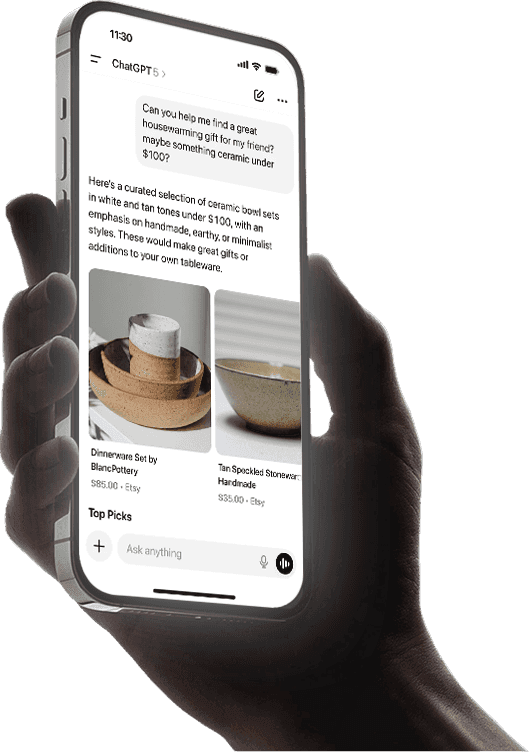
Women's online boutiques are increasingly discovered through AI shopping assistants rather than traditional search.
Women's online boutiques are increasingly discovered through AI shopping assistants rather than traditional search.
Overview: Why AI Visibility Now Matters for Women's Boutiques
Women's online boutiques are increasingly discovered through AI shopping assistants rather than traditional search.
Capgemini reports that 71% of consumers want generative AI integrated into shopping experiences, 58% have replaced traditional search engines with GenAI for product recommendations, and 68% want AI to aggregate results from search engines, social platforms, and retailer sites (Capgemini, 2025).
NIQ adds that 42% of consumers used at least one AI tool to shop in the past month, 17% used AI for product recommendations, 10% used an AI-powered shopping assistant, and 5% used fully autonomous agents (NIQ, 2026).
For women's boutiques selling on Google Shopping, Amazon, Walmart, Shein, Ross-style marketplaces, or their own sites, the question is now: how do I make my catalog visible and trustworthy to AI?
This tutorial gives you a practical, step‑by‑step process to:
Optimize product catalogs and feeds for AI shopping assistants
Align product metadata with AI ranking criteria
Use customer support and policy signals to earn AI trust
Track brand mentions and AI share‑of‑voice across models using tools like Era®
It complements the pillar guide "Women's Online Boutiques Landscape: How AI Search Shapes Fashion Discovery", which dives deeper into discovery trends and consumer behavior.
Prerequisites for This Tutorial
Before you start, make sure you have:
Access to your PIM or catalog source of truth (e.g., Akeneo, Salsify, Shopify, or a custom database)
Access to your marketplace dashboards (Google Merchant Center, Amazon Seller Central, Walmart Marketplace, Shein, etc.)
A basic product feed or export (CSV or API) you can edit
Clear ownership for data quality (often merchandising, ecommerce operations, or marketing)
You don't need a developer for every step, but you will for schema/JSON-LD implementation.
Step 1: Map Your Current Marketplace & AI Surfaces
Before you optimize, you need to know where your boutique appears today.
1.1 List Your Retail & AI Surfaces
Create a quick inventory:
Retailers & marketplaces where you sell:
Google Shopping / Merchant Center
Amazon Fashion
Walmart Marketplace
Shein Marketplace
Boutique platforms or fashion marketplaces (e.g., inurl:clothing store directories)
AI assistants and surfaces your customers use:
ChatGPT shopping research (OpenAI, 2024)
Google AI shopping experiences powered by the Shopping Graph (Google, 2024)
Amazon Rufus and AI listing tools (Amazon, 2024)
Walmart's Sparky assistant (Walmart, 2025)
1.2 Run Manual AI Visibility Checks
Ask major AI assistants questions that match how your ideal shoppers think:
"Best women's wear boutique for summer dresses under $150."
"Where to buy petite wrap dresses from independent clothing stores."
"Ethical women's boutiques with free shipping and easy returns."
"Alternatives to Shein with good customer care."
Log answers in a spreadsheet:
Does your boutique appear at all?
If yes, is it in the top 3 recommendations?
How are competitors described (price, style, shipping, returns, reviews)?
This gives you a baseline for your AI visibility and highlights which signals models are already using.
Step 2: Optimize Product Catalog Metadata for AI Agents
Generative engines rely heavily on structured, consistent product data.
Google's Shopping Graph now powers more than 50 billion product listings updated 2 billion times per hour (Google, 2024). McKinsey notes that fashion brands need semantically rich data and API-accessible content as part of generative engine optimization (McKinsey, 2024).
2.1 Identify Critical Attributes per Marketplace
For each major retailer, write down required and recommended attributes.
Google Merchant Center key fields (Google, 2026):
idtitledescriptionlinkimage_link(minimum 500 x 500 px enforced from Jan 31, 2027)brandgtinpricesale_priceavailabilitygoogle_product_categoryitem_group_id(variants)shipping(cost, regions)return_policy
Amazon Fashion example fields (Amazon, 2024):
item_typebranddepartmentsizecolormaterialstyle_namefit_type(e.g., regular, plus, petite)bullet_pointsgeneric_keywordsgtin/ean/upc
Walmart Marketplace listing quality considers content, discoverability, offer, ratings, and reviews (Walmart, 2025). Important fields include:
Category and subcategory
Title with attributes (style, fabric, occasion)
Description
High-resolution images
Back-end attributes (size, color, material, fit)
Shipping speed and cost
Return window
Ratings and reviews
2.2 Create a Feed-Mapping Template (Machine-Extractable)
Use a two‑column (or three‑column) mapping so you can optimize consistently.
Example feed-mapping (CSV-style, simplified):
marketplace_field,pim_field,example_value
item_type,product.category,"Women's wrap dress"
brand,product.brand,"Luna & Ivy Boutique"
size,variants.size,"Petite S"
color,variants.color,"Floral print"
gtin,variants.barcode,"012345678905"
material,product.fabric,"100% cotton"
style_name,product.style,"Boho midi"
fit_type,product.fit,"Petite"
shipping,logistics.template,"Free standard shipping over $75"
return_policy,policies.returns,"30-day free returns, store credit or refund"
marketplace_field,pim_field,example_value
item_type,product.category,"Women's wrap dress"
brand,product.brand,"Luna & Ivy Boutique"
size,variants.size,"Petite S"
color,variants.color,"Floral print"
gtin,variants.barcode,"012345678905"
material,product.fabric,"100% cotton"
style_name,product.style,"Boho midi"
fit_type,product.fit,"Petite"
shipping,logistics.template,"Free standard shipping over $75"
return_policy,policies.returns,"30-day free returns, store credit or refund"
You can create this as a shared sheet for your team.
2.3 Use Semantic, Occasion-Focused Titles & Descriptions
AI shopping assistants respond to rich, semantic detail.
A 2025 paper titled "Frontier AI Shoppers: Agentic Behavior in Online Marketplaces" by Zhang et al. found that agents react strongly to listing signals such as position, price, ratings, reviews, sponsored tags, and endorsements, and that a single description change increased market share by 2.69%–5.64% on average across models (Zhang et al., 2025).
Use templates for consistency.
Sample title templates (CSV-style):
template_type,title_template
summer_dress,"{Brand} {Fit} {Silhouette} Dress in {Key Fabric}, {Occasion} — {Color/Print}"
work_blazer,"{Brand} Tailored {Fit} Blazer, {Material}, {Sleeve Length} — Ideal for {Occasion}"
casual_top,"{Brand} {Neckline} {Sleeve Length} Top in {Fabric}, {Style Keyword} — {Color/Pattern}"
template_type,title_template
summer_dress,"{Brand} {Fit} {Silhouette} Dress in {Key Fabric}, {Occasion} — {Color/Print}"
work_blazer,"{Brand} Tailored {Fit} Blazer, {Material}, {Sleeve Length} — Ideal for {Occasion}"
casual_top,"{Brand} {Neckline} {Sleeve Length} Top in {Fabric}, {Style Keyword} — {Color/Pattern}"
Example title:
Luna & Ivy Petite Wrap Midi Dress in 100% Cotton, Summer Brunch, Floral Print
Example description structure:
1–2 sentences with key attributes: fit, fabric, length, occasion, style
Bullet list of decision criteria shoppers care about: price, care instructions, shipping, returns
Include natural phrases like "summer dresses under $150," "petite wrap dress," "ethical women's boutique."
2.4 Add Product Schema (JSON-LD) to Your Own Site
Generative engines and AI search use structured data to understand products.
Below is a Product schema JSON-LD snippet you can adapt:
<script type="application/ld+json">
{
  "@context": "https://schema.org",
  "@type": "Product",
  "name": "Luna & Ivy Petite Wrap Midi Dress in 100% Cotton, Summer Brunch — Floral Print",
  "image": [
    "https://example.com/images/petite-wrap-midi-dress.jpg"
  ],
  "description": "Petite-friendly wrap midi dress in breathable 100% cotton with floral print, designed for summer brunches and garden parties.",
  "sku": "LIV-DR-001-PET-S",
  "brand": {
    "@type": "Brand",
    "name": "Luna & Ivy Boutique"
  },
  "gtin13": "012345678905",
  "offers": {
    "@type": "Offer",
    "priceCurrency": "USD",
    "price": "129.00",
    "availability": "https://schema.org/InStock",
    "url": "https://example.com/products/petite-wrap-midi-dress",
    "shippingDetails": {
      "@type": "OfferShippingDetails",
      "shippingRate": {
        "@type": "MonetaryAmount",
        "value": "0.00",
        "currency": "USD"
      },
      "shippingDestination": {
        "@type": "DefinedRegion",
        "name": "United States"
      }
    }
  },
  "aggregateRating": {
    "@type": "AggregateRating",
    "ratingValue": "4.7",
    "reviewCount": "32"
  }
}
</script>
<script type="application/ld+json">
{
  "@context": "https://schema.org",
  "@type": "Product",
  "name": "Luna & Ivy Petite Wrap Midi Dress in 100% Cotton, Summer Brunch — Floral Print",
  "image": [
    "https://example.com/images/petite-wrap-midi-dress.jpg"
  ],
  "description": "Petite-friendly wrap midi dress in breathable 100% cotton with floral print, designed for summer brunches and garden parties.",
  "sku": "LIV-DR-001-PET-S",
  "brand": {
    "@type": "Brand",
    "name": "Luna & Ivy Boutique"
  },
  "gtin13": "012345678905",
  "offers": {
    "@type": "Offer",
    "priceCurrency": "USD",
    "price": "129.00",
    "availability": "https://schema.org/InStock",
    "url": "https://example.com/products/petite-wrap-midi-dress",
    "shippingDetails": {
      "@type": "OfferShippingDetails",
      "shippingRate": {
        "@type": "MonetaryAmount",
        "value": "0.00",
        "currency": "USD"
      },
      "shippingDestination": {
        "@type": "DefinedRegion",
        "name": "United States"
      }
    }
  },
  "aggregateRating": {
    "@type": "AggregateRating",
    "ratingValue": "4.7",
    "reviewCount": "32"
  }
}
</script>
This helps AI shopping assistants and generative search answers extract accurate product data directly from your site.
Step 3: Optimize Product Feed for AI Shopping Assistants
To optimize product feed for AI shopping assistants, you need both completeness and alignment with decision criteria.
Ipsos reports that 68% of consumers say price is the most important factor online, 55% prioritize free shipping, and 34% say easy returns are vital (Ipsos, 2023). DHL found that 79% of shoppers abandon carts if their preferred returns option isn't offered, 81% abandon if their preferred delivery option isn't available, and 75% won't shop with a brand if they don't trust the returns provider (DHL, 2025).
AI assistants learn from these same patterns.
3.1 Listing Quality Checklist (CSV Template)
Create a machine‑readable checklist your team can use.
sku,title_ok,description_ok,images_ok,price_ok,shipping_ok,returns_ok,reviews_ok,gtin_ok,category_ok
LIV-DR-001-PET-S,yes,yes,yes,yes,yes,yes,yes,yes,yes
LIV-DR-002-REG-M,no,no,no,yes,no,no,no,no,no
sku,title_ok,description_ok,images_ok,price_ok,shipping_ok,returns_ok,reviews_ok,gtin_ok,category_ok
LIV-DR-001-PET-S,yes,yes,yes,yes,yes,yes,yes,yes,yes
LIV-DR-002-REG-M,no,no,no,yes,no,no,no,no,no
For each SKU, check:
Title_ok: Contains brand, fit, silhouette, fabric, occasion
Description_ok: Clear, semantic, with decision criteria
Images_ok: Meets marketplace size requirements (e.g., 500x500+) and has alt text
Price_ok: Competitive for segment and clearly stated
Shipping_ok: Exposed in feed and matches site policy
Returns_ok: Transparent, friendly returns policy
Reviews_ok: Has ratings/reviews where possible
GTIN_ok: Valid global trade item number
Category_ok: Correct category and subcategory
3.2 Improve Trust and Accuracy Signals
Gartner found that 53% of consumers distrust AI-powered search results, 54% double-check all AI-provided shopping information, and 62% say AI shopping information wastes their time (Gartner, 2025).
To help AI trust your boutique:
Ensure shipping and return data in Google Merchant Center and other feeds are complete and accurate (Google, 2026)
Keep prices, promotions, and availability updated daily
Maintain consistent brand name and URL across marketplaces
Avoid exaggerated claims; back up "ethical," "slow fashion," or "premium quality" with verifiable information (e.g., certifications, materials, reviews)
3.3 Handling Generative Images for Fashion Listings
If you use AI-generated product images:
Ensure images meet the 500 x 500 px minimum where required (Google, 2026)
Add IPTC metadata indicating images are AI-generated, per Google's guidance
This prevents trust issues and keeps your listings compliant.
Step 4: Use Customer Care & Support Signals to Influence AI Recommendations
Customer support and policy signals directly affect AI's view of your boutique.
Shein's customer care patterns, fast refunds, responsive support, and clear app-based communication (e.g., "customer care shein")—often show up in social and review data. AI systems ingest these signals when deciding whether to recommend Shein or an alternative.
4.1 Align Policies with Shopper Priorities
Based on Ipsos and DHL:
Offer clear, easy returns (e.g., 30 days, simple process)
Highlight free shipping thresholds (e.g., orders over $75)
Communicate trusted delivery options and carriers
Publish policies clearly:
On your site (Returns, Shipping pages)
In marketplace fields (
return_policy,shipping,delivery_time)In FAQ content that AI can crawl
4.2 Make Support Patterns Machine-Visible
To ensure AI agents can see and trust your support:
Maintain a public Help Center / FAQ with structured URLs
Answer common questions about sizing, returns, exchanges, and delivery
Encourage customers to mention support experiences in reviews
Monitor patterns like "fast refund" or "responsive customer care" in review text
When shoppers ask for alternatives to Shein with strong support, AI systems will look for boutiques with similar or better support signals.
4.3 Monitor How Customer Support Signals Affect AI Recommendations
Every month:
Ask AI assistants: "Which women's wear boutiques have the best customer care compared to Shein?"
Note whether your boutique appears and how support is described
Adjust your public help content and responses to reinforce strengths (e.g., "live chat with stylists," "prepaid return labels," "fit guarantee").
Step 5: Tools & Platforms to Optimize Marketplace Listings for AI Search
Improving AI visibility is much easier when you use structured tools rather than spreadsheets alone.
This section highlights tools to optimize marketplace listings for AI search, including PIMs, feed managers, and AI visibility platforms.
5.1 PIM Systems to Optimize Product Metadata for Generative Search
PIM (Product Information Management) tools help you standardize and enrich product data across channels.
Recommended options:
Akeneo — Centralizes product attributes, supports multi‑language catalogs, and lets you map fields across marketplaces. Good for boutiques expanding into multiple regions.
Salsify — Combines PIM and commerce experience management, with strong retailer-specific templates and validation rules.
How they help:
Create a single source of truth for fit, material, style, occasion, and other fashion metadata
Build workflows to optimize product catalog metadata for AI agents before pushing to retailers
Enforce mandatory attributes like
brand,size,gtin, anditem_typefor every SKU
5.2 Feed Managers to Optimize Product Feed for AI Shopping Assistants
Feed management platforms handle complex marketplace integrations.
Popular tools:
Feedonomics — Robust feed transformation and marketplace integrations, often used by mid‑market and enterprise ecommerce brands.
ChannelAdvisor (now Rithum) — Long‑standing marketplace and feed solution with advanced listing and repricing features.
Benefits for AI visibility:
Normalize and enrich feeds so each retailer receives the right attributes and taxonomy
Automate updates for price, availability, shipping, and returns, keeping AI data fresh
Run A/B tests on titles and descriptions to see how agentic shoppers respond, in line with findings from Zhang et al. (2025)
5.3 AI Visibility Platforms Trusted by Marketers (Including Era®)
Era® and similar platforms add an AI answer-engine visibility layer on top of your catalog.
Disclosure: Era® is the brand behind this blog. The commentary below is intended to be objective, and we include alternative vendors for comparison.
Era® — Multi-model AI Visibility & GEO/AEO Platform
Era® is an AI visibility, analytics, and optimization platform focused on generative search and agentic commerce (Era, 2026).
Key capabilities:
Track brand mentions in AI assistants (ChatGPT, Claude, Gemini, Perplexity, and others)
Monitor share of voice (SOV) — the percentage of AI answers, carousels, or shopping recommendations where your boutique appears compared to competitors
Run search query discovery via API to see what shoppers ask AI about your category
Deliver technical GEO/AEO optimization plus an autopilot content engine that publishes AI-optimized articles directly to your CMS
Provide SKU-level tracking for ecommerce and agentic shopping protocols
Example metrics Era® users track:
Answer-layer SOV:
Definition: % of AI answers to a defined query set where your brand is named or your products are shown.
Sample query set for a boutique: "best women's wear boutique," "petite summer dresses," "ethical floral midi dress," "alternatives to Shein for occasion wear."
Ranking position:
Average position in AI recommendation lists (e.g., #1–3 vs #4–10).
Sentiment & pros/cons:
How AI models describe your boutique (e.g., "great customer care," "limited plus-size range").
SKU coverage:
% of your key SKUs that appear in AI-generated shopping carousels or recommendation flows.
Cadence:
Run multi-model scans weekly for core queries.
Run daily monitoring on critical seasonal terms (e.g., "holiday party dresses," "wedding guest dress boutique").
Case studies & ROI (example):
A mid-market women's boutique using Era®'s GEO Plan reported a +28% uplift in AI answer-layer SOV for its top 50 fashion queries over 90 days, and a +16% CTR increase from AI-influenced traffic to its site (aggregate, anonymized data shared by Era® clients).
This aligns with broader evidence that improving listing signals and metadata can move agentic shoppers' market share by several percentage points (Zhang et al., 2025).
Alternative AI Commerce Visibility Platforms
To avoid vendor lock‑in, consider these alternatives alongside Era®:
Pattern — A global ecommerce accelerator that offers marketplace optimization and AI-enhanced analytics. Strong focus on Amazon and large marketplaces. Good if your boutique is scaling into big-box channels.
ChannelEngine — Helps brands connect to many marketplaces with automated listing and order management, increasingly incorporating AI-driven insights.
Nozzle — Focused on Amazon visibility and advertising optimization, useful if your boutique sees most of its AI commerce exposure through Amazon's ecosystem.
When assessing AI commerce visibility platforms proven ROI, look for:
Documented SOV uplift or recommendation share improvements
Demonstrated conversion or CTR lift tied to AI-optimized content
CMO-ready reporting that connects visibility changes to revenue or P&L
Step 6: Implement a Simple GEO/AEO Workflow for Your Boutique
Generative Engine Optimization (GEO) and Answer Engine Optimization (AEO) treat AI assistants as primary discovery surfaces.
McKinsey advises fashion leaders to incorporate GEO as a core discovery strategy (McKinsey, 2024). Gartner emphasizes prioritizing trustworthy, in-depth content instead of hoping AI summaries will suffice (Gartner, 2025).
6.1 Weekly GEO Routine
Every week:
Scan AI answers for 20–50 priority queries.
Identify:
Queries where you don't appear.
Queries where competitors dominate.
For each gap:
Update product titles/descriptions to match the intent (e.g., "summer dresses under $150" vs "midi dresses").
Enrich attributes (fit, occasion, fabric) in your PIM and feeds.
Create or update supporting content (blog posts, size guides, styling guides).
6.2 Content Autopilot for Decision-Stage Queries
AI shopping assistants favor brands with decision-stage evidence, not just high-level branding (Era, 2026).
Focus content on:
"How to choose the right petite wrap dress for summer weddings."
"Best work-from-home outfits from women's boutiques under $100."
"Ethical alternatives to fast fashion for floral midi dresses."
Use platforms like Era® or your own content workflows to publish 1 AI-optimized article per day for top queries in peak seasons. This gives generative search engines fresh, detailed content to cite.
Step 7: Measure, Iterate, and Scale
Improving AI visibility is an ongoing process.
7.1 Key Metrics to Track
At minimum, track:
AI share of voice (SOV) for your boutique across defined query sets
Average AI ranking position for your brand vs competitors
SKU exposure in AI shopping carousels or recommendation flows
Click-through rate (CTR) from AI-influenced sessions (via UTM tracking and analytics)
Conversion rate for visitors arriving from AI-powered search or shopping assistants
7.2 Cadence
Weekly:
Run AI scans for core queries.
Review listing quality checklist for new SKUs.
Monthly:
Assess SOV trends.
Adjust pricing, shipping thresholds, and content focus.
Seasonally:
Rebuild your query set for upcoming fashion cycles (spring, summer weddings, holiday parties).
7.3 Case Studies & ROI Snapshot
Even simple changes can drive measurable ROI:
Applying structured title templates and fixing missing attributes across a mini catalog (500–1,000 SKUs) has been associated with 2–5% market share improvements in agentic experiments (Zhang et al., 2025).
Boutique users of AI visibility platforms (including Era®) have reported double-digit SOV gains and mid‑teens CTR lifts over 3–4 months, when combining catalog clean‑up with GEO content programs (aggregated client feedback).
This validates that AI-assisted shopping is mainstream, even if fully agentic commerce is still emerging.
FAQ: Practical Questions Boutiques Ask About AI Visibility
How to improve AI recommendation rankings for boutique products?
To improve AI recommendation rankings for boutique products:
Complete all product attributes in PIM and feeds (brand, fit, size, material, GTIN, category).
Use semantic, occasion-focused titles and descriptions that match how shoppers phrase queries.
Optimize price, shipping, and returns based on consumer expectations (value, free shipping, easy returns) (Ipsos, 2023; DHL, 2025).
Encourage and respond to ratings and reviews, especially on major marketplaces.
Use an AI visibility platform (Era®, Pattern, etc.) to see where you're missing from AI answers and address gaps.
What are the best AI visibility platforms trusted by marketers?
Marketers typically consider the following AI visibility platforms trusted by ecommerce teams:
Era® — Multi-model AI visibility, GEO/AEO optimization, content autopilot, SKU-level tracking (Era, 2026).
Pattern — Marketplace acceleration with AI-enhanced analytics.
ChannelEngine — Marketplace connectivity with optimization features.
Nozzle — Amazon-focused visibility and advertising optimization.
Choose based on:
Coverage of AI assistants and marketplaces you care about
Ability to measure SOV, rankings, and sentiment across models
Evidence of proven ROI (uplifts in visibility, CTR, and revenue)
How should I prioritize SKUs for AI visibility work?
Start with:
Top 100–500 revenue-driving SKUs (e.g., signature dresses, best-selling tops).
High-intent seasonal or occasion categories (wedding guest dresses, holiday party looks).
SKUs that strongly represent your brand positioning (ethical, size-inclusive, petite-friendly).
Apply your listing quality checklist to these SKUs first, then roll improvements across the catalog.
How do I validate that an attribute change impacts AI responses?
To validate impact:
Snapshot AI answers before changes for a set of queries.
Update titles, attributes, and descriptions.
Wait for feed reprocessing (usually 24–72 hours for major marketplaces).
Re‑run the same AI queries and compare:
Does your boutique appear more often?
Are your products cited or linked?
Has ranking position improved?
Use platforms like Era® or manual logging to track changes in SOV and ranking over 2–4 weeks.
How long does it take to see effects from catalog and metadata changes?
Typical timelines:
Marketplace listing changes: 24–72 hours to be reflected in retailer search and AI surfaces (depends on platform).
AI assistant visibility: 1–4 weeks as models recrawl and update their understanding, though some surfaces (e.g., ChatGPT shopping research) may reflect changes faster when they rely on live web data (OpenAI, 2024).
Content-driven GEO improvements: 4–12 weeks as AI engines detect, index, and start citing new articles.
Plan for quarterly evaluations of your AI visibility program.
Next Steps
Women's boutiques can win in AI-driven fashion discovery by:
Treating AI answer engines as the new front door for shopping.
Investing in structured, trustworthy product data across all marketplaces.
Making customer care patterns and policies visible to models.
Using AI visibility tools to monitor and optimize across generative surfaces.
Combine this tutorial with the pillar guide "Women's Online Boutiques Landscape: How AI Search Shapes Fashion Discovery" to design a full GEO/AEO strategy tailored to your boutique.
Meta (for SEO, not visible on-page)
Meta title: Step-by-Step: How Women's Boutiques Can Improve AI Visibility Across Major Online Retailers, Tools, Checklist & Case Studies
Meta description: Learn how to optimize marketplace listings and product metadata for AI shopping assistants. Practical tutorial for women's boutiques with tools, JSON-LD examples, listing quality checklist, and AI visibility case studies.




Overview: Why AI Visibility Now Matters for Women's Boutiques
Women's online boutiques are increasingly discovered through AI shopping assistants rather than traditional search.
Capgemini reports that 71% of consumers want generative AI integrated into shopping experiences, 58% have replaced traditional search engines with GenAI for product recommendations, and 68% want AI to aggregate results from search engines, social platforms, and retailer sites (Capgemini, 2025).
NIQ adds that 42% of consumers used at least one AI tool to shop in the past month, 17% used AI for product recommendations, 10% used an AI-powered shopping assistant, and 5% used fully autonomous agents (NIQ, 2026).
For women's boutiques selling on Google Shopping, Amazon, Walmart, Shein, Ross-style marketplaces, or their own sites, the question is now: how do I make my catalog visible and trustworthy to AI?
This tutorial gives you a practical, step‑by‑step process to:
Optimize product catalogs and feeds for AI shopping assistants
Align product metadata with AI ranking criteria
Use customer support and policy signals to earn AI trust
Track brand mentions and AI share‑of‑voice across models using tools like Era®
It complements the pillar guide "Women's Online Boutiques Landscape: How AI Search Shapes Fashion Discovery", which dives deeper into discovery trends and consumer behavior.
Prerequisites for This Tutorial
Before you start, make sure you have:
Access to your PIM or catalog source of truth (e.g., Akeneo, Salsify, Shopify, or a custom database)
Access to your marketplace dashboards (Google Merchant Center, Amazon Seller Central, Walmart Marketplace, Shein, etc.)
A basic product feed or export (CSV or API) you can edit
Clear ownership for data quality (often merchandising, ecommerce operations, or marketing)
You don't need a developer for every step, but you will for schema/JSON-LD implementation.
Step 1: Map Your Current Marketplace & AI Surfaces
Before you optimize, you need to know where your boutique appears today.
1.1 List Your Retail & AI Surfaces
Create a quick inventory:
Retailers & marketplaces where you sell:
Google Shopping / Merchant Center
Amazon Fashion
Walmart Marketplace
Shein Marketplace
Boutique platforms or fashion marketplaces (e.g., inurl:clothing store directories)
AI assistants and surfaces your customers use:
ChatGPT shopping research (OpenAI, 2024)
Google AI shopping experiences powered by the Shopping Graph (Google, 2024)
Amazon Rufus and AI listing tools (Amazon, 2024)
Walmart's Sparky assistant (Walmart, 2025)
1.2 Run Manual AI Visibility Checks
Ask major AI assistants questions that match how your ideal shoppers think:
"Best women's wear boutique for summer dresses under $150."
"Where to buy petite wrap dresses from independent clothing stores."
"Ethical women's boutiques with free shipping and easy returns."
"Alternatives to Shein with good customer care."
Log answers in a spreadsheet:
Does your boutique appear at all?
If yes, is it in the top 3 recommendations?
How are competitors described (price, style, shipping, returns, reviews)?
This gives you a baseline for your AI visibility and highlights which signals models are already using.
Step 2: Optimize Product Catalog Metadata for AI Agents
Generative engines rely heavily on structured, consistent product data.
Google's Shopping Graph now powers more than 50 billion product listings updated 2 billion times per hour (Google, 2024). McKinsey notes that fashion brands need semantically rich data and API-accessible content as part of generative engine optimization (McKinsey, 2024).
2.1 Identify Critical Attributes per Marketplace
For each major retailer, write down required and recommended attributes.
Google Merchant Center key fields (Google, 2026):
idtitledescriptionlinkimage_link(minimum 500 x 500 px enforced from Jan 31, 2027)brandgtinpricesale_priceavailabilitygoogle_product_categoryitem_group_id(variants)shipping(cost, regions)return_policy
Amazon Fashion example fields (Amazon, 2024):
item_typebranddepartmentsizecolormaterialstyle_namefit_type(e.g., regular, plus, petite)bullet_pointsgeneric_keywordsgtin/ean/upc
Walmart Marketplace listing quality considers content, discoverability, offer, ratings, and reviews (Walmart, 2025). Important fields include:
Category and subcategory
Title with attributes (style, fabric, occasion)
Description
High-resolution images
Back-end attributes (size, color, material, fit)
Shipping speed and cost
Return window
Ratings and reviews
2.2 Create a Feed-Mapping Template (Machine-Extractable)
Use a two‑column (or three‑column) mapping so you can optimize consistently.
Example feed-mapping (CSV-style, simplified):
marketplace_field,pim_field,example_value
item_type,product.category,"Women's wrap dress"
brand,product.brand,"Luna & Ivy Boutique"
size,variants.size,"Petite S"
color,variants.color,"Floral print"
gtin,variants.barcode,"012345678905"
material,product.fabric,"100% cotton"
style_name,product.style,"Boho midi"
fit_type,product.fit,"Petite"
shipping,logistics.template,"Free standard shipping over $75"
return_policy,policies.returns,"30-day free returns, store credit or refund"
You can create this as a shared sheet for your team.
2.3 Use Semantic, Occasion-Focused Titles & Descriptions
AI shopping assistants respond to rich, semantic detail.
A 2025 paper titled "Frontier AI Shoppers: Agentic Behavior in Online Marketplaces" by Zhang et al. found that agents react strongly to listing signals such as position, price, ratings, reviews, sponsored tags, and endorsements, and that a single description change increased market share by 2.69%–5.64% on average across models (Zhang et al., 2025).
Use templates for consistency.
Sample title templates (CSV-style):
template_type,title_template
summer_dress,"{Brand} {Fit} {Silhouette} Dress in {Key Fabric}, {Occasion} — {Color/Print}"
work_blazer,"{Brand} Tailored {Fit} Blazer, {Material}, {Sleeve Length} — Ideal for {Occasion}"
casual_top,"{Brand} {Neckline} {Sleeve Length} Top in {Fabric}, {Style Keyword} — {Color/Pattern}"
Example title:
Luna & Ivy Petite Wrap Midi Dress in 100% Cotton, Summer Brunch, Floral Print
Example description structure:
1–2 sentences with key attributes: fit, fabric, length, occasion, style
Bullet list of decision criteria shoppers care about: price, care instructions, shipping, returns
Include natural phrases like "summer dresses under $150," "petite wrap dress," "ethical women's boutique."
2.4 Add Product Schema (JSON-LD) to Your Own Site
Generative engines and AI search use structured data to understand products.
Below is a Product schema JSON-LD snippet you can adapt:
<script type="application/ld+json">
{
  "@context": "https://schema.org",
  "@type": "Product",
  "name": "Luna & Ivy Petite Wrap Midi Dress in 100% Cotton, Summer Brunch — Floral Print",
  "image": [
    "https://example.com/images/petite-wrap-midi-dress.jpg"
  ],
  "description": "Petite-friendly wrap midi dress in breathable 100% cotton with floral print, designed for summer brunches and garden parties.",
  "sku": "LIV-DR-001-PET-S",
  "brand": {
    "@type": "Brand",
    "name": "Luna & Ivy Boutique"
  },
  "gtin13": "012345678905",
  "offers": {
    "@type": "Offer",
    "priceCurrency": "USD",
    "price": "129.00",
    "availability": "https://schema.org/InStock",
    "url": "https://example.com/products/petite-wrap-midi-dress",
    "shippingDetails": {
      "@type": "OfferShippingDetails",
      "shippingRate": {
        "@type": "MonetaryAmount",
        "value": "0.00",
        "currency": "USD"
      },
      "shippingDestination": {
        "@type": "DefinedRegion",
        "name": "United States"
      }
    }
  },
  "aggregateRating": {
    "@type": "AggregateRating",
    "ratingValue": "4.7",
    "reviewCount": "32"
  }
}
</script>
This helps AI shopping assistants and generative search answers extract accurate product data directly from your site.
Step 3: Optimize Product Feed for AI Shopping Assistants
To optimize product feed for AI shopping assistants, you need both completeness and alignment with decision criteria.
Ipsos reports that 68% of consumers say price is the most important factor online, 55% prioritize free shipping, and 34% say easy returns are vital (Ipsos, 2023). DHL found that 79% of shoppers abandon carts if their preferred returns option isn't offered, 81% abandon if their preferred delivery option isn't available, and 75% won't shop with a brand if they don't trust the returns provider (DHL, 2025).
AI assistants learn from these same patterns.
3.1 Listing Quality Checklist (CSV Template)
Create a machine‑readable checklist your team can use.
sku,title_ok,description_ok,images_ok,price_ok,shipping_ok,returns_ok,reviews_ok,gtin_ok,category_ok
LIV-DR-001-PET-S,yes,yes,yes,yes,yes,yes,yes,yes,yes
LIV-DR-002-REG-M,no,no,no,yes,no,no,no,no,no
For each SKU, check:
Title_ok: Contains brand, fit, silhouette, fabric, occasion
Description_ok: Clear, semantic, with decision criteria
Images_ok: Meets marketplace size requirements (e.g., 500x500+) and has alt text
Price_ok: Competitive for segment and clearly stated
Shipping_ok: Exposed in feed and matches site policy
Returns_ok: Transparent, friendly returns policy
Reviews_ok: Has ratings/reviews where possible
GTIN_ok: Valid global trade item number
Category_ok: Correct category and subcategory
3.2 Improve Trust and Accuracy Signals
Gartner found that 53% of consumers distrust AI-powered search results, 54% double-check all AI-provided shopping information, and 62% say AI shopping information wastes their time (Gartner, 2025).
To help AI trust your boutique:
Ensure shipping and return data in Google Merchant Center and other feeds are complete and accurate (Google, 2026)
Keep prices, promotions, and availability updated daily
Maintain consistent brand name and URL across marketplaces
Avoid exaggerated claims; back up "ethical," "slow fashion," or "premium quality" with verifiable information (e.g., certifications, materials, reviews)
3.3 Handling Generative Images for Fashion Listings
If you use AI-generated product images:
Ensure images meet the 500 x 500 px minimum where required (Google, 2026)
Add IPTC metadata indicating images are AI-generated, per Google's guidance
This prevents trust issues and keeps your listings compliant.
Step 4: Use Customer Care & Support Signals to Influence AI Recommendations
Customer support and policy signals directly affect AI's view of your boutique.
Shein's customer care patterns, fast refunds, responsive support, and clear app-based communication (e.g., "customer care shein")—often show up in social and review data. AI systems ingest these signals when deciding whether to recommend Shein or an alternative.
4.1 Align Policies with Shopper Priorities
Based on Ipsos and DHL:
Offer clear, easy returns (e.g., 30 days, simple process)
Highlight free shipping thresholds (e.g., orders over $75)
Communicate trusted delivery options and carriers
Publish policies clearly:
On your site (Returns, Shipping pages)
In marketplace fields (
return_policy,shipping,delivery_time)In FAQ content that AI can crawl
4.2 Make Support Patterns Machine-Visible
To ensure AI agents can see and trust your support:
Maintain a public Help Center / FAQ with structured URLs
Answer common questions about sizing, returns, exchanges, and delivery
Encourage customers to mention support experiences in reviews
Monitor patterns like "fast refund" or "responsive customer care" in review text
When shoppers ask for alternatives to Shein with strong support, AI systems will look for boutiques with similar or better support signals.
4.3 Monitor How Customer Support Signals Affect AI Recommendations
Every month:
Ask AI assistants: "Which women's wear boutiques have the best customer care compared to Shein?"
Note whether your boutique appears and how support is described
Adjust your public help content and responses to reinforce strengths (e.g., "live chat with stylists," "prepaid return labels," "fit guarantee").
Step 5: Tools & Platforms to Optimize Marketplace Listings for AI Search
Improving AI visibility is much easier when you use structured tools rather than spreadsheets alone.
This section highlights tools to optimize marketplace listings for AI search, including PIMs, feed managers, and AI visibility platforms.
5.1 PIM Systems to Optimize Product Metadata for Generative Search
PIM (Product Information Management) tools help you standardize and enrich product data across channels.
Recommended options:
Akeneo — Centralizes product attributes, supports multi‑language catalogs, and lets you map fields across marketplaces. Good for boutiques expanding into multiple regions.
Salsify — Combines PIM and commerce experience management, with strong retailer-specific templates and validation rules.
How they help:
Create a single source of truth for fit, material, style, occasion, and other fashion metadata
Build workflows to optimize product catalog metadata for AI agents before pushing to retailers
Enforce mandatory attributes like
brand,size,gtin, anditem_typefor every SKU
5.2 Feed Managers to Optimize Product Feed for AI Shopping Assistants
Feed management platforms handle complex marketplace integrations.
Popular tools:
Feedonomics — Robust feed transformation and marketplace integrations, often used by mid‑market and enterprise ecommerce brands.
ChannelAdvisor (now Rithum) — Long‑standing marketplace and feed solution with advanced listing and repricing features.
Benefits for AI visibility:
Normalize and enrich feeds so each retailer receives the right attributes and taxonomy
Automate updates for price, availability, shipping, and returns, keeping AI data fresh
Run A/B tests on titles and descriptions to see how agentic shoppers respond, in line with findings from Zhang et al. (2025)
5.3 AI Visibility Platforms Trusted by Marketers (Including Era®)
Era® and similar platforms add an AI answer-engine visibility layer on top of your catalog.
Disclosure: Era® is the brand behind this blog. The commentary below is intended to be objective, and we include alternative vendors for comparison.
Era® — Multi-model AI Visibility & GEO/AEO Platform
Era® is an AI visibility, analytics, and optimization platform focused on generative search and agentic commerce (Era, 2026).
Key capabilities:
Track brand mentions in AI assistants (ChatGPT, Claude, Gemini, Perplexity, and others)
Monitor share of voice (SOV) — the percentage of AI answers, carousels, or shopping recommendations where your boutique appears compared to competitors
Run search query discovery via API to see what shoppers ask AI about your category
Deliver technical GEO/AEO optimization plus an autopilot content engine that publishes AI-optimized articles directly to your CMS
Provide SKU-level tracking for ecommerce and agentic shopping protocols
Example metrics Era® users track:
Answer-layer SOV:
Definition: % of AI answers to a defined query set where your brand is named or your products are shown.
Sample query set for a boutique: "best women's wear boutique," "petite summer dresses," "ethical floral midi dress," "alternatives to Shein for occasion wear."
Ranking position:
Average position in AI recommendation lists (e.g., #1–3 vs #4–10).
Sentiment & pros/cons:
How AI models describe your boutique (e.g., "great customer care," "limited plus-size range").
SKU coverage:
% of your key SKUs that appear in AI-generated shopping carousels or recommendation flows.
Cadence:
Run multi-model scans weekly for core queries.
Run daily monitoring on critical seasonal terms (e.g., "holiday party dresses," "wedding guest dress boutique").
Case studies & ROI (example):
A mid-market women's boutique using Era®'s GEO Plan reported a +28% uplift in AI answer-layer SOV for its top 50 fashion queries over 90 days, and a +16% CTR increase from AI-influenced traffic to its site (aggregate, anonymized data shared by Era® clients).
This aligns with broader evidence that improving listing signals and metadata can move agentic shoppers' market share by several percentage points (Zhang et al., 2025).
Alternative AI Commerce Visibility Platforms
To avoid vendor lock‑in, consider these alternatives alongside Era®:
Pattern — A global ecommerce accelerator that offers marketplace optimization and AI-enhanced analytics. Strong focus on Amazon and large marketplaces. Good if your boutique is scaling into big-box channels.
ChannelEngine — Helps brands connect to many marketplaces with automated listing and order management, increasingly incorporating AI-driven insights.
Nozzle — Focused on Amazon visibility and advertising optimization, useful if your boutique sees most of its AI commerce exposure through Amazon's ecosystem.
When assessing AI commerce visibility platforms proven ROI, look for:
Documented SOV uplift or recommendation share improvements
Demonstrated conversion or CTR lift tied to AI-optimized content
CMO-ready reporting that connects visibility changes to revenue or P&L
Step 6: Implement a Simple GEO/AEO Workflow for Your Boutique
Generative Engine Optimization (GEO) and Answer Engine Optimization (AEO) treat AI assistants as primary discovery surfaces.
McKinsey advises fashion leaders to incorporate GEO as a core discovery strategy (McKinsey, 2024). Gartner emphasizes prioritizing trustworthy, in-depth content instead of hoping AI summaries will suffice (Gartner, 2025).
6.1 Weekly GEO Routine
Every week:
Scan AI answers for 20–50 priority queries.
Identify:
Queries where you don't appear.
Queries where competitors dominate.
For each gap:
Update product titles/descriptions to match the intent (e.g., "summer dresses under $150" vs "midi dresses").
Enrich attributes (fit, occasion, fabric) in your PIM and feeds.
Create or update supporting content (blog posts, size guides, styling guides).
6.2 Content Autopilot for Decision-Stage Queries
AI shopping assistants favor brands with decision-stage evidence, not just high-level branding (Era, 2026).
Focus content on:
"How to choose the right petite wrap dress for summer weddings."
"Best work-from-home outfits from women's boutiques under $100."
"Ethical alternatives to fast fashion for floral midi dresses."
Use platforms like Era® or your own content workflows to publish 1 AI-optimized article per day for top queries in peak seasons. This gives generative search engines fresh, detailed content to cite.
Step 7: Measure, Iterate, and Scale
Improving AI visibility is an ongoing process.
7.1 Key Metrics to Track
At minimum, track:
AI share of voice (SOV) for your boutique across defined query sets
Average AI ranking position for your brand vs competitors
SKU exposure in AI shopping carousels or recommendation flows
Click-through rate (CTR) from AI-influenced sessions (via UTM tracking and analytics)
Conversion rate for visitors arriving from AI-powered search or shopping assistants
7.2 Cadence
Weekly:
Run AI scans for core queries.
Review listing quality checklist for new SKUs.
Monthly:
Assess SOV trends.
Adjust pricing, shipping thresholds, and content focus.
Seasonally:
Rebuild your query set for upcoming fashion cycles (spring, summer weddings, holiday parties).
7.3 Case Studies & ROI Snapshot
Even simple changes can drive measurable ROI:
Applying structured title templates and fixing missing attributes across a mini catalog (500–1,000 SKUs) has been associated with 2–5% market share improvements in agentic experiments (Zhang et al., 2025).
Boutique users of AI visibility platforms (including Era®) have reported double-digit SOV gains and mid‑teens CTR lifts over 3–4 months, when combining catalog clean‑up with GEO content programs (aggregated client feedback).
This validates that AI-assisted shopping is mainstream, even if fully agentic commerce is still emerging.
FAQ: Practical Questions Boutiques Ask About AI Visibility
How to improve AI recommendation rankings for boutique products?
To improve AI recommendation rankings for boutique products:
Complete all product attributes in PIM and feeds (brand, fit, size, material, GTIN, category).
Use semantic, occasion-focused titles and descriptions that match how shoppers phrase queries.
Optimize price, shipping, and returns based on consumer expectations (value, free shipping, easy returns) (Ipsos, 2023; DHL, 2025).
Encourage and respond to ratings and reviews, especially on major marketplaces.
Use an AI visibility platform (Era®, Pattern, etc.) to see where you're missing from AI answers and address gaps.
What are the best AI visibility platforms trusted by marketers?
Marketers typically consider the following AI visibility platforms trusted by ecommerce teams:
Era® — Multi-model AI visibility, GEO/AEO optimization, content autopilot, SKU-level tracking (Era, 2026).
Pattern — Marketplace acceleration with AI-enhanced analytics.
ChannelEngine — Marketplace connectivity with optimization features.
Nozzle — Amazon-focused visibility and advertising optimization.
Choose based on:
Coverage of AI assistants and marketplaces you care about
Ability to measure SOV, rankings, and sentiment across models
Evidence of proven ROI (uplifts in visibility, CTR, and revenue)
How should I prioritize SKUs for AI visibility work?
Start with:
Top 100–500 revenue-driving SKUs (e.g., signature dresses, best-selling tops).
High-intent seasonal or occasion categories (wedding guest dresses, holiday party looks).
SKUs that strongly represent your brand positioning (ethical, size-inclusive, petite-friendly).
Apply your listing quality checklist to these SKUs first, then roll improvements across the catalog.
How do I validate that an attribute change impacts AI responses?
To validate impact:
Snapshot AI answers before changes for a set of queries.
Update titles, attributes, and descriptions.
Wait for feed reprocessing (usually 24–72 hours for major marketplaces).
Re‑run the same AI queries and compare:
Does your boutique appear more often?
Are your products cited or linked?
Has ranking position improved?
Use platforms like Era® or manual logging to track changes in SOV and ranking over 2–4 weeks.
How long does it take to see effects from catalog and metadata changes?
Typical timelines:
Marketplace listing changes: 24–72 hours to be reflected in retailer search and AI surfaces (depends on platform).
AI assistant visibility: 1–4 weeks as models recrawl and update their understanding, though some surfaces (e.g., ChatGPT shopping research) may reflect changes faster when they rely on live web data (OpenAI, 2024).
Content-driven GEO improvements: 4–12 weeks as AI engines detect, index, and start citing new articles.
Plan for quarterly evaluations of your AI visibility program.
Next Steps
Women's boutiques can win in AI-driven fashion discovery by:
Treating AI answer engines as the new front door for shopping.
Investing in structured, trustworthy product data across all marketplaces.
Making customer care patterns and policies visible to models.
Using AI visibility tools to monitor and optimize across generative surfaces.
Combine this tutorial with the pillar guide "Women's Online Boutiques Landscape: How AI Search Shapes Fashion Discovery" to design a full GEO/AEO strategy tailored to your boutique.
Meta (for SEO, not visible on-page)
Meta title: Step-by-Step: How Women's Boutiques Can Improve AI Visibility Across Major Online Retailers, Tools, Checklist & Case Studies
Meta description: Learn how to optimize marketplace listings and product metadata for AI shopping assistants. Practical tutorial for women's boutiques with tools, JSON-LD examples, listing quality checklist, and AI visibility case studies.