
July 25, 2026
July 25, 2026
How to Evaluate AI Search Visibility Tools and GEO Agencies Step by Step (2026 Guide)
AI answer engines and shopping agents are now a primary discovery channel. Google reports AI Overviews reach 2.5B monthly users, AI Mode tops 1B, and Pew shows…
AI answer engines and shopping agents are now a primary discovery channel. Google reports AI Overviews reach 2.5B monthly users, AI Mode tops 1B, and Pew shows…
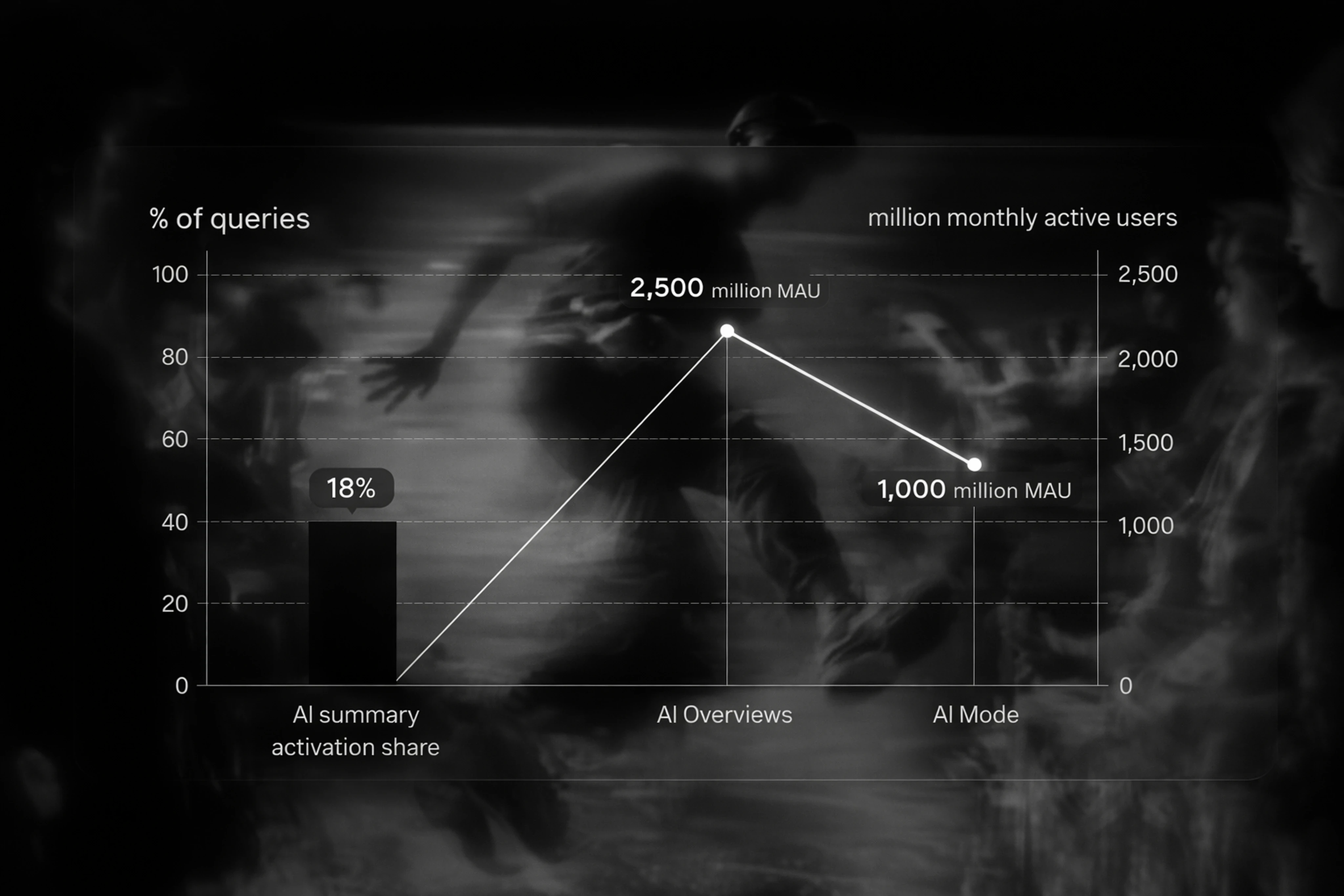
AI answer engines and shopping agents are now a primary discovery channel. Google reports AI Overviews reach 2.5B monthly users, AI Mode tops 1B, and Pew shows users click traditional results almost 50% less when an AI summary appears. For brands, that makes choosing the right AI search visibility tools and GEO agencies a P&L decision—not a side experiment.
This step‑by‑step framework will help you audit, shortlist, and select the right AI visibility platform or GEO agency, with a practical focus on:
GEO‑ranking accuracy across models and regions
AI Overview and AI Mode tracking quality
How well each partner supports GEO vs SEO workflows at scale
It’s designed for mid‑market and enterprise ecommerce brands and agencies that want predictable AI visibility. For a broader market landscape, see the related pillar guide: “AI Search Visibility Tools and GEO Agencies: 2026 Buyer’s Guide for Brands.”
Prerequisites: What You Need Before You Start Evaluating
Before you evaluate AI visibility platforms or GEO agencies, get clarity on your baseline and objectives. This prevents you from buying a shiny dashboard that doesn’t move revenue.
1. Define your AI visibility goals in hard numbers
Write down what “success” looks like in the AI answer layer. Keep it simple and measurable.
Examples of concrete goals:
Increase share of voice in ChatGPT, Claude, Gemini, Perplexity and AI Overviews for top 200 high‑intent queries
Reach SKU‑level monitoring for your top 5,000 SKUs across at least 3 regions
Improve AI shopping agent inclusion rate (your SKUs appearing in carousels or agent recommendations) by 20–30%
Decide which channels matter most:
General AI assistants: ChatGPT, Claude, Gemini, Copilot, Perplexity
Search surfaces: Google AI Overviews, AI Mode
Shopping agents: marketplace agents, native agentic commerce experiences
2. List your critical workflows and stakeholders
AI visibility touches multiple teams. Map who needs what so you can evaluate workflow fit—not just feature lists.
Create a simple table with:
SEO / GEO lead – needs daily AI rank tracking, query discovery, content guidance
Performance marketing – needs impact on revenue, ROAS, and P&L
Ecommerce / merchandising – needs SKU‑level visibility across regions, price/availability checks
PR / communications – needs earned media mapped to AI citations
Agency partners – need white‑label reporting, multi‑client dashboards
List your current stack:
SEO tools (e.g., Ahrefs, Semrush)
Analytics (GA4, BI tools)
CMS / ecommerce platform
Any existing AI search monitoring services or brand monitoring tools for AI voice assistants
You’ll use these lists in later steps to score workflow fit.
Step 1: Build an AI Search Visibility Baseline
You can’t evaluate tools or GEO agencies without a clear baseline. This step is about sampling where and how your brand appears in AI answers today.
1.1 Create a practical prompt and query set
Start with 50–200 queries that reflect real buying and research behavior. Include brand, category, and comparison searches.
Examples:
“Best [category] brands for [use case] in [country]”
“Which [brand] is best for [feature]?”
“Top alternatives to [your brand]”
“Where to buy [your SKU] in [city/country]”
Include queries in question form. Research shows Google’s AI Overviews activate on 64.7% of question‑form queries but only 9.5% of non‑questions.
1.2 Manually sample answers across models
Run your prompt set through:
ChatGPT, Claude, Gemini, Perplexity, Copilot
Google Search with AI Overview and AI Mode toggled on
Log for each query:
Whether an AI summary or AI carousel appears
Whether your brand or SKUs are mentioned or recommended
Which competitors appear instead
Any pros/cons, pricing, or sentiment attached to your brand
This manual baseline will help you test any AI visibility platform’s geo‑ranking accuracy later.
Step 2: Shortlist AI Visibility Platforms and GEO Agencies
Once you understand your baseline, build a shortlist of potential partners. Include both software platforms and GEO agencies.
2.1 Identify relevant categories of partners
For AI search visibility and GEO, you’ll typically choose between:
AI visibility platforms – multi‑model AI rank trackers for brands; dashboards, APIs, SKU‑level monitoring
SEO suites with AI tracking – legacy SEO tools that have added AI features
GEO / AEO agencies – PR‑led or SEO‑led services that run GEO programs
Examples of partner types:
AI visibility tools for enterprise brands that monitor brand mentions in chatbots and AI assistants
GEO agencies that specialize in earned media plus AI search optimization (e.g., PR‑driven models)
Technical SEO agencies that integrate GEO/AEO/LLMO into core SEO workflows
2.2 Build a comparison sheet
Create a simple spreadsheet or doc with columns:
Partner name
Type (platform, SEO suite, GEO agency)
Models covered (ChatGPT, Claude, Gemini, Perplexity, AI Overviews, AI Mode)
Regions and languages supported
Ecommerce/SKU capabilities
API and integration support
Support model and SLAs
Pricing bands
Add a column for “Initial fit score” on a 1–5 scale based on your prerequisites. This will help you narrow to a manageable shortlist (3–7 partners) for deeper evaluation.
For a market‑level overview of categories and vendors, refer back to the pillar Buyer’s Guide mentioned earlier.
Step 3: Evaluate Geo‑Ranking Accuracy and AI Overview Tracking
Now go deeper into measurement quality.
AI visibility is not a single‑rank problem; answers vary across runs, prompts, and time.
You need partners that treat visibility as a distribution, not just a screenshot.
3.1 Test multi‑model rank tracking on your own queries
Ask each platform or agency to run your baseline prompt set. Compare results to your manual sampling.
Assess:
Coverage: Does the tool actually monitor all the models you care about (ChatGPT, Gemini, Claude, Perplexity, Copilot, AI Overviews, AI Mode)?
Granularity: Does it track brand mentions, rankings, citations/quotes, pros & cons, and sentiment across models, regions, and languages?
Sampling frequency: Does it monitor daily or only ad hoc? Industry practice is shifting to continuous monitoring with historical trends.
For GEO agencies, ask:
How they sample AI answers (frequency, prompt sets, geos)
Whether they share their sampling scripts or methodology
How they estimate uncertainty (do they rerun queries to detect variability?)
3.2 Evaluate AI Overview tracker quality
Given Google’s scale, AI Overviews and AI Mode matter. You need reliable AI Overview trackers and the ability to tie them to revenue.
Ask each partner:
Do you integrate with Google’s 2026 Gen‑AI performance reports in Search Console?
Can you show activation rates for AI Overviews and AI Mode by query type, country, and device?
Do you report:
% of your pages cited in AI Overviews
% of times you appear in the answer without being on page 1 of organic results
Share of voice versus competitors
Test their metrics against known research:
In a 55,393‑query study, AI Overviews activated on 13.7% of trending queries.
29.8% of cited domains were not on the first page.
11.0% of atomic claims were unsupported.
A good AI Overview tracker:
Reflects that source selection is not identical to organic rank
Highlights unsupported or contradictory claims so you can fix evidence gaps
3.3 Check region and language fidelity
Global expansion matters. One study found AI Overview exposure grew from 7 countries to 229 in a year.
Ask:
Can you configure country and language for each query set?
Do you track performance in non‑English markets (e.g., Hindi, where models are weaker)?
Can you compare visibility and sentiment by region?
Models perform differently across languages. Top chatbots exceeded 90% accuracy in multiple‑choice tests on English content, but performance dropped and was worst on Hindi. Your partner should be honest about these biases and account for them in reporting.
Step 4: Assess GEO vs SEO Workflow Support
A core evaluation question is: What is GEO vs SEO in practice, and how will this partner support both?
4.1 Clarify how each partner defines GEO
Ask directly: “What is GEO, and how does it relate to SEO in your approach?” Listen for concrete answers.
Strong answers usually include:
GEO (Generative Engine Optimization) focuses on how LLMs and AI agents see, understand, and recommend brands.
SEO remains critical for crawlability, structured data, and site health.
AI visibility is an architectural problem, not a copywriting trick.
Look for explicit mention of:
Structured, machine‑readable evidence (specs, pricing, availability, reviews)
Catalogue hygiene and SKU completeness
Third‑party and earned media signals
Be cautious if a provider describes GEO as “just more content” or “AI‑optimized keywords” without touching data architecture.
4.2 Score workflow fit across your teams
Evaluate how each platform or GEO agency fits your existing workflows. Use a 1–5 scale for each dimension.
Key dimensions:
Technical GEO/AEO support
Schema and structured data alignment with Google’s guidance
Merchants/Business Profile and Merchant Center hygiene
SKU‑level enrichment for ecommerce
Content workflows
AI‑optimized content generation tied to AI search data
Autopilot capabilities (e.g., one AI‑optimized article per day with CMS publishing)
Editorial controls and brand voice governance
PR / earned media workflows
Mapping of earned media to AI citations
GEO‑friendly press release formats
Coordination between PR and SEO for decision‑stage queries
Tools like Era® explicitly close the loop from insight to action with GEO optimization plus a content autopilot engine.
Service‑led GEO agencies may focus more on competitive audits and earned media.
Choose based on your internal capacity.
4.3 Confirm integration and reporting maturity
AI visibility data should not live in a silo. Check how each partner plugs into your stack.
Look for:
APIs and export options for BI tools
Native integrations with major ecommerce platforms and CMSs
CMO‑ready reporting that connects AI visibility to revenue and P&L
Ask to see sample dashboards and executive reports. Check whether they report:
AI share of voice by brand, category, and region
Trends over time, not just snapshots
Clear action recommendations for GEO and SEO teams
Step 5: Validate Earned Media and Evidence Strategy
Research shows earned media is a major GEO lever. You should evaluate how each partner handles owned, earned, and community content.
5.1 Check how they use earned media for AI visibility
Muck Rack’s 2026 analysis of 25M+ links found:
84% of AI citations come from earned media
Journalism alone accounts for 27% of cited sources
Ask partners:
How do you identify and prioritize sources that AI models read for our category?
Do you track which outlets tend to be cited in AI answers for our space?
Can you connect PR wins to changes in AI answer share of voice?
PR‑led GEO agencies should have a clear playbook for:
GEO‑friendly releases
Target outlet lists driven by AI citation patterns
AI search monitoring services that tie coverage to AI answer changes
5.2 Confirm their owned + earned + community content stack
Strong AI visibility partners treat GEO as a three‑layer stack:
Owned content – product pages, guides, FAQs, spec sheets, blog posts
Earned media – reviews, news articles, thought‑leadership placements
Community signals – Reddit threads, forums, UGC, verified reviews
Ask:
Do you monitor Reddit and community sources for brand mentions in AI assistants?
How do you balance owned vs earned content in GEO programs?
How do you avoid over‑reliance on any single source type?
This is particularly important because citation concentration is high. Some studies show only 9% of citations are news sources, concentrated among a small set of outlets. You need diversification.
Step 6: Run a 90‑Day Pilot and Measure ROI
Never commit long‑term without a structured pilot. Use 60–90 days to test geo‑ranking accuracy, AI overview tracker quality, and workflow fit.
6.1 Set pilot KPIs tied to business outcomes
Define pilot metrics before you sign. Include visibility and revenue indicators.
Example pilot KPIs:
AI share of voice for top 200 queries up by 15–25%
% of high‑intent queries where your brand appears in AI answers or shopping carousels
Increase in merchant/SKU listing coverage in agentic shopping flows
Incremental revenue or conversion rate change from AI‑influenced sessions (where possible)
Ask the partner to propose realistic targets. Make sure they can connect visibility improvements to business metrics.
6.2 Test support quality and responsiveness
During the pilot, pay close attention to support. AI search visibility tools with highly rated support can make the difference between dashboards and outcomes.
Evaluate:
Time to answer complex GEO/SEO questions
Quality of recommendations and technical guidance
Willingness to share methodology rather than “black box” metrics
For GEO agencies, look at:
Cadence of strategic reviews
Alignment with your brand and performance teams
Ability to pivot based on early data
6.3 Decide on your long‑term AI visibility stack
At the end of the pilot, compare partners on:
Accuracy and stability of AI rank tracking
Breadth of multi‑model coverage
Depth of GEO vs SEO workflow support
Integration and reporting quality
Commercial impact (revenue, P&L, not just vanity metrics)
In many cases, the best option is a hybrid stack:
An AI visibility platform as your always‑on measurement and optimization layer
A GEO agency for PR‑heavy or category‑defining campaigns
The goal is to own your AI visibility stack, not rent it blindly from platforms. You want principled control over how AI answer engines see and recommend your brand.
FAQ: Evaluating AI Visibility Tools and GEO Agencies
What is GEO vs SEO, in simple terms?
GEO (Generative Engine Optimization) focuses on how AI answer engines and shopping agents understand and recommend your brand. SEO focuses on how traditional search engines crawl, index, and rank your site.
GEO adds:
Multi‑model visibility (ChatGPT, Gemini, Claude, Perplexity, AI Overviews, AI Mode)
Evidence orchestration (structured specs, reviews, pricing, availability)
Agentic commerce readiness (SKU‑level data for shopping agents)
SEO remains foundational for crawlability, internal links, text content, and structured data. Google explicitly says AI features rely on the same technical fundamentals.
How do I audit an AI search visibility tool before buying?
To audit AI search visibility tools, you should:
Run your own prompt set across multiple models and log results
Ask the tool to monitor the same prompts and compare outputs
Check sampling frequency and historical trend tracking
Confirm coverage of AI Overviews and AI Mode, not just chatbots
Validate geo‑ranking accuracy by region and language
Also review methodology documentation.
Academic work argues visibility should be treated as a distribution with confidence intervals, not a fixed point estimate.
Tools that acknowledge variability are usually more trustworthy.
What should I look for in AI search visibility GEO agencies?
When evaluating GEO agencies, focus on:
Clear definition of GEO vs SEO in their approach
Competitive audits and prompt‑set design for your category
Ability to align PR, earned media, and content with AI citation patterns
Transparent reporting on AI share of voice and business impact
Collaboration with your internal SEO and ecommerce teams
Ask for case studies or AI commerce visibility platform ROI examples. Look for evidence of SKU‑level improvements and decision‑stage answer wins—not just brand mentions.
How important are AI Overview trackers in 2026?
AI Overview trackers are critical. Google’s AI features reach billions of users, and AI Overviews appear on roughly 13–18% of queries in major studies.
Pew’s data shows users click traditional results less when AI summaries appear. Only 1% of visits to AI‑summary pages result in clicks on cited sources.
That makes measuring visibility in AI summaries as important as measuring organic rank. Good trackers connect AI Overview exposure to click‑through and downstream conversions.
Can I rely on traditional SEO tools for AI visibility?
Traditional SEO tools can help with technical fundamentals and some AI reporting. However, most are not purpose‑built for multi‑model AI visibility and agentic commerce.
Consider adding:
A dedicated AI visibility platform with cross‑model monitoring
Or a GEO agency that channels GEO/AEO into your SEO workflows
The best partner is usually the one that fits your workflows and stack, not a generic “best tool” winner. Look for platforms and agencies that treat AI answer engines as primary surfaces, not just add‑ons.
If you’re ready to move from theory to selection, pair this tutorial with the “AI Search Visibility Tools and GEO Agencies: 2026 Buyer’s Guide for Brands.” Use that guide for market context, and this framework to run a disciplined, ROI‑focused evaluation of your next AI visibility partner.



AI answer engines and shopping agents are now a primary discovery channel. Google reports AI Overviews reach 2.5B monthly users, AI Mode tops 1B, and Pew shows users click traditional results almost 50% less when an AI summary appears. For brands, that makes choosing the right AI search visibility tools and GEO agencies a P&L decision—not a side experiment.
This step‑by‑step framework will help you audit, shortlist, and select the right AI visibility platform or GEO agency, with a practical focus on:
GEO‑ranking accuracy across models and regions
AI Overview and AI Mode tracking quality
How well each partner supports GEO vs SEO workflows at scale
It’s designed for mid‑market and enterprise ecommerce brands and agencies that want predictable AI visibility. For a broader market landscape, see the related pillar guide: “AI Search Visibility Tools and GEO Agencies: 2026 Buyer’s Guide for Brands.”
Prerequisites: What You Need Before You Start Evaluating
Before you evaluate AI visibility platforms or GEO agencies, get clarity on your baseline and objectives. This prevents you from buying a shiny dashboard that doesn’t move revenue.
1. Define your AI visibility goals in hard numbers
Write down what “success” looks like in the AI answer layer. Keep it simple and measurable.
Examples of concrete goals:
Increase share of voice in ChatGPT, Claude, Gemini, Perplexity and AI Overviews for top 200 high‑intent queries
Reach SKU‑level monitoring for your top 5,000 SKUs across at least 3 regions
Improve AI shopping agent inclusion rate (your SKUs appearing in carousels or agent recommendations) by 20–30%
Decide which channels matter most:
General AI assistants: ChatGPT, Claude, Gemini, Copilot, Perplexity
Search surfaces: Google AI Overviews, AI Mode
Shopping agents: marketplace agents, native agentic commerce experiences
2. List your critical workflows and stakeholders
AI visibility touches multiple teams. Map who needs what so you can evaluate workflow fit—not just feature lists.
Create a simple table with:
SEO / GEO lead – needs daily AI rank tracking, query discovery, content guidance
Performance marketing – needs impact on revenue, ROAS, and P&L
Ecommerce / merchandising – needs SKU‑level visibility across regions, price/availability checks
PR / communications – needs earned media mapped to AI citations
Agency partners – need white‑label reporting, multi‑client dashboards
List your current stack:
SEO tools (e.g., Ahrefs, Semrush)
Analytics (GA4, BI tools)
CMS / ecommerce platform
Any existing AI search monitoring services or brand monitoring tools for AI voice assistants
You’ll use these lists in later steps to score workflow fit.
Step 1: Build an AI Search Visibility Baseline
You can’t evaluate tools or GEO agencies without a clear baseline. This step is about sampling where and how your brand appears in AI answers today.
1.1 Create a practical prompt and query set
Start with 50–200 queries that reflect real buying and research behavior. Include brand, category, and comparison searches.
Examples:
“Best [category] brands for [use case] in [country]”
“Which [brand] is best for [feature]?”
“Top alternatives to [your brand]”
“Where to buy [your SKU] in [city/country]”
Include queries in question form. Research shows Google’s AI Overviews activate on 64.7% of question‑form queries but only 9.5% of non‑questions.
1.2 Manually sample answers across models
Run your prompt set through:
ChatGPT, Claude, Gemini, Perplexity, Copilot
Google Search with AI Overview and AI Mode toggled on
Log for each query:
Whether an AI summary or AI carousel appears
Whether your brand or SKUs are mentioned or recommended
Which competitors appear instead
Any pros/cons, pricing, or sentiment attached to your brand
This manual baseline will help you test any AI visibility platform’s geo‑ranking accuracy later.
Step 2: Shortlist AI Visibility Platforms and GEO Agencies
Once you understand your baseline, build a shortlist of potential partners. Include both software platforms and GEO agencies.
2.1 Identify relevant categories of partners
For AI search visibility and GEO, you’ll typically choose between:
AI visibility platforms – multi‑model AI rank trackers for brands; dashboards, APIs, SKU‑level monitoring
SEO suites with AI tracking – legacy SEO tools that have added AI features
GEO / AEO agencies – PR‑led or SEO‑led services that run GEO programs
Examples of partner types:
AI visibility tools for enterprise brands that monitor brand mentions in chatbots and AI assistants
GEO agencies that specialize in earned media plus AI search optimization (e.g., PR‑driven models)
Technical SEO agencies that integrate GEO/AEO/LLMO into core SEO workflows
2.2 Build a comparison sheet
Create a simple spreadsheet or doc with columns:
Partner name
Type (platform, SEO suite, GEO agency)
Models covered (ChatGPT, Claude, Gemini, Perplexity, AI Overviews, AI Mode)
Regions and languages supported
Ecommerce/SKU capabilities
API and integration support
Support model and SLAs
Pricing bands
Add a column for “Initial fit score” on a 1–5 scale based on your prerequisites. This will help you narrow to a manageable shortlist (3–7 partners) for deeper evaluation.
For a market‑level overview of categories and vendors, refer back to the pillar Buyer’s Guide mentioned earlier.
Step 3: Evaluate Geo‑Ranking Accuracy and AI Overview Tracking
Now go deeper into measurement quality.
AI visibility is not a single‑rank problem; answers vary across runs, prompts, and time.
You need partners that treat visibility as a distribution, not just a screenshot.
3.1 Test multi‑model rank tracking on your own queries
Ask each platform or agency to run your baseline prompt set. Compare results to your manual sampling.
Assess:
Coverage: Does the tool actually monitor all the models you care about (ChatGPT, Gemini, Claude, Perplexity, Copilot, AI Overviews, AI Mode)?
Granularity: Does it track brand mentions, rankings, citations/quotes, pros & cons, and sentiment across models, regions, and languages?
Sampling frequency: Does it monitor daily or only ad hoc? Industry practice is shifting to continuous monitoring with historical trends.
For GEO agencies, ask:
How they sample AI answers (frequency, prompt sets, geos)
Whether they share their sampling scripts or methodology
How they estimate uncertainty (do they rerun queries to detect variability?)
3.2 Evaluate AI Overview tracker quality
Given Google’s scale, AI Overviews and AI Mode matter. You need reliable AI Overview trackers and the ability to tie them to revenue.
Ask each partner:
Do you integrate with Google’s 2026 Gen‑AI performance reports in Search Console?
Can you show activation rates for AI Overviews and AI Mode by query type, country, and device?
Do you report:
% of your pages cited in AI Overviews
% of times you appear in the answer without being on page 1 of organic results
Share of voice versus competitors
Test their metrics against known research:
In a 55,393‑query study, AI Overviews activated on 13.7% of trending queries.
29.8% of cited domains were not on the first page.
11.0% of atomic claims were unsupported.
A good AI Overview tracker:
Reflects that source selection is not identical to organic rank
Highlights unsupported or contradictory claims so you can fix evidence gaps
3.3 Check region and language fidelity
Global expansion matters. One study found AI Overview exposure grew from 7 countries to 229 in a year.
Ask:
Can you configure country and language for each query set?
Do you track performance in non‑English markets (e.g., Hindi, where models are weaker)?
Can you compare visibility and sentiment by region?
Models perform differently across languages. Top chatbots exceeded 90% accuracy in multiple‑choice tests on English content, but performance dropped and was worst on Hindi. Your partner should be honest about these biases and account for them in reporting.
Step 4: Assess GEO vs SEO Workflow Support
A core evaluation question is: What is GEO vs SEO in practice, and how will this partner support both?
4.1 Clarify how each partner defines GEO
Ask directly: “What is GEO, and how does it relate to SEO in your approach?” Listen for concrete answers.
Strong answers usually include:
GEO (Generative Engine Optimization) focuses on how LLMs and AI agents see, understand, and recommend brands.
SEO remains critical for crawlability, structured data, and site health.
AI visibility is an architectural problem, not a copywriting trick.
Look for explicit mention of:
Structured, machine‑readable evidence (specs, pricing, availability, reviews)
Catalogue hygiene and SKU completeness
Third‑party and earned media signals
Be cautious if a provider describes GEO as “just more content” or “AI‑optimized keywords” without touching data architecture.
4.2 Score workflow fit across your teams
Evaluate how each platform or GEO agency fits your existing workflows. Use a 1–5 scale for each dimension.
Key dimensions:
Technical GEO/AEO support
Schema and structured data alignment with Google’s guidance
Merchants/Business Profile and Merchant Center hygiene
SKU‑level enrichment for ecommerce
Content workflows
AI‑optimized content generation tied to AI search data
Autopilot capabilities (e.g., one AI‑optimized article per day with CMS publishing)
Editorial controls and brand voice governance
PR / earned media workflows
Mapping of earned media to AI citations
GEO‑friendly press release formats
Coordination between PR and SEO for decision‑stage queries
Tools like Era® explicitly close the loop from insight to action with GEO optimization plus a content autopilot engine.
Service‑led GEO agencies may focus more on competitive audits and earned media.
Choose based on your internal capacity.
4.3 Confirm integration and reporting maturity
AI visibility data should not live in a silo. Check how each partner plugs into your stack.
Look for:
APIs and export options for BI tools
Native integrations with major ecommerce platforms and CMSs
CMO‑ready reporting that connects AI visibility to revenue and P&L
Ask to see sample dashboards and executive reports. Check whether they report:
AI share of voice by brand, category, and region
Trends over time, not just snapshots
Clear action recommendations for GEO and SEO teams
Step 5: Validate Earned Media and Evidence Strategy
Research shows earned media is a major GEO lever. You should evaluate how each partner handles owned, earned, and community content.
5.1 Check how they use earned media for AI visibility
Muck Rack’s 2026 analysis of 25M+ links found:
84% of AI citations come from earned media
Journalism alone accounts for 27% of cited sources
Ask partners:
How do you identify and prioritize sources that AI models read for our category?
Do you track which outlets tend to be cited in AI answers for our space?
Can you connect PR wins to changes in AI answer share of voice?
PR‑led GEO agencies should have a clear playbook for:
GEO‑friendly releases
Target outlet lists driven by AI citation patterns
AI search monitoring services that tie coverage to AI answer changes
5.2 Confirm their owned + earned + community content stack
Strong AI visibility partners treat GEO as a three‑layer stack:
Owned content – product pages, guides, FAQs, spec sheets, blog posts
Earned media – reviews, news articles, thought‑leadership placements
Community signals – Reddit threads, forums, UGC, verified reviews
Ask:
Do you monitor Reddit and community sources for brand mentions in AI assistants?
How do you balance owned vs earned content in GEO programs?
How do you avoid over‑reliance on any single source type?
This is particularly important because citation concentration is high. Some studies show only 9% of citations are news sources, concentrated among a small set of outlets. You need diversification.
Step 6: Run a 90‑Day Pilot and Measure ROI
Never commit long‑term without a structured pilot. Use 60–90 days to test geo‑ranking accuracy, AI overview tracker quality, and workflow fit.
6.1 Set pilot KPIs tied to business outcomes
Define pilot metrics before you sign. Include visibility and revenue indicators.
Example pilot KPIs:
AI share of voice for top 200 queries up by 15–25%
% of high‑intent queries where your brand appears in AI answers or shopping carousels
Increase in merchant/SKU listing coverage in agentic shopping flows
Incremental revenue or conversion rate change from AI‑influenced sessions (where possible)
Ask the partner to propose realistic targets. Make sure they can connect visibility improvements to business metrics.
6.2 Test support quality and responsiveness
During the pilot, pay close attention to support. AI search visibility tools with highly rated support can make the difference between dashboards and outcomes.
Evaluate:
Time to answer complex GEO/SEO questions
Quality of recommendations and technical guidance
Willingness to share methodology rather than “black box” metrics
For GEO agencies, look at:
Cadence of strategic reviews
Alignment with your brand and performance teams
Ability to pivot based on early data
6.3 Decide on your long‑term AI visibility stack
At the end of the pilot, compare partners on:
Accuracy and stability of AI rank tracking
Breadth of multi‑model coverage
Depth of GEO vs SEO workflow support
Integration and reporting quality
Commercial impact (revenue, P&L, not just vanity metrics)
In many cases, the best option is a hybrid stack:
An AI visibility platform as your always‑on measurement and optimization layer
A GEO agency for PR‑heavy or category‑defining campaigns
The goal is to own your AI visibility stack, not rent it blindly from platforms. You want principled control over how AI answer engines see and recommend your brand.
FAQ: Evaluating AI Visibility Tools and GEO Agencies
What is GEO vs SEO, in simple terms?
GEO (Generative Engine Optimization) focuses on how AI answer engines and shopping agents understand and recommend your brand. SEO focuses on how traditional search engines crawl, index, and rank your site.
GEO adds:
Multi‑model visibility (ChatGPT, Gemini, Claude, Perplexity, AI Overviews, AI Mode)
Evidence orchestration (structured specs, reviews, pricing, availability)
Agentic commerce readiness (SKU‑level data for shopping agents)
SEO remains foundational for crawlability, internal links, text content, and structured data. Google explicitly says AI features rely on the same technical fundamentals.
How do I audit an AI search visibility tool before buying?
To audit AI search visibility tools, you should:
Run your own prompt set across multiple models and log results
Ask the tool to monitor the same prompts and compare outputs
Check sampling frequency and historical trend tracking
Confirm coverage of AI Overviews and AI Mode, not just chatbots
Validate geo‑ranking accuracy by region and language
Also review methodology documentation.
Academic work argues visibility should be treated as a distribution with confidence intervals, not a fixed point estimate.
Tools that acknowledge variability are usually more trustworthy.
What should I look for in AI search visibility GEO agencies?
When evaluating GEO agencies, focus on:
Clear definition of GEO vs SEO in their approach
Competitive audits and prompt‑set design for your category
Ability to align PR, earned media, and content with AI citation patterns
Transparent reporting on AI share of voice and business impact
Collaboration with your internal SEO and ecommerce teams
Ask for case studies or AI commerce visibility platform ROI examples. Look for evidence of SKU‑level improvements and decision‑stage answer wins—not just brand mentions.
How important are AI Overview trackers in 2026?
AI Overview trackers are critical. Google’s AI features reach billions of users, and AI Overviews appear on roughly 13–18% of queries in major studies.
Pew’s data shows users click traditional results less when AI summaries appear. Only 1% of visits to AI‑summary pages result in clicks on cited sources.
That makes measuring visibility in AI summaries as important as measuring organic rank. Good trackers connect AI Overview exposure to click‑through and downstream conversions.
Can I rely on traditional SEO tools for AI visibility?
Traditional SEO tools can help with technical fundamentals and some AI reporting. However, most are not purpose‑built for multi‑model AI visibility and agentic commerce.
Consider adding:
A dedicated AI visibility platform with cross‑model monitoring
Or a GEO agency that channels GEO/AEO into your SEO workflows
The best partner is usually the one that fits your workflows and stack, not a generic “best tool” winner. Look for platforms and agencies that treat AI answer engines as primary surfaces, not just add‑ons.
If you’re ready to move from theory to selection, pair this tutorial with the “AI Search Visibility Tools and GEO Agencies: 2026 Buyer’s Guide for Brands.” Use that guide for market context, and this framework to run a disciplined, ROI‑focused evaluation of your next AI visibility partner.