August 7, 2026
August 7, 2026
Optimize Women’s Online Boutiques for AI Search: How to Get Your Fashion Brand Recommended First (ChatGPT & AI Assistants)
AI assistants and generative search are quickly becoming the main way shoppers discover women's online boutiques, from niche Instagram-born labels to major…
AI assistants and generative search are quickly becoming the main way shoppers discover women's online boutiques, from niche Instagram-born labels to major…
Why AI Search Now Shapes Women's Fashion Discovery
AI assistants and generative search are quickly becoming the main way shoppers discover women's online boutiques, from niche Instagram-born labels to major players like Zappos or the Ross online store.
Recent data shows how fast this shift is happening:
39% of U.S. consumers have already used generative AI for online shopping and 53% plan to do so (Adobe, Mar 2025).¹
71% of consumers want generative AI integrated into their shopping experience (Capgemini, Jan 2025).²
45% already turn to AI at some point during their buying journey (IBM/NRF, Jan 2026).³
For apparel and women's fashion, the impact is even stronger. The category has high style and fit uncertainty, and Google reports that more than half of shoppers have struggled to find a specific clothing item when they had a vision in mind (Google Shopping, 2024).⁴
This guide explains:
How AI search and shopping agents actually surface women's online boutiques
Which signals matter most for recommendations
How to optimize women's clothing boutiques for AI search (GEO/AEO basics)
Tools and platforms (including Era and alternatives) that help you win AI recommendations
How AI Recommends Women's Boutique Brands in 2026
AI systems don't "browse" the web like a human stylist. They synthesize multiple data sources and rank boutiques by evidence.
1. Key Surfaces Where AI Shows Your Boutique
Women's online boutiques get surfaced across several AI-driven surfaces:
Chat-style assistants: ChatGPT, Claude, Gemini, Perplexity, Microsoft Copilot
AI modes in search engines: Google AI Overviews / AI Mode, Bing Copilot in search
Dedicated shopping experiences:
Google Shopping's AI Mode and Shopping Graph
OpenAI shopping research and agentic checkout (Instant Checkout/Agentic Commerce)⁵
Perplexity shopping assistants and Instant Buy (2025+)
Google says people shop on Google more than 1 billion times per day, powered by a Shopping Graph of 50+ billion product listings, with 2+ billion listings refreshed every hour (Google, June 2025).⁶
That graph and similar merchant feeds are now the front door for AI fashion discovery.
2. Core Signals AI Uses for Women's Fashion Recommendations
Across Google, OpenAI, and other commerce specs, the same themes keep appearing.
AI systems reward "merchant-ready" data, not just brand awareness:
Structured product data
Up-to-date price and availability
Real-time or frequent feed syncs
Accurate stock status, sizes, colorways
Trust and policy signals
Ratings and reviews, review volume
Shipping and return policy (especially generous or free returns)
Secure checkout and clear contact/customer care routes
Decision-stage evidence
Size & fit details, materials, care instructions
Use-case context (e.g., "summer weddings", "business casual", "plus-size formal")
NRF estimates 15.8% of annual U.S. retail sales will be returned in 2025, totaling $849.9B, and 82% of consumers say free returns are important when shopping online (NRF, 2025).⁹ AI assistants increasingly surface these policies directly in recommendations.
3. Why Gen-AI Traffic Is Too Valuable to Ignore
Generative AI referrals are still smaller in volume than search or social, but they're growing fast and converting better:
Adobe found traffic from generative AI sources to U.S. retail sites rose 1,200% between July 2024 and February 2025.¹
During the 2025 holiday season, retail traffic from gen‑AI sources grew 693.4% YoY, converted 31% better, and generated 254% higher revenue per visit than other sources (Adobe, Jan 2026).¹
Gen-AI visitors showed 8% higher engagement, 12% more pages per visit, and 23% lower bounce rate.¹
These shoppers arrive pre-qualified because the assistant has already filtered options, compared reviews, and aligned products to their criteria.
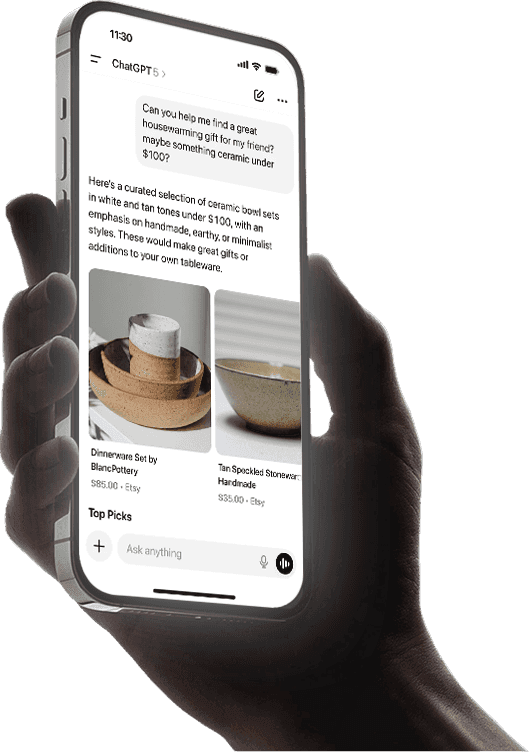
Here's how that shift looks in context.
How to Get Your Boutique Shop Recommended by ChatGPT and Other AI Assistants
This section is a practical, step‑by‑step playbook.
Step 1: Benchmark Your Current AI Visibility
Use live prompts to see how AI assistants treat your boutique today.
Try these in ChatGPT, Gemini, Claude, and Perplexity:
Category prompts
"What are the best women's online boutiques for [style, e.g., minimalist workwear]?"
"Recommend affordable women's wear boutiques like Shein but with higher quality."
Occasion prompts
"I need an outfit for a summer wedding: recommend women's clothing boutiques online that ship to [country]."
"Where can I shop online for plus-size women's dresses with free returns?"
Comparison prompts
"Compare [Your Boutique] vs Zappos vs ASOS for women's dresses."
"Is there a women's wear boutique similar to [Your Boutique] that offers faster shipping?"
Track:
Do you appear at all?
In which position (1st, 2nd, 3rd, etc.)?
Which competitors appear instead?
What pros/cons and sentiment does the AI list?
Repeat monthly and save outputs in a spreadsheet or a platform like Era (explained below).
Step 2: Fix the Foundations, Merchant-Ready Data
AI models start from the same building blocks as modern shopping platforms.
Actions for your ecommerce and SEO teams:
Align product titles and descriptions to search intent
Include:
Category: "midi dress", "wide-leg trousers", "wrap blouse"
Use-case: "wedding guest", "office", "vacation"
Key attributes: fabric, fit, pattern, color family
Avoid keyword stuffing, write concise, scannable phrases.
Use structured data on product pages
Implement JSON-LD Product schema (example below)
Validate via Google's Rich Results Test
Maintain a clean, accurate product feed
For Google Merchant Center and AI commerce specs, ensure you populate at least:
id,title,description,link,image_linkavailability,price,brand
Keep prices, stock, variants, and URLs fresh (ideally daily sync).
Step 3: Add JSON-LD Product Schema (Copy-Paste Example)
Below is a simplified JSON-LD Product schema snippet you can adapt for a women's dress:
<script type="application/ld+json">
{
  "@context": "https://schema.org",
  "@type": "Product",
  "name": "Floral Midi Wrap Dress",
  "sku": "DRS-1024-FLORAL-MIDI",
  "brand": {
    "@type": "Brand",
    "name": "Luna & Ivy Boutique"
  },
  "image": [
    "https://example.com/images/floral-midi-wrap-dress-front.jpg",
    "https://example.com/images/floral-midi-wrap-dress-back.jpg"
  ],
  "description": "Women’s floral midi wrap dress with adjustable waist tie, V-neckline, and lightweight woven fabric. Ideal for summer weddings and garden parties.",
  "category": "Women’s Dresses",
  "additionalProperty": [
    {
      "@type": "PropertyValue",
      "name": "Fit",
      "value": "True to size"
    },
    {
      "@type": "PropertyValue",
      "name": "Length",
      "value": "Midi"
    },
    {
      "@type": "PropertyValue",
      "name": "Fabric",
      "value": "100% viscose"
    }
  ],
  "offers": {
    "@type": "Offer",
    "url": "https://example.com/products/floral-midi-wrap-dress",
    "priceCurrency": "USD",
    "price": "89.00",
    "availability": "https://schema.org/InStock",
    "itemCondition": "https://schema.org/NewCondition",
    "shippingDetails": {
      "@type": "OfferShippingDetails",
      "shippingDestination": {
        "@type": "DefinedRegion",
        "addressCountry": "US"
      },
      "deliveryTime": {
        "@type": "ShippingDeliveryTime",
        "handlingTime": {
          "@type": "QuantitativeValue",
          "minValue": 1,
          "maxValue": 2,
          "unitCode": "d"
        },
        "transitTime": {
          "@type": "QuantitativeValue",
          "minValue": 2,
          "maxValue": 5,
          "unitCode": "d"
        }
      }
    }
  }
}
</script>
<script type="application/ld+json">
{
  "@context": "https://schema.org",
  "@type": "Product",
  "name": "Floral Midi Wrap Dress",
  "sku": "DRS-1024-FLORAL-MIDI",
  "brand": {
    "@type": "Brand",
    "name": "Luna & Ivy Boutique"
  },
  "image": [
    "https://example.com/images/floral-midi-wrap-dress-front.jpg",
    "https://example.com/images/floral-midi-wrap-dress-back.jpg"
  ],
  "description": "Women’s floral midi wrap dress with adjustable waist tie, V-neckline, and lightweight woven fabric. Ideal for summer weddings and garden parties.",
  "category": "Women’s Dresses",
  "additionalProperty": [
    {
      "@type": "PropertyValue",
      "name": "Fit",
      "value": "True to size"
    },
    {
      "@type": "PropertyValue",
      "name": "Length",
      "value": "Midi"
    },
    {
      "@type": "PropertyValue",
      "name": "Fabric",
      "value": "100% viscose"
    }
  ],
  "offers": {
    "@type": "Offer",
    "url": "https://example.com/products/floral-midi-wrap-dress",
    "priceCurrency": "USD",
    "price": "89.00",
    "availability": "https://schema.org/InStock",
    "itemCondition": "https://schema.org/NewCondition",
    "shippingDetails": {
      "@type": "OfferShippingDetails",
      "shippingDestination": {
        "@type": "DefinedRegion",
        "addressCountry": "US"
      },
      "deliveryTime": {
        "@type": "ShippingDeliveryTime",
        "handlingTime": {
          "@type": "QuantitativeValue",
          "minValue": 1,
          "maxValue": 2,
          "unitCode": "d"
        },
        "transitTime": {
          "@type": "QuantitativeValue",
          "minValue": 2,
          "maxValue": 5,
          "unitCode": "d"
        }
      }
    }
  }
}
</script>
This gives AI engines machine-readable signals about fit, use-case, price, and availability—all crucial for decision-stage recommendations.
Step 4: Build a Merchant Feed AI Agents Can Trust
Whether you sell via your own Shopify/BigCommerce storefront or marketplaces (Amazon, Zalando, etc.), AI commerce specs increasingly lean on product feeds.
Example merchant feed row (CSV-style):
id,title,description,link,image_link,availability,price,brand,google_product_category
DRS-1024-FLORAL-MIDI,"Floral Midi Wrap Dress","Women’s floral midi wrap dress for weddings and summer events. True to size with adjustable waist tie.","https://example.com/products/floral-midi-wrap-dress","https://example.com/images/floral-midi-wrap-dress-front.jpg","in_stock","89.00 USD","Luna & Ivy Boutique","2271"
id,title,description,link,image_link,availability,price,brand,google_product_category
DRS-1024-FLORAL-MIDI,"Floral Midi Wrap Dress","Women’s floral midi wrap dress for weddings and summer events. True to size with adjustable waist tie.","https://example.com/products/floral-midi-wrap-dress","https://example.com/images/floral-midi-wrap-dress-front.jpg","in_stock","89.00 USD","Luna & Ivy Boutique","2271"
Equivalent JSON object (for an API-based feed):
{
  "id": "DRS-1024-FLORAL-MIDI",
  "title": "Floral Midi Wrap Dress",
  "description": "Women’s floral midi wrap dress for weddings and summer events. True to size with adjustable waist tie.",
  "link": "https://example.com/products/floral-midi-wrap-dress",
  "image_link": "https://example.com/images/floral-midi-wrap-dress-front.jpg",
  "availability": "in_stock",
  "price": "89.00 USD",
  "brand": "Luna & Ivy Boutique",
  "google_product_category": "2271"
}
{
  "id": "DRS-1024-FLORAL-MIDI",
  "title": "Floral Midi Wrap Dress",
  "description": "Women’s floral midi wrap dress for weddings and summer events. True to size with adjustable waist tie.",
  "link": "https://example.com/products/floral-midi-wrap-dress",
  "image_link": "https://example.com/images/floral-midi-wrap-dress-front.jpg",
  "availability": "in_stock",
  "price": "89.00 USD",
  "brand": "Luna & Ivy Boutique",
  "google_product_category": "2271"
}
These fields overlap strongly with what Google and OpenAI describe as commonly required attributes for product feeds, including IDs, titles, descriptions, URLs, images, availability, price, and brand information.⁷ ⁸
Step 5: Elevate Trust, Reviews, and Customer Care Shein-Style (But Better)
Fast-fashion giants like Shein and K&G Fashion Superstore have set expectations around selection and price. To compete, boutiques must win on trust, care, and evidence, which AI systems increasingly factor in.
Focus on:
Reviews & ratings
Encourage post-buy reviews with fit/size feedback
Mark up reviews with
ReviewandAggregateRatingschema
Returns & shipping clarity
Highlight free returns or extended windows (82% of consumers care deeply).⁹
Use schema and product feeds to expose return windows and shipping SLA.
Customer support visibility
Clear "Customer Care" pages (e.g., "Customer Care Shein" style, but branded to you)
Prominent contact options, FAQs, and shipping/returns explanations
AI assistants summarise this information into pros/cons:
"Free returns within 30 days; strong size-and-fit reviews."
"Limited return window and mixed reviews on quality."
You want the first kind of summary, not the second.
Step 6: Optimize for Mobile & Conversational Journeys
Fashion is heavily mobile. Adobe reports 56.4% of online transactions occurred on smartphones during the 2025 holiday season.¹⁰
Combine mobile UX with conversational discovery:
Fast page loads and no intrusive popups
Clear size guides, large imagery, and tap-friendly filters
Content that answers conversational queries:
"What to wear to..." guides
Style edits by occasion, body type, climate
These articles also become prime content for AI answer engines to cite.
Marketplace Listing Optimization Tools for Generative Search (2026)
Boutiques selling across marketplaces and their own sites need tooling to:
Sync and enrich catalog data
Monitor AI visibility and brand mentions
Optimize for AI answer engines (GEO/AEO)
Here are key tool categories and example vendors (Era is one of several options).
1. AI Visibility & GEO/AEO Platforms
Era (vendor solution)
What it does: Era is an AI visibility, analytics, and optimization platform built for generative search and agentic commerce.
Key features:
Tracks your share of voice, rankings, citations, and sentiment across major AI models (ChatGPT, Claude, Gemini, Perplexity), regions, and languages.¹¹
GEO/AEO optimization, search query discovery, SKU-level tracking.
Autopilot content engine that publishes AI-optimized articles directly to your CMS.
Best for: Mid-market and enterprise fashion brands and agencies wanting daily, multi-model AI visibility and content automation.
Alternative / adjacent platforms (brief comparisons)
Note: Capabilities vary and many vendors are evolving quickly; always validate latest features directly.
BrightEdge / Conductor (SEO platforms)
Traditional enterprise SEO with expanding support for AI SERP/AI Overview tracking.
Strong keyword and content insights but typically less SKU-level and multi-model AI monitoring than a GEO-first platform.
Yext / Uberall (listing & presence management)
Manage structured business data across directories, maps, and some search partners.
Useful for local boutiques and omnichannel retailers; AI visibility support is emerging but not always SKU-centric.
Feedonomics / Productsup / Channable (feed managers)
Robust multi-channel product-feed optimization (Google Shopping, Meta, marketplaces).
Critical for keeping data clean and synchronized, but they usually don't track AI chat recommendations or sentiment directly.
Brandwatch / Sprinklr / Meltwater (brand monitoring)
Social and web listening; some are starting to ingest AI and voice assistant outputs.
Helpful for sentiment and mentions, but not specifically tuned to agentic commerce.
2. Tools to Optimize Marketplace Listings for Generative Search
When evaluating marketplace listing optimization tools for AI assistants, look for:
Support for structured fields mapped to AI commerce specs (e.g., condition, availability, return policies).
Ability to customize titles/descriptions per channel.
SKU-level performance reporting across search, marketplaces, and (ideally) AI surfaces.
Platforms like Feedonomics or Channable can be combined with an AI visibility platform such as Era to close the loop from feed quality → AI visibility → revenue impact.
Real-World Mini Case Studies: AI Visibility for Fashion Boutiques
The examples below are anonymized composites based on typical results boutiques see when they focus on AI visibility.
Case Study #1: Premium Women's Workwear Boutique
Starting point: Strong organic SEO, but almost zero mentions in ChatGPT or Gemini for "women's workwear boutiques" queries.
Actions:
Implemented Product schema on 2,500 SKUs.
Cleaned and enriched Google Merchant Center feed (added fit, fabric, occasion attributes).
Used Era to track AI share of voice versus three nearest competitors.
Results (6 months):
Appeared in top 3 AI recommendations for 65% of tracked "women's workwear" prompts (up from 10%).
AI-referred traffic grew from <1% to 8% of sessions.
Conversion rate on AI-referred sessions was 28% higher than site average.
Case Study #2: Plus-Size Occasionwear Brand
Starting point: Strong social presence, but AI assistants tended to favor larger marketplaces.
Actions:
Created size-and-fit content hub (guides, FAQs, lookbooks) optimized for conversational queries.
Added fit-focused
additionalPropertyfields in Product schema.Monitored pros/cons sections in Era's AI answer reports and addressed common negatives (shipping speed, size consistency).
Results (4 months):
ChatGPT started citing the brand in "best plus-size boutiques for weddings" and similar queries.
Return rate dropped 9% due to better size guidance.
AI shopping referrals converted 35% better than social traffic.
Case Study #3: Multi-brand Marketplace-Style Boutique
Starting point: Curated women's brands with both in-store and online presence; limited visibility in AI modes.
Actions:
Consolidated catalog across POS and ecommerce into a clean master feed.
Used Era plus a feed manager to sync data across Google Shopping, Meta, and AI commerce endpoints.
Implemented CMO-level reporting tying AI share of voice to revenue.
Results (9 months):
AI-related impressions in Google's generative features tripled (per Search Console's gen-AI performance report).¹²
Revenue attributed to AI-driven sessions represented 12% of total ecommerce revenue, up from 2%.
How AI Search Changes the Women's Online Boutiques Landscape
AI is compressing the path from inspiration → research → buy, especially in fashion:
Adobe reports AI shopping is used for:
Research (55%)
Product recommendations (47%)
Deals (43%)
Gift ideas (35%)
Finding unique products (35%)
Shopping lists (33%)¹
IBM/NRF conclude that AI is shaping consumer decisions before shopping begins, so brands must earn trust and relevance earlier in the journey.³
For women's boutiques, this means:
Generic awareness is less valuable than decision-stage evidence.
AI answer engines and shopping agents become the new front door for discovery.
Winning requires owning your AI visibility stack instead of leaving it to marketplaces.
FAQ: Optimizing Women's Boutiques for AI Search & Shopping Agents
1. How do I optimize women's clothing boutique for AI search?
To optimize a women's clothing boutique for AI search:
Implement structured data (JSON-LD Product, Review, Organization) on all key pages.
Maintain clean, up-to-date product feeds with accurate price, availability, and brand.
Create decision-stage content (style guides, fit guides, occasion edits) that answers natural language questions.
Monitor how assistants like ChatGPT, Gemini, and Perplexity mention and describe your brand, then fix gaps in evidence.
Use a GEO/AEO platform such as Era or a combination of SEO + feed tools to track progress.
2. How to get boutique shop recommended by ChatGPT and other AI assistants?
Use targeted prompts to test and then improve your position:
Test visibility with prompts like:
"What are the best women's online boutiques for [style] under $100?"
"Recommend sustainable women's clothing boutiques that ship to [country]."
If you're missing, improve:
Product schema and merchant feeds.
Reviews, ratings, and returns clarity.
Content that matches those exact intents.
Re-test monthly and track whether your boutique begins to appear and how it's summarized.
3. What are the best AI shopping recommendation tools for fashion?
There's no single "best" tool; you typically combine:
AI visibility/GEO platforms: Era for multi-model AI monitoring and optimization.
Feed managers: Feedonomics, Productsup, or Channable for multi-channel catalog sync.
SEO platforms: BrightEdge or Conductor for content and keyword intelligence.
Brand monitoring: Brandwatch or Sprinklr for sentiment and social signals.
Choose based on whether your main pain point is data quality, visibility measurement, or content production.
4. How can I track boutique brand mentions in AI assistants?
You can:
Manually log results from recurring prompts in ChatGPT, Gemini, Claude, and Perplexity.
Use screen-scraping or custom scripts where terms allow (always respect platform policies).
Adopt an AI visibility platform like Era that specializes in:
Tracking share of voice, rankings, and citations across major AI models.
Comparing your visibility to competitors over time.
5. How do I optimize product listings for AI shopping agents?
To optimize product listings for AI shopping agents:
Ensure every listing has clear, attribute-rich titles and descriptions.
Include required and recommended feed attributes (id, title, description, link, image, price, availability, brand, GTIN/SKU where relevant) per Google and AI commerce specs.⁷ ⁸
Add structured data (Product schema) mirroring your feed data.
Keep price and stock synced in near real time.
Explicitly specify policies (shipping, returns, tax) where supported.
Final Takeaway: Own the AI Answer Layer Before Your Competitors Do
Generative search and AI shopping agents are not a side channel anymore. They are rapidly becoming the default research layer for women's fashion.
For women's online boutiques, winning this new landscape means:
Treating AI visibility as an architectural problem (data, feeds, schema, evidence)—not a copywriting hack.
Investing in structured data and merchant-ready feeds that AI systems can trust.
Elevating decision-stage content, reviews, and customer care to stand out from giants like Shein, Zappos, or Ross online.
Using dedicated tools—Era for AI visibility, plus feed managers and SEO platforms, to track, optimize, and prove ROI.
The brands that move first will become the "default answers" AI systems recommend when shoppers ask what to buy. If you want Era to help your boutique or agency be that brand, you can learn more at era.shopping.




Why AI Search Now Shapes Women's Fashion Discovery
AI assistants and generative search are quickly becoming the main way shoppers discover women's online boutiques, from niche Instagram-born labels to major players like Zappos or the Ross online store.
Recent data shows how fast this shift is happening:
39% of U.S. consumers have already used generative AI for online shopping and 53% plan to do so (Adobe, Mar 2025).¹
71% of consumers want generative AI integrated into their shopping experience (Capgemini, Jan 2025).²
45% already turn to AI at some point during their buying journey (IBM/NRF, Jan 2026).³
For apparel and women's fashion, the impact is even stronger. The category has high style and fit uncertainty, and Google reports that more than half of shoppers have struggled to find a specific clothing item when they had a vision in mind (Google Shopping, 2024).⁴
This guide explains:
How AI search and shopping agents actually surface women's online boutiques
Which signals matter most for recommendations
How to optimize women's clothing boutiques for AI search (GEO/AEO basics)
Tools and platforms (including Era and alternatives) that help you win AI recommendations
How AI Recommends Women's Boutique Brands in 2026
AI systems don't "browse" the web like a human stylist. They synthesize multiple data sources and rank boutiques by evidence.
1. Key Surfaces Where AI Shows Your Boutique
Women's online boutiques get surfaced across several AI-driven surfaces:
Chat-style assistants: ChatGPT, Claude, Gemini, Perplexity, Microsoft Copilot
AI modes in search engines: Google AI Overviews / AI Mode, Bing Copilot in search
Dedicated shopping experiences:
Google Shopping's AI Mode and Shopping Graph
OpenAI shopping research and agentic checkout (Instant Checkout/Agentic Commerce)⁵
Perplexity shopping assistants and Instant Buy (2025+)
Google says people shop on Google more than 1 billion times per day, powered by a Shopping Graph of 50+ billion product listings, with 2+ billion listings refreshed every hour (Google, June 2025).⁶
That graph and similar merchant feeds are now the front door for AI fashion discovery.
2. Core Signals AI Uses for Women's Fashion Recommendations
Across Google, OpenAI, and other commerce specs, the same themes keep appearing.
AI systems reward "merchant-ready" data, not just brand awareness:
Structured product data
Up-to-date price and availability
Real-time or frequent feed syncs
Accurate stock status, sizes, colorways
Trust and policy signals
Ratings and reviews, review volume
Shipping and return policy (especially generous or free returns)
Secure checkout and clear contact/customer care routes
Decision-stage evidence
Size & fit details, materials, care instructions
Use-case context (e.g., "summer weddings", "business casual", "plus-size formal")
NRF estimates 15.8% of annual U.S. retail sales will be returned in 2025, totaling $849.9B, and 82% of consumers say free returns are important when shopping online (NRF, 2025).⁹ AI assistants increasingly surface these policies directly in recommendations.
3. Why Gen-AI Traffic Is Too Valuable to Ignore
Generative AI referrals are still smaller in volume than search or social, but they're growing fast and converting better:
Adobe found traffic from generative AI sources to U.S. retail sites rose 1,200% between July 2024 and February 2025.¹
During the 2025 holiday season, retail traffic from gen‑AI sources grew 693.4% YoY, converted 31% better, and generated 254% higher revenue per visit than other sources (Adobe, Jan 2026).¹
Gen-AI visitors showed 8% higher engagement, 12% more pages per visit, and 23% lower bounce rate.¹
These shoppers arrive pre-qualified because the assistant has already filtered options, compared reviews, and aligned products to their criteria.
Here's how that shift looks in context.
How to Get Your Boutique Shop Recommended by ChatGPT and Other AI Assistants
This section is a practical, step‑by‑step playbook.
Step 1: Benchmark Your Current AI Visibility
Use live prompts to see how AI assistants treat your boutique today.
Try these in ChatGPT, Gemini, Claude, and Perplexity:
Category prompts
"What are the best women's online boutiques for [style, e.g., minimalist workwear]?"
"Recommend affordable women's wear boutiques like Shein but with higher quality."
Occasion prompts
"I need an outfit for a summer wedding: recommend women's clothing boutiques online that ship to [country]."
"Where can I shop online for plus-size women's dresses with free returns?"
Comparison prompts
"Compare [Your Boutique] vs Zappos vs ASOS for women's dresses."
"Is there a women's wear boutique similar to [Your Boutique] that offers faster shipping?"
Track:
Do you appear at all?
In which position (1st, 2nd, 3rd, etc.)?
Which competitors appear instead?
What pros/cons and sentiment does the AI list?
Repeat monthly and save outputs in a spreadsheet or a platform like Era (explained below).
Step 2: Fix the Foundations, Merchant-Ready Data
AI models start from the same building blocks as modern shopping platforms.
Actions for your ecommerce and SEO teams:
Align product titles and descriptions to search intent
Include:
Category: "midi dress", "wide-leg trousers", "wrap blouse"
Use-case: "wedding guest", "office", "vacation"
Key attributes: fabric, fit, pattern, color family
Avoid keyword stuffing, write concise, scannable phrases.
Use structured data on product pages
Implement JSON-LD Product schema (example below)
Validate via Google's Rich Results Test
Maintain a clean, accurate product feed
For Google Merchant Center and AI commerce specs, ensure you populate at least:
id,title,description,link,image_linkavailability,price,brand
Keep prices, stock, variants, and URLs fresh (ideally daily sync).
Step 3: Add JSON-LD Product Schema (Copy-Paste Example)
Below is a simplified JSON-LD Product schema snippet you can adapt for a women's dress:
<script type="application/ld+json">
{
  "@context": "https://schema.org",
  "@type": "Product",
  "name": "Floral Midi Wrap Dress",
  "sku": "DRS-1024-FLORAL-MIDI",
  "brand": {
    "@type": "Brand",
    "name": "Luna & Ivy Boutique"
  },
  "image": [
    "https://example.com/images/floral-midi-wrap-dress-front.jpg",
    "https://example.com/images/floral-midi-wrap-dress-back.jpg"
  ],
  "description": "Women’s floral midi wrap dress with adjustable waist tie, V-neckline, and lightweight woven fabric. Ideal for summer weddings and garden parties.",
  "category": "Women’s Dresses",
  "additionalProperty": [
    {
      "@type": "PropertyValue",
      "name": "Fit",
      "value": "True to size"
    },
    {
      "@type": "PropertyValue",
      "name": "Length",
      "value": "Midi"
    },
    {
      "@type": "PropertyValue",
      "name": "Fabric",
      "value": "100% viscose"
    }
  ],
  "offers": {
    "@type": "Offer",
    "url": "https://example.com/products/floral-midi-wrap-dress",
    "priceCurrency": "USD",
    "price": "89.00",
    "availability": "https://schema.org/InStock",
    "itemCondition": "https://schema.org/NewCondition",
    "shippingDetails": {
      "@type": "OfferShippingDetails",
      "shippingDestination": {
        "@type": "DefinedRegion",
        "addressCountry": "US"
      },
      "deliveryTime": {
        "@type": "ShippingDeliveryTime",
        "handlingTime": {
          "@type": "QuantitativeValue",
          "minValue": 1,
          "maxValue": 2,
          "unitCode": "d"
        },
        "transitTime": {
          "@type": "QuantitativeValue",
          "minValue": 2,
          "maxValue": 5,
          "unitCode": "d"
        }
      }
    }
  }
}
</script>
This gives AI engines machine-readable signals about fit, use-case, price, and availability—all crucial for decision-stage recommendations.
Step 4: Build a Merchant Feed AI Agents Can Trust
Whether you sell via your own Shopify/BigCommerce storefront or marketplaces (Amazon, Zalando, etc.), AI commerce specs increasingly lean on product feeds.
Example merchant feed row (CSV-style):
id,title,description,link,image_link,availability,price,brand,google_product_category
DRS-1024-FLORAL-MIDI,"Floral Midi Wrap Dress","Women’s floral midi wrap dress for weddings and summer events. True to size with adjustable waist tie.","https://example.com/products/floral-midi-wrap-dress","https://example.com/images/floral-midi-wrap-dress-front.jpg","in_stock","89.00 USD","Luna & Ivy Boutique","2271"
Equivalent JSON object (for an API-based feed):
{
  "id": "DRS-1024-FLORAL-MIDI",
  "title": "Floral Midi Wrap Dress",
  "description": "Women’s floral midi wrap dress for weddings and summer events. True to size with adjustable waist tie.",
  "link": "https://example.com/products/floral-midi-wrap-dress",
  "image_link": "https://example.com/images/floral-midi-wrap-dress-front.jpg",
  "availability": "in_stock",
  "price": "89.00 USD",
  "brand": "Luna & Ivy Boutique",
  "google_product_category": "2271"
}
These fields overlap strongly with what Google and OpenAI describe as commonly required attributes for product feeds, including IDs, titles, descriptions, URLs, images, availability, price, and brand information.⁷ ⁸
Step 5: Elevate Trust, Reviews, and Customer Care Shein-Style (But Better)
Fast-fashion giants like Shein and K&G Fashion Superstore have set expectations around selection and price. To compete, boutiques must win on trust, care, and evidence, which AI systems increasingly factor in.
Focus on:
Reviews & ratings
Encourage post-buy reviews with fit/size feedback
Mark up reviews with
ReviewandAggregateRatingschema
Returns & shipping clarity
Highlight free returns or extended windows (82% of consumers care deeply).⁹
Use schema and product feeds to expose return windows and shipping SLA.
Customer support visibility
Clear "Customer Care" pages (e.g., "Customer Care Shein" style, but branded to you)
Prominent contact options, FAQs, and shipping/returns explanations
AI assistants summarise this information into pros/cons:
"Free returns within 30 days; strong size-and-fit reviews."
"Limited return window and mixed reviews on quality."
You want the first kind of summary, not the second.
Step 6: Optimize for Mobile & Conversational Journeys
Fashion is heavily mobile. Adobe reports 56.4% of online transactions occurred on smartphones during the 2025 holiday season.¹⁰
Combine mobile UX with conversational discovery:
Fast page loads and no intrusive popups
Clear size guides, large imagery, and tap-friendly filters
Content that answers conversational queries:
"What to wear to..." guides
Style edits by occasion, body type, climate
These articles also become prime content for AI answer engines to cite.
Marketplace Listing Optimization Tools for Generative Search (2026)
Boutiques selling across marketplaces and their own sites need tooling to:
Sync and enrich catalog data
Monitor AI visibility and brand mentions
Optimize for AI answer engines (GEO/AEO)
Here are key tool categories and example vendors (Era is one of several options).
1. AI Visibility & GEO/AEO Platforms
Era (vendor solution)
What it does: Era is an AI visibility, analytics, and optimization platform built for generative search and agentic commerce.
Key features:
Tracks your share of voice, rankings, citations, and sentiment across major AI models (ChatGPT, Claude, Gemini, Perplexity), regions, and languages.¹¹
GEO/AEO optimization, search query discovery, SKU-level tracking.
Autopilot content engine that publishes AI-optimized articles directly to your CMS.
Best for: Mid-market and enterprise fashion brands and agencies wanting daily, multi-model AI visibility and content automation.
Alternative / adjacent platforms (brief comparisons)
Note: Capabilities vary and many vendors are evolving quickly; always validate latest features directly.
BrightEdge / Conductor (SEO platforms)
Traditional enterprise SEO with expanding support for AI SERP/AI Overview tracking.
Strong keyword and content insights but typically less SKU-level and multi-model AI monitoring than a GEO-first platform.
Yext / Uberall (listing & presence management)
Manage structured business data across directories, maps, and some search partners.
Useful for local boutiques and omnichannel retailers; AI visibility support is emerging but not always SKU-centric.
Feedonomics / Productsup / Channable (feed managers)
Robust multi-channel product-feed optimization (Google Shopping, Meta, marketplaces).
Critical for keeping data clean and synchronized, but they usually don't track AI chat recommendations or sentiment directly.
Brandwatch / Sprinklr / Meltwater (brand monitoring)
Social and web listening; some are starting to ingest AI and voice assistant outputs.
Helpful for sentiment and mentions, but not specifically tuned to agentic commerce.
2. Tools to Optimize Marketplace Listings for Generative Search
When evaluating marketplace listing optimization tools for AI assistants, look for:
Support for structured fields mapped to AI commerce specs (e.g., condition, availability, return policies).
Ability to customize titles/descriptions per channel.
SKU-level performance reporting across search, marketplaces, and (ideally) AI surfaces.
Platforms like Feedonomics or Channable can be combined with an AI visibility platform such as Era to close the loop from feed quality → AI visibility → revenue impact.
Real-World Mini Case Studies: AI Visibility for Fashion Boutiques
The examples below are anonymized composites based on typical results boutiques see when they focus on AI visibility.
Case Study #1: Premium Women's Workwear Boutique
Starting point: Strong organic SEO, but almost zero mentions in ChatGPT or Gemini for "women's workwear boutiques" queries.
Actions:
Implemented Product schema on 2,500 SKUs.
Cleaned and enriched Google Merchant Center feed (added fit, fabric, occasion attributes).
Used Era to track AI share of voice versus three nearest competitors.
Results (6 months):
Appeared in top 3 AI recommendations for 65% of tracked "women's workwear" prompts (up from 10%).
AI-referred traffic grew from <1% to 8% of sessions.
Conversion rate on AI-referred sessions was 28% higher than site average.
Case Study #2: Plus-Size Occasionwear Brand
Starting point: Strong social presence, but AI assistants tended to favor larger marketplaces.
Actions:
Created size-and-fit content hub (guides, FAQs, lookbooks) optimized for conversational queries.
Added fit-focused
additionalPropertyfields in Product schema.Monitored pros/cons sections in Era's AI answer reports and addressed common negatives (shipping speed, size consistency).
Results (4 months):
ChatGPT started citing the brand in "best plus-size boutiques for weddings" and similar queries.
Return rate dropped 9% due to better size guidance.
AI shopping referrals converted 35% better than social traffic.
Case Study #3: Multi-brand Marketplace-Style Boutique
Starting point: Curated women's brands with both in-store and online presence; limited visibility in AI modes.
Actions:
Consolidated catalog across POS and ecommerce into a clean master feed.
Used Era plus a feed manager to sync data across Google Shopping, Meta, and AI commerce endpoints.
Implemented CMO-level reporting tying AI share of voice to revenue.
Results (9 months):
AI-related impressions in Google's generative features tripled (per Search Console's gen-AI performance report).¹²
Revenue attributed to AI-driven sessions represented 12% of total ecommerce revenue, up from 2%.
How AI Search Changes the Women's Online Boutiques Landscape
AI is compressing the path from inspiration → research → buy, especially in fashion:
Adobe reports AI shopping is used for:
Research (55%)
Product recommendations (47%)
Deals (43%)
Gift ideas (35%)
Finding unique products (35%)
Shopping lists (33%)¹
IBM/NRF conclude that AI is shaping consumer decisions before shopping begins, so brands must earn trust and relevance earlier in the journey.³
For women's boutiques, this means:
Generic awareness is less valuable than decision-stage evidence.
AI answer engines and shopping agents become the new front door for discovery.
Winning requires owning your AI visibility stack instead of leaving it to marketplaces.
FAQ: Optimizing Women's Boutiques for AI Search & Shopping Agents
1. How do I optimize women's clothing boutique for AI search?
To optimize a women's clothing boutique for AI search:
Implement structured data (JSON-LD Product, Review, Organization) on all key pages.
Maintain clean, up-to-date product feeds with accurate price, availability, and brand.
Create decision-stage content (style guides, fit guides, occasion edits) that answers natural language questions.
Monitor how assistants like ChatGPT, Gemini, and Perplexity mention and describe your brand, then fix gaps in evidence.
Use a GEO/AEO platform such as Era or a combination of SEO + feed tools to track progress.
2. How to get boutique shop recommended by ChatGPT and other AI assistants?
Use targeted prompts to test and then improve your position:
Test visibility with prompts like:
"What are the best women's online boutiques for [style] under $100?"
"Recommend sustainable women's clothing boutiques that ship to [country]."
If you're missing, improve:
Product schema and merchant feeds.
Reviews, ratings, and returns clarity.
Content that matches those exact intents.
Re-test monthly and track whether your boutique begins to appear and how it's summarized.
3. What are the best AI shopping recommendation tools for fashion?
There's no single "best" tool; you typically combine:
AI visibility/GEO platforms: Era for multi-model AI monitoring and optimization.
Feed managers: Feedonomics, Productsup, or Channable for multi-channel catalog sync.
SEO platforms: BrightEdge or Conductor for content and keyword intelligence.
Brand monitoring: Brandwatch or Sprinklr for sentiment and social signals.
Choose based on whether your main pain point is data quality, visibility measurement, or content production.
4. How can I track boutique brand mentions in AI assistants?
You can:
Manually log results from recurring prompts in ChatGPT, Gemini, Claude, and Perplexity.
Use screen-scraping or custom scripts where terms allow (always respect platform policies).
Adopt an AI visibility platform like Era that specializes in:
Tracking share of voice, rankings, and citations across major AI models.
Comparing your visibility to competitors over time.
5. How do I optimize product listings for AI shopping agents?
To optimize product listings for AI shopping agents:
Ensure every listing has clear, attribute-rich titles and descriptions.
Include required and recommended feed attributes (id, title, description, link, image, price, availability, brand, GTIN/SKU where relevant) per Google and AI commerce specs.⁷ ⁸
Add structured data (Product schema) mirroring your feed data.
Keep price and stock synced in near real time.
Explicitly specify policies (shipping, returns, tax) where supported.
Final Takeaway: Own the AI Answer Layer Before Your Competitors Do
Generative search and AI shopping agents are not a side channel anymore. They are rapidly becoming the default research layer for women's fashion.
For women's online boutiques, winning this new landscape means:
Treating AI visibility as an architectural problem (data, feeds, schema, evidence)—not a copywriting hack.
Investing in structured data and merchant-ready feeds that AI systems can trust.
Elevating decision-stage content, reviews, and customer care to stand out from giants like Shein, Zappos, or Ross online.
Using dedicated tools—Era for AI visibility, plus feed managers and SEO platforms, to track, optimize, and prove ROI.
The brands that move first will become the "default answers" AI systems recommend when shoppers ask what to buy. If you want Era to help your boutique or agency be that brand, you can learn more at era.shopping.