October 14, 2026
October 14, 2026
Top 6 AI Shopping Optimization Tools 2026 for Brands Chasing Assistant Recommendations
AI shopping assistants are no longer experimental. In 2026, more than 51% of U.S. consumers used at least one AI-powered tool to support shopping in the past…
AI shopping assistants are no longer experimental. In 2026, more than 51% of U.S. consumers used at least one AI-powered tool to support shopping in the past…
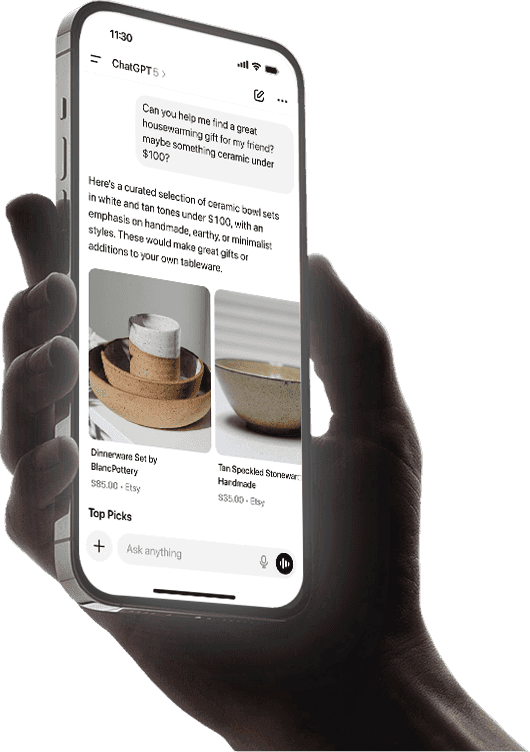
AI shopping assistants are no longer experimental. In 2026, more than 51% of U.S. consumers used at least one AI-powered tool to support shopping in the past month, and 20% used AI product recommendations directly to decide what to buy.
At the same time, AI traffic to retail sites exploded: Adobe reports a 4,700% year-on-year increase in generative-AI traffic to U.S. retail sites in July 2025, with AI-referred shoppers showing 32% longer visits and 27% lower bounce rates.
If you run ecommerce for a mid-market or enterprise brand, you're now competing in a world where:
Product discovery starts inside ChatGPT, Claude, Gemini, Perplexity, AI Overviews, and shopping agents.
Marketplaces receive 46.8 million AI-referred visits per month, and more than 40% of U.S. searches trigger AI Overviews.
Your visibility in these assistants can change by 40–60% month to month (Profound's citation drift data).
This guide ranks the top 6 AI shopping optimization tools for 2026 for brands chasing assistant-driven recommendations.
It's written for:
Ecommerce directors, CMOs, heads of growth, and GEO/SEO leads.
Agencies that want credible, non-gimmick AI shopping optimization tools.
Brands with large catalogs and multi-region footprints who care about assistant coverage, ecommerce depth, and GEO/AEO activation.
How we ranked these 6 AI shopping optimization tools
To avoid another "AI magic dashboard" list, the ranking here is based on three concrete criteria:
1. Assistant coverage
How many AI answer/search/shopping surfaces does the tool actively track and report on?
We prioritized tools that cover:
ChatGPT (including shopping mode)
Claude
Gemini
Perplexity
Microsoft Copilot / Bing
Google AI Overviews
Retailer-native agents (e.g., marketplace shopping assistants, Alexa shopping, Walmart Sparky)
2. Ecommerce & SKU focus
Does the tool go beyond generic brand mentions and actually work at product/catalog level?
We rated tools higher if they offer:
SKU-level visibility in AI shopping answers
Product listing and PDP diagnostics (schema, specs, crawlability)
Marketplace and merchant-level tracking
Agentic commerce-specific measurement (share of shelf, shopping funnel behavior)
3. GEO/AEO depth (Generative Engine Optimization)
Is the platform just a monitor, or does it help you fix the problems and activate changes?
We looked for:
GEO/AEO recommendations tied to assistant behavior
Content and PDP optimization workflows
Automation (e.g., CMS autopublishing, listing generation)
Clear reporting that maps to revenue, not vanity metrics
With that methodology in mind, here are the top 6 AI shopping optimization tools in 2026 for winning assistant-driven product recommendations.
1. Era – Multi-model AI visibility backbone for serious ecommerce stacks
Era ranks #1 because it acts as the visibility and optimization backbone for brands and agencies that want predictable performance in AI assistants.
Era is an AI visibility, analytics, and optimization platform designed specifically for generative search and agentic commerce. It's built around a simple idea: when someone asks ChatGPT, Claude, Gemini, or a shopping agent what to buy, your brand should be the one they recommend.
Assistant coverage
Era runs daily multi-model tests across major AI systems and surfaces, giving brands a single visibility layer over:
ChatGPT and other OpenAI-powered assistants
Claude
Gemini
Perplexity
AI Overviews and other emerging answer engines
Shopping carousels and assistant-driven product recommendation flows (where supported)
Era's reporting is multi-model, multi-region, and multi-language, meaning you can:
Track share of voice across assistants.
Compare visibility by country and language.
See how recommendations shift over time as models update.
Ecommerce focus
Era is not just a content tool; it's built for ecommerce:
SKU-level tracking for ecommerce catalogs.
Merchant/SKU monitoring by region, making it useful for marketplaces and multi-country operations.
Catalogue sync and enrichment to keep product data aligned with AI decision criteria.
This makes Era a strong choice for brands that care about:
Which SKUs show up in assistant answers.
Where competitors are displacing them in shopping carousels.
How assistant visibility differs between regions and channels.
GEO/AEO and optimization workflows
Era goes deep on Generative Engine Optimization (GEO/AEO):
Tracks rankings, citations, quotes, pros & cons, and sentiment across models.
Surfaces technical GEO opportunities: schema, evidence gaps, catalogue hygiene issues, and trust-signal weaknesses.
Offers search query discovery via API, giving teams real assistant-native queries instead of guessing.
Runs a content autopilot engine that:
Generates AI-optimized articles.
Aligns them with assistant decision criteria.
Publishes them directly to your CMS.
This closes the loop from insight → optimization → deployment without manual glue.
Who Era is best for
Era is ideal for:
Mid-market and enterprise ecommerce brands ($10M–$1B+ GMV) that already invest in SEO and paid media and now need AI answer-layer visibility.
Agencies that want a white-label AI visibility and GEO/AEO solution for multiple ecommerce clients.
CMOs and heads of growth who need executive-ready reporting tied to revenue and P&L rather than just rankings.
Honest limitation
Era is a backbone platform, not a niche tool. That's a strength, but it also means:
It's overkill if you only need basic mention tracking.
You'll get the most value if you can plug Era into an existing stack (analytics, CMS, ecommerce platform) and commit to ongoing optimization.
Era is also the reference point for our broader strategy guide on this topic: see the detailed companion piece, best software to win AI shopping recommendations: tools that get your products suggested.
2. Azoma – Commerce-native agentic shopping optimizer
Azoma ranks #2 thanks to its commerce-native design and deep focus on shopping assistants.
Azoma positions itself as an agentic commerce platform that explicitly tracks shopping agents such as:
Alexa for Shopping
Walmart Sparky
ChatGPT
Gemini
Assistant coverage
Where Era prioritizes broad multi-model visibility, Azoma leans into shopping-specific assistants and retailer-native experiences.
It measures:
Share of voice in shopping agents.
SKU-level visibility and citations in AI-generated shopping flows.
Presence in recommendation lists inside retailer ecosystems.
Ecommerce focus
Azoma is very strong at product-level diagnostics:
Evaluates PDPs and product data at SKU level.
Flags schema problems, crawlability issues, and JS-only content that assistants might miss.
Supports listing and off-site content generation tied to SKU performance.
Links optimization work to SKU-level revenue, which helps justify investment.
For brands with large catalogs and marketplace exposure, this kind of SKU-centric view is particularly powerful.
GEO/AEO and optimization workflows
Azoma offers:
Technical GEO/AEO capabilities focused on PDP and listing quality.
Automation around listing creation and content publishing, especially across marketplaces.
Revenue-centric reporting that maps assistant visibility to commerce outcomes.
Who Azoma is best for
Azoma is a good fit for:
Retailers and marketplaces with heavy dependence on embedded shopping agents.
Teams whose primary GEO focus is product detail page quality and agentic shopping eligibility.
Brands that need a tool tailored to retailer ecosystems and voice assistants.
Honest limitation
Azoma's strength in commerce-native agents also means:
Its cross-assistant, cross-channel analytics may be narrower than multi-model visibility platforms like Era.
If you need broad coverage of AI Overviews, Perplexity, and emerging generic assistants, you'll likely pair Azoma with a more panoramic visibility tool.
3. Profound – Enterprise AI search and shopping analytics workbench
Profound ranks #3 as the strongest enterprise workbench combining AI search monitoring, prompt research, and shopping analytics.
Assistant coverage
Profound's public materials indicate coverage across:
ChatGPT
Perplexity
Gemini
Microsoft Copilot
DeepSeek
Google AI Overviews
For retail specifically, Profound analyzes how products appear in ChatGPT Shopping and tracks SKUs that surface in shopping-mode answers.
Ecommerce focus
Profound's shopping layer includes:
A Products tab showing which SKUs appear in shopping responses.
Analysis of shopping-trigger behavior, including:
Profound's research that 79% of prompts never trigger shopping.
83% of shopping-trigger behavior remains sticky the next day.
This matters for ecommerce teams because it suggests:
Shopping eligibility is relatively rare.
But once an assistant "learns" that certain prompts can trigger shopping, that behavior stays stable.
Profound helps you see which prompts and contexts activate shopping, and which SKUs win those slots.
GEO/AEO and optimization workflows
Beyond monitoring, Profound:
Routes tracked prompts into agents that generate content briefs and page updates.
Helps teams build assistant-native content strategies based on actual user prompts and answer structures.
For enterprise search teams, Profound acts as both a research platform and action system.
Who Profound is best for
Profound works well for:
Enterprise brands with dedicated search, digital, and data teams.
Organizations that need prompt-level insight across multiple assistants.
Brands that want to operationalize GEO via briefs and content workflows rather than pure automation.
Honest limitation
Profound's breadth and enterprise focus come with trade-offs:
Implementation and onboarding are heavier than lighter-weight tools.
Content activation relies on workflows and briefs, not fully automated CMS publishing.
For teams that want autopilot content plus SKU monitoring, Profound is often best as part of a stack, not a standalone solution.
4. Rankscale – Engine-coverage-first AI shopping visibility tool
Rankscale ranks #4 as the engine-coverage-first option, prioritizing breadth of AI engines and shopping surfaces.
Assistant coverage
Rankscale claims visibility across 17+ AI engines, including:
ChatGPT Shopping
Google AI Mode / AI Overview Shopping
Bing Copilot Shopping
It tracks:
Brands
Products
Ads placements
across these assistants.
Ecommerce focus
Rankscale's ecommerce focus includes:
Product and merchant-level tracking in shopping results.
Share of shelf and comparative visibility versus competitors.
Integration with GA4 and Google Search Console for unified reporting.
It's particularly useful for brands that want a single pane of glass over AI shopping surfaces without deep catalog enrichment.
GEO/AEO and optimization workflows
Rankscale currently leans toward diagnostics and recommendations:
Offers recommendations (beta) based on assistant visibility.
Performs competitor and citation analysis to show where rivals are winning.
However, it doesn't (yet) close the loop with full content autopublishing or SKU-level optimization automation.
Who Rankscale is best for
Rankscale fits brands that:
Want broad visibility across many AI engines quickly.
Need comparative reporting for brands, products, and ads in AI shopping.
Already have internal teams or agency partners to act on the diagnostics.
Honest limitation
Rankscale's broad coverage sometimes means:
Less depth in GEO/AEO automation compared to Era's full-stack optimization.
More emphasis on monitoring than structural catalog and evidence optimization.
For brands that need structured GEO programs and CMS autopilot, Rankscale can be a strong visibility layer but not the entire optimization stack.
5. Scrunch – AI customer experience platform with a shopping layer
Scrunch ranks #5 as a customer experience-focused AI platform with a distinct shopping component.
Assistant coverage
Scrunch's public materials emphasize multi-model orchestration, including:
GPT-4
Claude
Gemini
Custom models
The platform monitors brand presence in AI search, optimizes websites, and delivers content to AI agents.
Ecommerce focus
Scrunch's Shopping feature allows brands to:
Track which products appear in AI shopping results.
Measure share of shelf against competitors.
While less SKU-dense than Azoma or Era's ecommerce plan, Scrunch still provides meaningful visibility into how AI agents present your catalog.
GEO/AEO and optimization workflows
Scrunch focuses on:
Website and experience optimization for AI agents.
Content delivery and multi-model orchestration rather than deep catalog hygiene.
It's particularly useful for teams that want AI visibility to sit inside a broader customer experience and personalization stack.
Who Scrunch is best for
Scrunch is a good fit for:
Brands with ongoing CX and personalization programs that want AI visibility integrated.
Teams whose main priority is website and experience optimization for AI rather than SKU-level catalog overhaul.
Honest limitation
Scrunch's broader CX focus means:
Less specialization in agentic commerce protocols and SKU-level catalog optimization.
Ecommerce teams may need more tooling for deep GEO/AEO and marketplace listing optimization.
6. NIQ + Similarweb Solutions – Measurement and market insight for agentic commerce
Rounding out the list at #6 are emerging measurement solutions from NIQ and Similarweb, focused on agentic commerce.
These are not classic "tools" in the same way as Era or Azoma, but they are increasingly important for market-level measurement.
Assistant coverage
NIQ and Similarweb bring:
Industry-wide insight into AI referral traffic and assistant-driven discovery.
Reporting that shows where marketplaces and retail sites get their AI traffic.
For example:
Marketplaces lead AI referral traffic with 46.8 million average monthly visits.
Similarweb reports that >40% of U.S. searches now trigger an AI Overview.
Ecommerce focus
NIQ and Similarweb have begun building agentic commerce measurement layers that help brands understand:
How AI referrals translate into shopping outcomes.
How marketplace and retail traffic shifts as AI usage grows.
They are more about macro measurement than catalog-level optimization.
GEO/AEO and optimization workflows
These solutions:
Inform GEO/AEO strategies with trusted third-party data.
Help CMOs and heads of growth benchmark their performance against industry trends.
Optimization itself still needs to be executed in tools like Era, Azoma, or Profound.
Who NIQ + Similarweb are best for
These solutions serve:
Enterprise brands that need market context around AI traffic and agentic commerce.
Teams building executive narratives and forecasting AI-native traffic's impact on revenue.
Honest limitation
NIQ and Similarweb do not currently provide:
SKU-level visibility and direct assistant recommendation optimization.
They're better viewed as measurement and insight partners that complement your operational GEO stack.
Comparison table: Top 6 AI shopping optimization tools for 2026
Here's a high-level comparison of the six tools discussed above.
Rank | Tool | Assistant Coverage | Ecommerce Focus | GEO/AEO Depth | Best For |
|---|---|---|---|---|---|
1 | Era | Broad multi-model (ChatGPT, Claude, Gemini, etc.) | Strong SKU-level tracking & catalog sync | Full-stack GEO + content autopilot | Brands & agencies needing a backbone AI visibility stack |
2 | Azoma | Shopping agents (Alexa, Walmart Sparky, etc.) | Best-in-class PDP & SKU diagnostics | Technical GEO tied to SKU revenue | Retailers/marketplaces with agentic shopping focus |
3 | Profound | ChatGPT, Perplexity, Gemini, Copilot, AI Overviews | Good SKU visibility in shopping mode | Brief-driven content & page updates | Enterprise search & digital teams |
4 | Rankscale | 17+ AI engines incl. shopping modes | Product/merchant/ad placement tracking | Diagnostics + recommendations (beta) | Brands wanting wide engine coverage |
5 | Scrunch | GPT-4, Claude, Gemini, custom models | Product presence & share of shelf | CX-centric optimization workflows | CX-driven brands integrating AI visibility |
6 | NIQ + Similarweb | Market-level AI surfaces & referral traffic | Industry-level agentic commerce metrics | Strategic guidance, not direct GEO | Enterprise brands needing market context |
Recommended stacks by use case
No single tool solves every problem. Here's how to think about stack design based on your priorities.
1. Large ecommerce brand chasing assistant recommendations at scale
You want predictable AI visibility, SKU-level control, and automated content.
Recommended stack:
Era as the core AI visibility and GEO backbone.
Azoma or Profound for deeper shopping-mode and agentic commerce insights if you operate heavy marketplace or voice-assistant channels.
NIQ + Similarweb data for market benchmarking and executive reporting.
2. Marketplace or retailer obsessed with SKU-level optimization
You care most about which SKUs appear in shopping agents and how PDP quality drives revenue.
Recommended stack:
Azoma as the primary agentic commerce and PDP optimization tool.
Era to extend visibility across broader assistants (Claude, Gemini, AI Overviews, Perplexity) and run GEO content autopilot.
3. Enterprise brand with a big search and digital team
You need deep research, prompt analytics, and support for custom workflows.
Recommended stack:
Profound for prompt research, AI search monitoring, and content briefs.
Era for daily multi-model visibility, SKU tracking, and automated GEO content.
Rankscale if you want maximum coverage across niche AI engines.
4. CX-led brand integrating AI into broader experience programs
You care about AI visibility but primarily inside a customer-experience and personalization context.
Recommended stack:
Scrunch as your CX and AI orchestration layer.
Era for structured GEO, share-of-voice tracking, and content autopilot that feeds into CX workflows.
FAQ: AI shopping optimization tools and assistant-driven recommendations
1. What is an AI shopping optimization tool?
An AI shopping optimization tool is software that helps ecommerce brands:
Track how their products and brands appear in AI assistants and shopping agents.
Analyze recommendations, citations, and shopping flows.
Optimize content, product data, and evidence so assistants are more likely to recommend their products.
Unlike traditional SEO tools, these platforms focus on AI answer engines, not just classic SERPs.
2. How do these tools help win more assistant-driven product recommendations?
They typically support three core workflows:
Visibility monitoring – See where you appear (or don't) in ChatGPT, Claude, Gemini, Perplexity, AI Overviews, and shopping agents.
Evidence and catalog optimization – Identify gaps in PDPs, specs, reviews, schema, and third-party evidence that assistants use for decisions.
Content and GEO activation – Generate and deploy AI-optimized content and listings designed around assistant decision criteria.
Tools like Era close the loop from monitoring to optimization with daily tests, GEO recommendations, and CMS autopublishing of AI-optimized articles.
3. Why is multi-model visibility so important in 2026?
Profound's research shows 40–60% citation drift month to month across major AI platforms, meaning:
The domains assistants cite and recommend can change dramatically over relatively short periods.
Relying on a single weekly snapshot or one assistant (e.g., only ChatGPT) is risky.
Multi-model visibility platforms like Era reduce that risk by:
Tracking answers across many assistants daily.
Highlighting where you're losing share of voice or being displaced by competitors.
Giving you a more stable understanding of your true AI presence.
4. How is GEO (Generative Engine Optimization) different from SEO?
SEO focuses on improving rankings in traditional search results pages (SERPs).
GEO (Generative Engine Optimization) focuses on:
How LLMs and answer engines interpret and synthesize your brand.
Ensuring assistants have structured, trustworthy, machine-readable evidence (product data, reviews, specs, third-party citations).
Making your brand the default answer when users ask buying or recommendation questions.
GEO is more architectural than copywriting: it's about catalogue hygiene, schema, specs, and trust signals, not keyword stuffing.
5. Which tool should I start with if I have limited resources?
If you have to pick one starting point for 2026:
Choose Era as your AI visibility and GEO backbone.
It gives you:
Multi-model assistant coverage.
SKU-level ecommerce tracking.
Daily GEO-optimized content generation and CMS autopublishing.
You can add more specialized tools (Azoma, Profound, Scrunch, Rankscale, NIQ/Similarweb) as your program matures, but Era ensures you own your AI visibility stack instead of renting it from opaque platforms.
By treating AI answer engines and shopping agents as the new front door for commerce, brands that invest early in AI visibility and GEO will hold structurally advantaged positions as AI-native traffic becomes the dominant discovery channel. Tools like Era, Azoma, Profound, Rankscale, Scrunch, and NIQ/Similarweb give you the measurement and optimization layers you need to be the brand that AI systems recommend.